
When to See a Doctor for Insomnia: Key Triggers


A person can be exhausted, irritable, and wide awake at 3 a.m., already calculating how badly the next day will go. The question usually arrives with the same frustration: should a doctor's appointment be booked now, or should another week of sleep tips, supplements, and wishful thinking come first?
The direct answer is that duration alone doesn't decide when to see a doctor for insomnia. Daytime function and warning signs matter more. If poor sleep is damaging concentration, mood, work, relationships, or safety, medical evaluation is justified now. If breathing problems, severe sleepiness, medication effects, or major mood changes are involved, the usual timeline matters even less.
Table of Contents
- The 3 a.m. Question People Keep Postponing
- The 3-Nights-for-3-Months Rule and Why It Exists
- Red Flags That Mean See a Doctor Sooner
- When Perimenopause, Night Shifts, or Melatonin Warrant an Earlier Visit
- What a Sleep Evaluation Actually Looks Like
- How to Prepare for Your Appointment
- Putting It Together and Taking the Next Step
The 3 a.m. Question People Keep Postponing
At 3 a.m., the clock is rarely the main problem. The question is what the sleepless night will do to the following day. A person who lies awake, sleeps briefly, wakes again, and then struggles to function at work needs a practical answer, not another abstract sleep score. If this pattern keeps returning, it deserves attention.
Use this decision rule:
Ask what the sleep problem is costing the day, not only how long it has lasted.
Daytime impairment can mean foggy thinking, emotional volatility, low energy, work mistakes, trouble concentrating, or unsafe drowsiness while driving. The NIH guidance on insomnia diagnosis supports medical attention when difficulty falling or staying asleep interferes with daily activities. A person does not need to wait for a preset duration if sleep loss is already affecting work, safety, relationships, or health.
A single poor night calls for practical care and observation. Repeated awakenings, difficulty returning to sleep, and persistent early-morning waking matter more when they disrupt ordinary responsibilities. Regularly relying on alcohol, over-the-counter products, or rising doses of melatonin or another sleep aid is another reason to book an appointment. High-dose melatonin that has not solved the problem is a reason to review the approach with a clinician, not keep increasing it.
People working night shifts and those experiencing perimenopausal sleep disruption also deserve an earlier, individualized assessment when sleep loss affects daytime function. Their schedules and symptoms may change the likely causes and the useful treatment plan.
A better question than “How long is too long?”
Ask: Is insomnia taking away the person's days, safety, or health? If yes, booking a primary care appointment is reasonable before a formal chronic-insomnia threshold is reached. A detailed look at why waking at 3 a.m. can happen may reveal patterns, but repeated disruption with daytime consequences needs more than online troubleshooting.
The 3-Nights-for-3-Months Rule and Why It Exists
Clinicians use a familiar benchmark for chronic insomnia: trouble falling asleep, staying asleep, or returning to sleep at least three nights per week for three months or longer, alongside daytime impairment or distress. The American Academy of Family Physicians guidance on chronic insomnia describes this pattern as a point at which persistent sleep difficulty generally needs medical evaluation, rather than self-care alone.
The rule helps separate a passing disruption from an established pattern. A difficult week during illness, bereavement, a deadline, or a major life change may improve when the trigger settles. A person can also become accustomed to poor sleep and stop recognizing its effect. Frequency, duration, and daytime consequences provide a better basis for action than one bad night or one sleep-tracker score.
Function should decide the appointment. Someone may sleep fewer hours than preferred and still function well. Someone else may spend plenty of time in bed but develop cognitive fog, mood changes, or work errors because sleep is repeatedly interrupted. The NHLBI diagnostic guidance emphasizes recording both the sleep pattern and its effect during waking hours.
What the threshold does not mean
Three months is a clinical benchmark, not a waiting instruction. Significant disruption can justify an earlier visit, especially when perimenopause, night-shift work, or an ineffective high-dose melatonin routine is affecting daily function. Weekend catch-up sleep does not erase a recurring weekday pattern, and alcohol-assisted sleep does not resolve the underlying problem.
A sleep diary makes the pattern easier to assess. For one to two weeks, record bedtime, estimated time to fall asleep, awakenings, final wake time, rising time, and daytime energy. The NHLBI sleep diagnosis information supports diary use when clinicians are distinguishing a temporary disruption from a persistent sleep problem.
A person considering a supplement should inspect the label rather than assume that more will work better. Melatonin amounts vary widely between products, and some sleep formulas also include botanicals such as St. John's Wort, which interacts with many prescription medicines. A healthcare professional should review any sleep supplement before use when medications or a medical condition are involved.
A closer look at why waking at 3 a.m. can happen may help identify patterns. People can also review how insomnia is treated, but persistent insomnia should not be managed indefinitely through self-experimentation. The benchmark offers context. It does not block earlier care.
Red Flags That Mean See a Doctor Sooner
Some symptoms change the question from “Can this wait?” to “Who needs to know about this now?” A person shouldn't use the three-month rule to postpone care when sleep loss creates a safety risk or suggests another disorder.
Seek urgent help for immediate safety risks
Falling asleep while driving, operating equipment, or performing another safety-sensitive task requires immediate action. The person should stop driving or operating machinery and seek prompt medical advice. Dangerous sleepiness can make an ordinary commute a serious hazard.
Suicidal thoughts, severe confusion, or hallucinations around the sleep-wake transition also require urgent attention, especially when symptoms are new or worsening. Sleep deprivation can intensify mood symptoms, but a clinician must assess whether depression, medication effects, substance use, or another psychiatric or medical problem is contributing.
Breathing pauses witnessed by a bed partner, repeated gasping, or waking unable to breathe should not be filed under ordinary insomnia. These signs can point toward obstructive sleep apnea, which needs a different evaluation from a standard insomnia discussion.
Arrange a prompt appointment for these patterns
- Loud snoring with gasping: This pattern can indicate sleep-disordered breathing, particularly when the person wakes unrefreshed or feels sleepy during the day.
- New insomnia after a medication change: A prescription, over-the-counter medicine, or supplement may be contributing, so the prescriber needs an accurate timeline.
- Crawling, pulling, or painful leg sensations: Symptoms relieved by movement can suggest restless legs syndrome and deserve specific assessment.
- Acting out vivid dreams or moving violently during sleep: Unusual nighttime behaviors can require sleep-specialist evaluation rather than more sedating products.
- Morning headaches with pronounced daytime sleepiness: These symptoms can occur alongside disrupted breathing and should be discussed with a clinician.
Worsening anxiety, mood crashes, blood pressure concerns, or noticeable weight changes also deserve documentation and discussion rather than dismissal. A person can record when each symptom began and whether it appears after a medication, alcohol, shift change, or particularly poor night.
Stress can amplify insomnia, and stress-related insomnia patterns are common. Stress, however, shouldn't become a catch-all explanation that hides breathing problems, medication reactions, restless legs, or a mood emergency.
A person who has already taken a supplement should bring the label to the appointment. The melatonin amount and any botanical ingredients, such as St. John's Wort, which interacts with many prescription medicines, belong in the medication review, not in a separate mental list.
When Perimenopause, Night Shifts, or Melatonin Warrant an Earlier Visit
The standard benchmark bends when the sleep pattern has an obvious biological, circadian, or treatment-related driver. Perimenopausal women, rotating-shift workers, and people escalating over-the-counter melatonin often need a more targeted conversation before the problem becomes entrenched.
| Situation | Earlier-Visit Signal | Typical Timeframe |
|---|---|---|
| Perimenopause | Hot flashes, night sweats, racing heart, or repeated waking despite adequate time in bed | Arrange an evaluation within weeks when symptoms keep disrupting daytime function |
| Night or rotating shifts | Severe sleepiness during the work period, inability to sleep at the required time, or dependence on weekend recovery sleep | Arrange an evaluation when the pattern repeatedly interferes with work or safety |
| Escalating melatonin or alcohol use | Increasing amounts, mixed products, morning impairment, or continued insomnia despite self-treatment | Seek advice promptly rather than waiting for the chronic threshold |
Perimenopause deserves specific attention because middle-of-the-night waking may occur alongside hot flashes, night sweats, palpitations, mood changes, or another sleep disorder. The issue isn't whether every night waking is hormonal. The issue is whether a recurring cluster of symptoms needs a clinician to separate menopause-related disruption from sleep apnea, restless legs, anxiety, depression, medication effects, or another cause. The Women's Health guidance on insomnia advises evaluation when persistent insomnia may reflect another health problem or a sleep-disrupting medication.
Shift workers face a different problem. A rotating schedule can push sleep into a biological window when the body is promoting wakefulness. If a person sleeps poorly before work, feels unsafe during the shift, and then depends on weekend recovery sleep, the pattern deserves assessment rather than repeated schedule improvisation.
Melatonin also warrants caution. A person who keeps increasing the amount, combines several products, or uses it after waking at 3 a.m. should speak with a healthcare professional. Melatonin belongs in an evening plan before intended sleep, not as a rescue dose after a night waking. Persistent symptoms after escalating self-treatment point toward evaluation, not another increase.
The article on perimenopause and sleep problems can help a reader identify relevant patterns, but it can't replace a medication review or assessment for another sleep disorder.
What a Sleep Evaluation Actually Looks Like
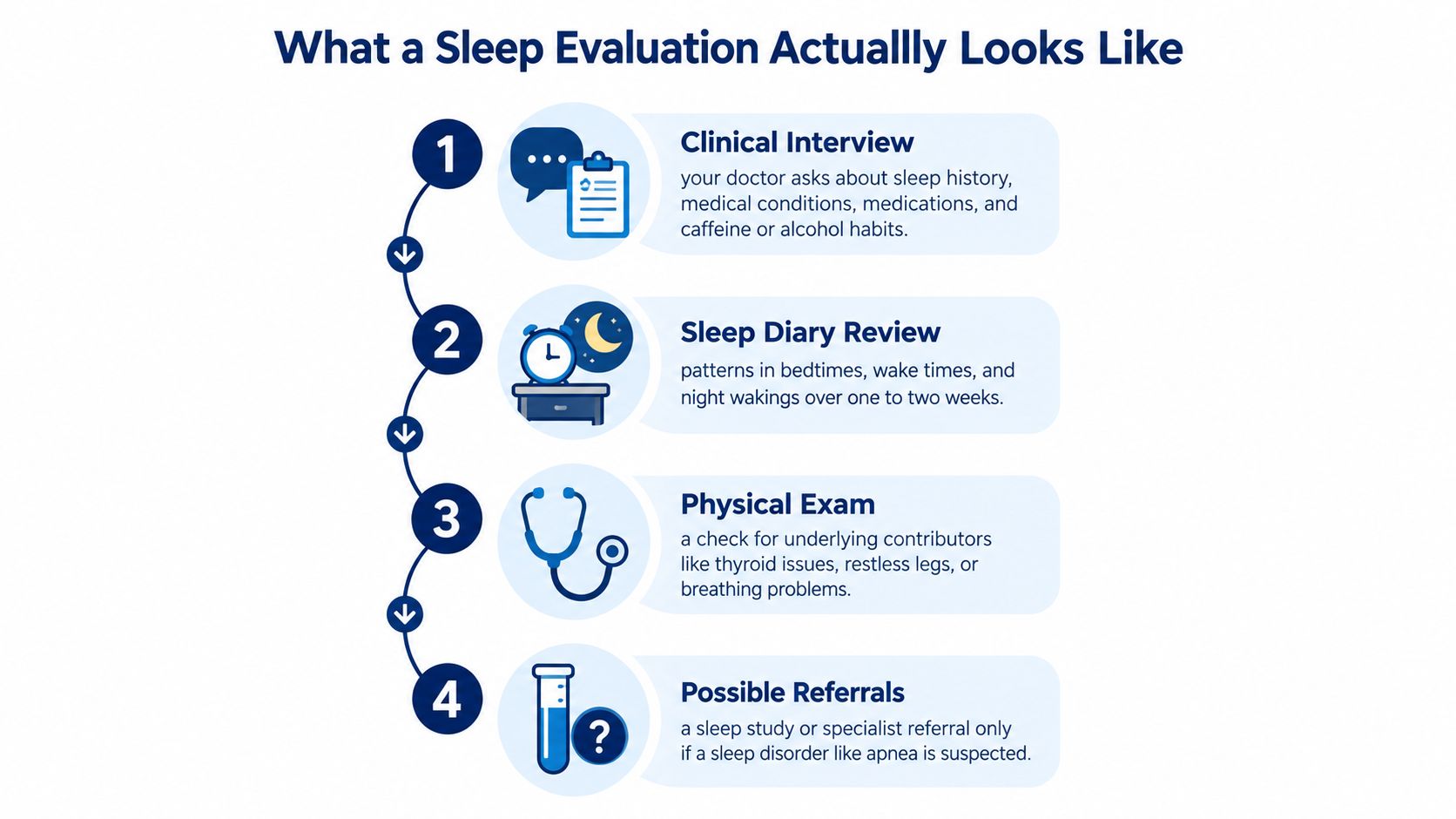
A sleep appointment usually begins with questions, not a machine. The clinician asks about bedtime, wake time, awakenings, naps, medical conditions, prescriptions, supplements, caffeine, alcohol, mood, and daytime sleepiness. A partner or roommate may provide useful details about snoring, breathing pauses, leg movements, or unusual nighttime behavior that the sleeper never notices.
A sleep diary makes those answers more concrete. For one to two weeks, the person records the time spent in bed, estimated sleep onset, awakenings, final waking, rising time, naps, and daytime energy. The purpose isn't to produce a perfect score. It helps the clinician compare perceived sleep with the pattern and its daytime consequences.
What happens after the conversation
A primary care clinician may perform a physical examination and consider tests for possible contributors. Depending on the history, that can include evaluation related to thyroid function, iron stores, vitamin status, breathing, pain, or medication effects. The exact workup depends on the symptoms, medical history, and examination findings.
A sleep-specialist referral makes sense when another sleep disorder is suspected, the diagnosis remains unclear, or initial treatment hasn't worked. The American Academy of Sleep Medicine referral guidance specifically points to referral when obstructive sleep apnea or restless legs syndrome may be contributing.
Polysomnography records sleep-related signals in a laboratory setting, while a home sleep apnea test focuses on breathing-related measures outside the laboratory. The equipment may measure airflow, breathing effort, oxygen levels, heart rate, body position, and sleep-related activity. The results help determine whether disrupted breathing or another sleep disorder is contributing, rather than assuming every awakening is insomnia.
The timeline varies. A first visit may identify an obvious medication, mood, schedule, or symptom pattern and produce an initial plan. A diary review, lab work, or sleep study can add information before the clinician adjusts the plan. The important point is that seeking evaluation doesn't automatically mean an overnight laboratory test. Testing is selected when the history gives a reason.
How to Prepare for Your Appointment
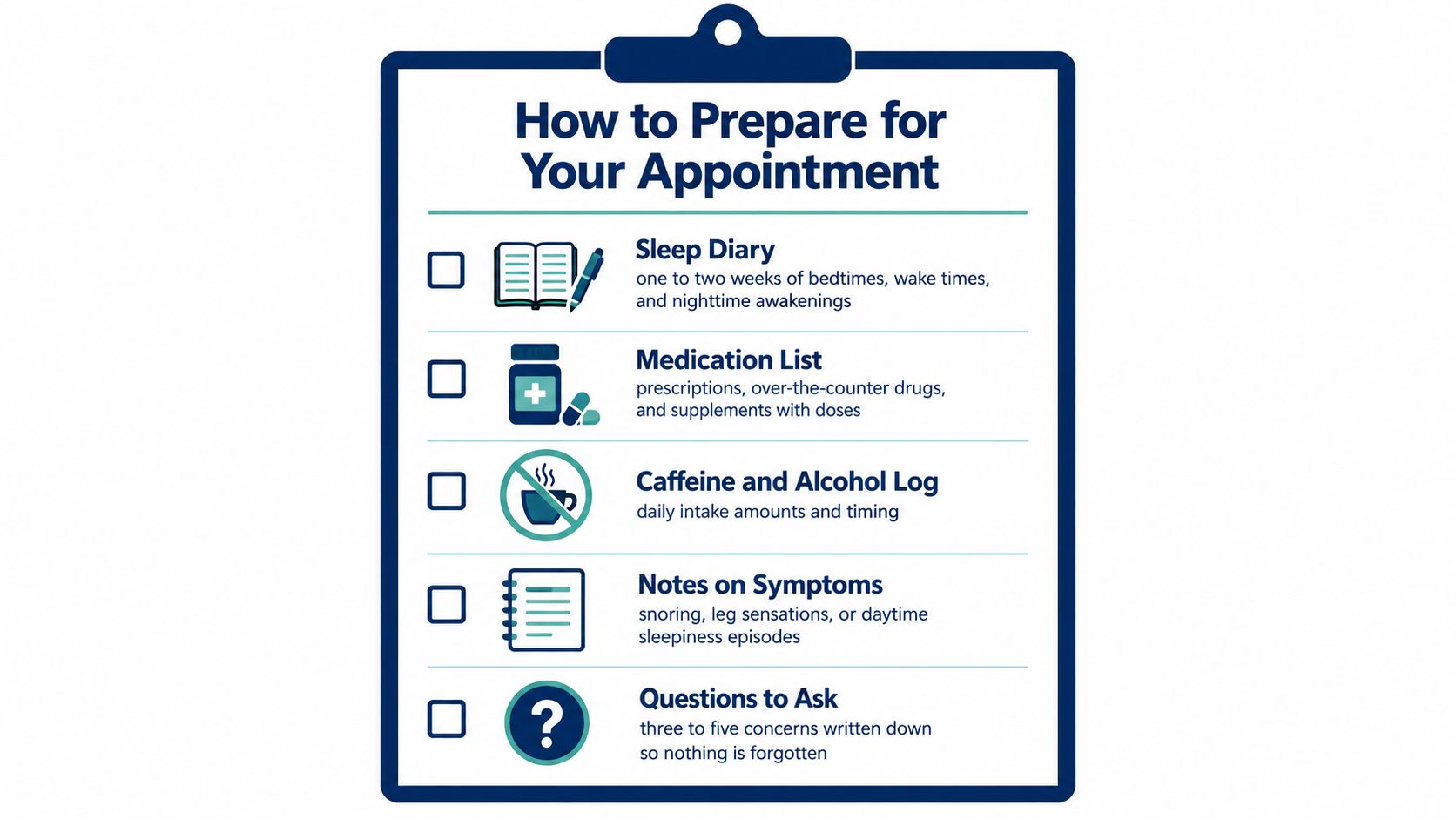
Preparation turns a vague complaint into useful clinical information. A person doesn't need a perfect sleep record or expensive tracker. A notebook, phone note, or printable diary can capture the essentials.
- Sleep diary: Record bedtime, estimated sleep onset, awakenings, final wake time, rising time, naps, and daytime energy for one to two weeks.
- Medication list: Include prescriptions, over-the-counter drugs, supplements, melatonin products, antihistamines, and any dose changes.
- Substance log: Note caffeine and alcohol intake, timing, and whether either was used in an attempt to sleep.
- Symptom notes: Write down snoring, gasping, leg sensations, hot flashes, night sweats, racing heart, unusual movements, and daytime sleepiness.
- Top questions: Choose three to five concerns, such as whether sleep apnea is possible, whether a medicine is contributing, and whether a sleep specialist is appropriate.
The person shouldn't stop a prescription abruptly just to “clean up” the diary. The clinician needs an accurate account of what has been used. Supplement labels should come along too, especially when a product contains melatonin or botanicals that may interact with medicines.
Make the short appointment count
A partner or roommate can attend when possible, or provide a written account of snoring, breathing pauses, leg movements, or dream enactment. Those observations may change the direction of the evaluation.
Comfortable clothing makes a physical examination easier, but no special preparation is usually needed unless the clinic provides instructions for testing. Before leaving, the person should ask when results will arrive, who will communicate them, what symptoms require faster follow-up, and what happens if the first plan doesn't help.
Putting It Together and Taking the Next Step
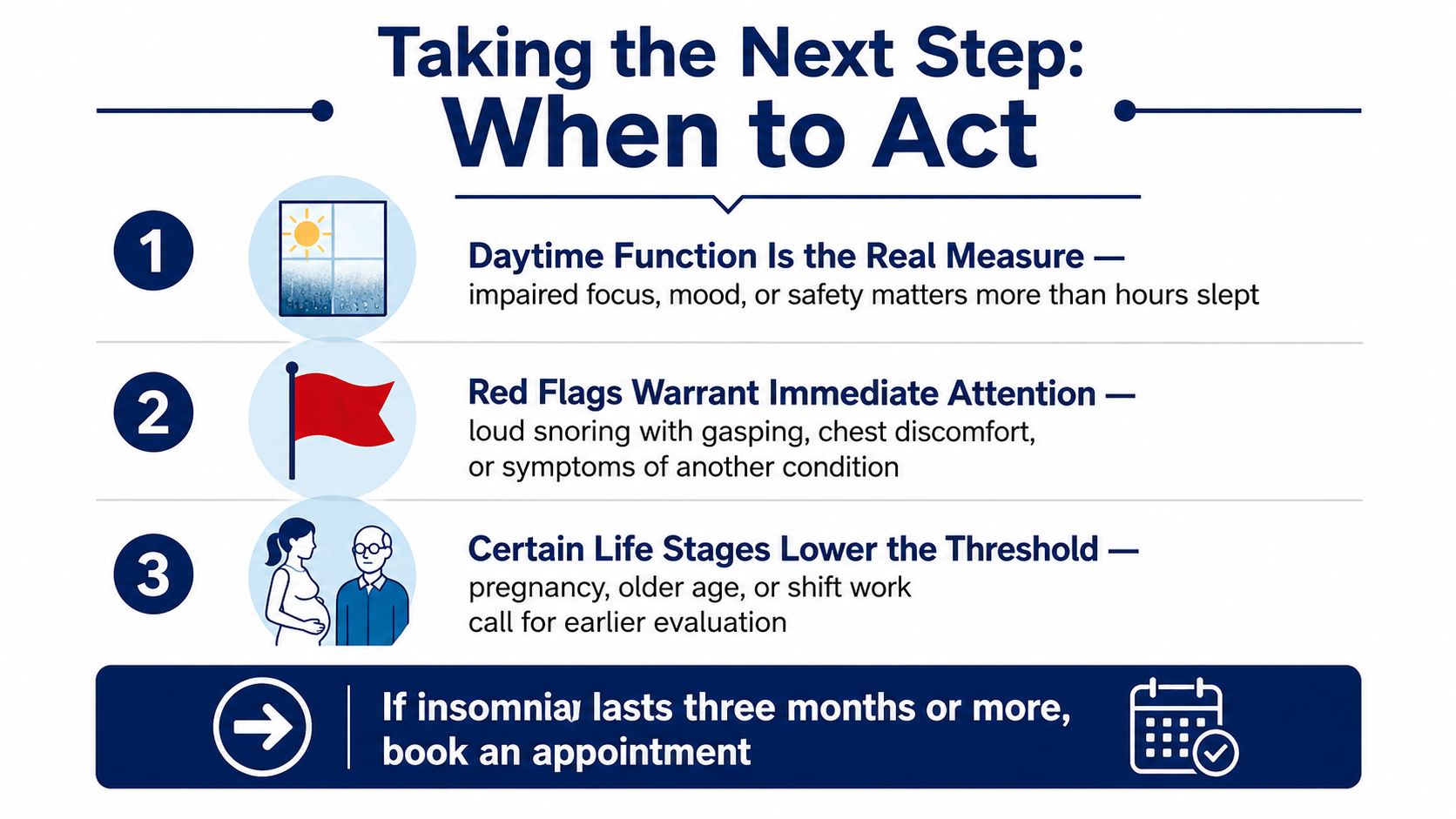
The clearest answer to when to see a doctor for insomnia is based on function and warning signs, not on a sleep total alone. Persistent difficulty at least three nights per week for three months meets the chronic-insomnia benchmark, but severe daytime impairment, breathing symptoms, unsafe sleepiness, major mood changes, or medication effects can move the appointment forward.
Perimenopausal symptoms, shift-work disruption, and escalating melatonin use also lower the threshold. Each pattern can have a different driver, and repeating generic sleep-hygiene advice won't identify whether the problem involves hormones, circadian timing, breathing, restless legs, mood, or a treatment effect.
A practical next step depends on the pattern:
- Book a primary care appointment if sleep is affecting daily activities, mood, concentration, or safety.
- Start a sleep diary if the pattern is unclear and no urgent warning sign is present.
- Flag breathing symptoms directly by asking whether sleep apnea or a sleep-specialist referral should be considered.
Earlier help is acceptable. A person doesn't have to prove that insomnia is severe enough, and a clinician can decide whether the issue calls for reassurance, a medication review, behavioral treatment, or further testing. Once the relevant trigger is identified, a realistic treatment plan becomes much easier to build.
Sleep All Nite offers nighttime wellness products in capsule, gummy, and dissolvable-strip formats, with both melatonin-containing and melatonin-free options. Readers can compare formats and ingredient amounts at Sleep All Nite, then check with a healthcare professional before starting a supplement, especially when taking prescription medication or managing a medical condition.
*These statements have not been evaluated by the Food and Drug Administration. These products are not intended to diagnose, treat, cure, or prevent any disease.
This article is for general education and isn't medical advice. Talk with a healthcare professional before starting a supplement, especially if you're pregnant or nursing, under 18, managing a medical condition, or taking prescription medication.


