
What Helps You Stay Asleep Through the Night


The clock glows at 3 a.m. A sleeper has already spent hours in bed, yet the mind is suddenly listing tomorrow's tasks, the body feels alert, and sleep seems farther away than it did at bedtime. The frustration grows because the problem isn't always falling asleep. Often, it's staying asleep and returning to sleep without turning one brief awakening into a long wakeful stretch.
Nighttime waking is easier to understand when treated as an arousal-prevention problem, not a mysterious failure of sleep. Evening habits, bedroom conditions, physical symptoms, stress, and the natural structure of sleep can stack together. The most useful response usually begins with free, repeatable changes to timing and surroundings, then adds targeted support only when it makes sense.
Table of Contents
- Why You Keep Waking at 3 a.m.
- What Staying Asleep Actually Means
- Everyday Habits That Reduce Nighttime Awakenings
- What to Do When You Wake in the Middle of the Night
- Supplement Formats and Ingredients to Consider
- When to Bring in a Clinician and What CBT-I Offers
- Building Your Own Stay-Asleep Menu
Why You Keep Waking at 3 a.m.
At 3 a.m., the room is warm, a phone lights up after a brief awakening, and tomorrow's schedule starts running through your mind. Perhaps bedtime shifted, an evening drink loosened sleep, or you went to bed already tense. One small interruption becomes an hour of wakefulness, so the night feels broken even when your total time in bed seemed adequate.
Treat staying asleep as an arousal-prevention problem. The practical question is, “What raised arousal tonight?” Late caffeine, alcohol, pain, reflux, worry, a full bladder, noise, temperature, or an irregular wake time can turn a normal transition between sleep cycles into sustained alertness. Like a sensitive alarm system, sleep can react to several small signals at once.
Sleep-maintenance insomnia means waking during the night and struggling to return to sleep. Cleveland Clinic estimates that about 1 in 5 people with insomnia have the sleep-maintenance type. (Learn more about waking at 3 a.m.)
Start with the triggers you can change:
- Environmental and behavioral amplifiers: Light, noise, room temperature, alcohol, caffeine, late meals, fluid timing, naps, and inconsistent schedules can leave sleep more easily disturbed.
- Intrinsic or medical contributors: Anxiety, chronic pain, depression, nocturia, sleep apnea, medication effects, and hormonal changes may interrupt sleep despite sensible routines.
The second half of the night can feel more fragile because sleep pressure has fallen since bedtime. That pattern does not make a 3 a.m. awakening imaginary or unavoidable. It points to a practical sequence: reduce preventable arousals before bed, then respond to waking without adding light, worry, or stimulation. Behavioral changes usually provide the largest gains before any ingredient or product enters the discussion.
What Staying Asleep Actually Means
Sleep onset is the transition from wakefulness into sleep. Sleep maintenance concerns continuity after sleep begins. Researchers often track wake after sleep onset, or WASO, separately because a sleeper can fall asleep quickly yet spend long periods awake between sleep cycles.
Fragmentation matters even when total sleep time doesn't change. In a controlled study of healthy men, a fragmented night involved about five awakenings, reduced REM sleep from 83.5 minutes to 69.4 minutes, and no change in total sleep time. In another clinical comparison, fragmented sleep reduced REM sleep to 4.9 minutes versus 67.4 minutes during continuous sleep and increased stage 1 light sleep to 26.1 minutes versus 7.2 minutes. (Read the sleep-fragmentation study)
Why the second half of the night feels different
Sleep cycles change across the night. Earlier sleep contains more deep sleep, while the latter part contains more lighter NREM sleep and REM sleep. That later architecture can make awakenings feel easier to trigger, especially when a sound, temperature change, worry, bladder pressure, or physical symptom appears.
The practical implication is important: staying asleep isn't only about accumulating hours. It's also about protecting continuity. A sleeper who wakes briefly and returns to sleep may have a very different night from someone who wakes, checks the time, turns on a bright screen, and begins mentally rehearsing the next day.
A nighttime formula can be part of an evening routine, but it shouldn't replace identifying the trigger. Nite Cap is a capsule blend containing valerian, chamomile, GABA, L-tryptophan, lemon balm, passion flower, and 2 mg of melatonin for nighttime routine support.* Melatonin belongs in the evening before intended sleep, not as a response to a middle-of-the-night awakening.
Everyday Habits That Reduce Nighttime Awakenings
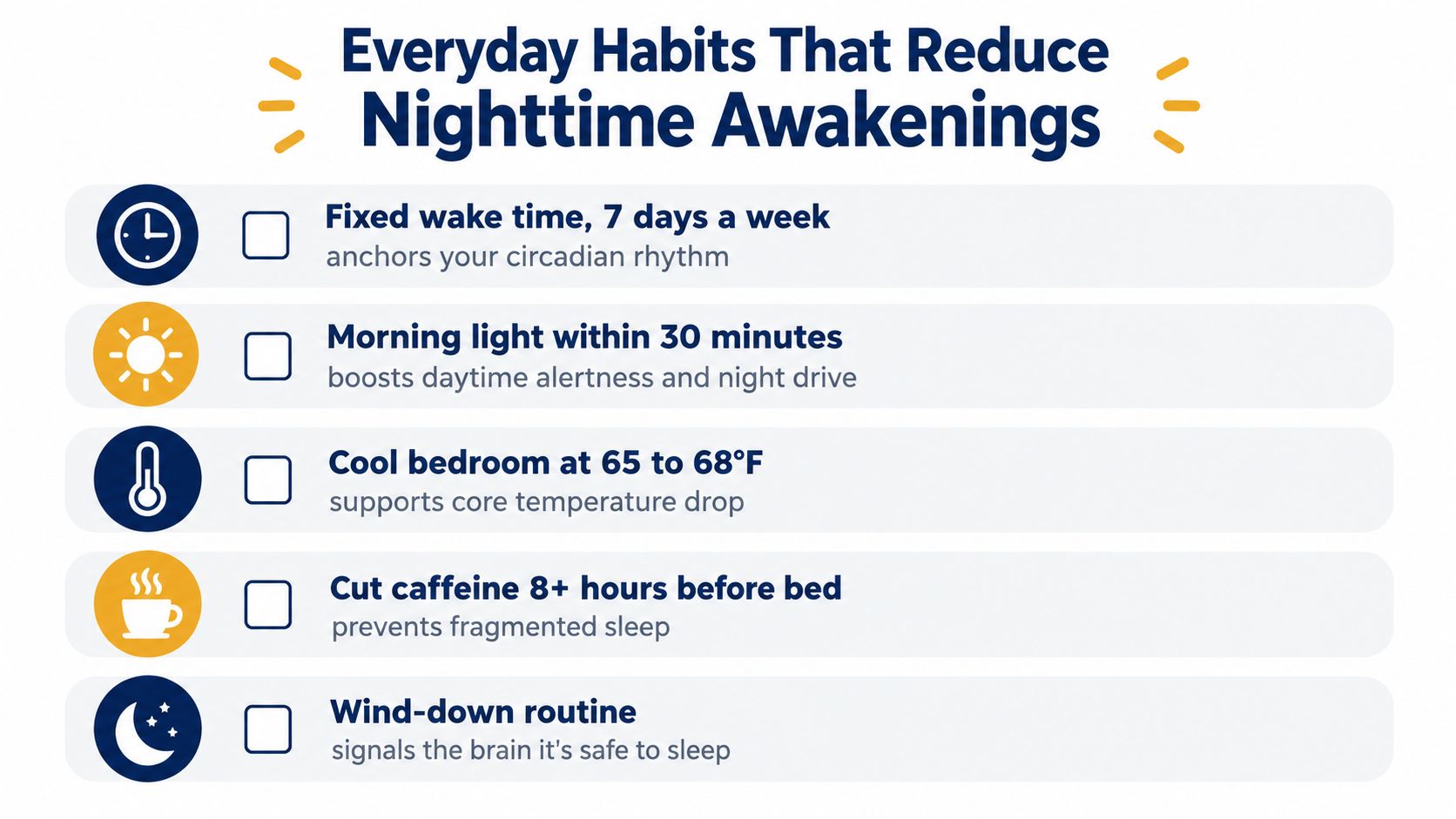
A sleeper may follow a reasonable bedtime routine and still wake repeatedly because small disruptions keep activating the brain. Treat the night like a system with adjustable inputs: stabilize the body clock, reduce physical interruptions, and move stimulating activities earlier. Start with two or three changes and repeat them consistently, so you can see which adjustment affects your sleep.
- Anchor the wake time. Get up at roughly the same time each day, including weekends. A dependable morning anchor helps set the sleep-wake rhythm and may work better than forcing yourself into bed before you feel ready.
- Use morning light. Outdoor light early in the day helps separate daytime alertness from evening sleepiness. A short walk, time beside a bright window, or another practical source of morning light can become a reliable cue.
- Cool the room. A bedroom that is cool, dark, and quiet removes common sources of arousal. One sleep reference describes a comfortable cool range of about 60 to 70 degrees Fahrenheit. (Review sleep-environment guidance)
- Reduce evening fluid pressure. If bathroom trips break up sleep, shift more fluid intake earlier in the day. A Journal of Clinical Sleep Medicine study of women aged 40 to 50 identified bathroom use as the most frequently reported reason for sleep disturbance, reported by 81% of participants. Feeling too hot followed at 26%. (Read the sleep-disturbance data)
- Move caffeine and vigorous exercise earlier. Clinical guidance recommends a caffeine cutoff six to eight hours before bed and avoiding exercise within four hours of bedtime. (Review clinical sleep guidance)
- Treat alcohol as a disruptor. Alcohol can make falling asleep feel easier while contributing to later-night disruption and extra bathroom trips. Reducing or removing it from the evening gives the second half of the night a better chance to remain stable.
Practical rule: Remove one likely disruptor before adding another ingredient.
These experiments can cost nothing. Existing curtains can darken the room, a closed door can reduce noise, and different bedding or available airflow may improve temperature control. A wind-down period might include reading, gentle stretching, quiet music, or breathing rather than bright-screen use.
Magnesium is a separate option for readers who prefer a melatonin-free format. Deep Calm provides 275 mg of magnesium per serving as magnesium glycinate, a form used to support muscle relaxation and normal nervous system function.* A healthcare professional can help assess whether it fits your health history and medication list.
What to Do When You Wake in the Middle of the Night
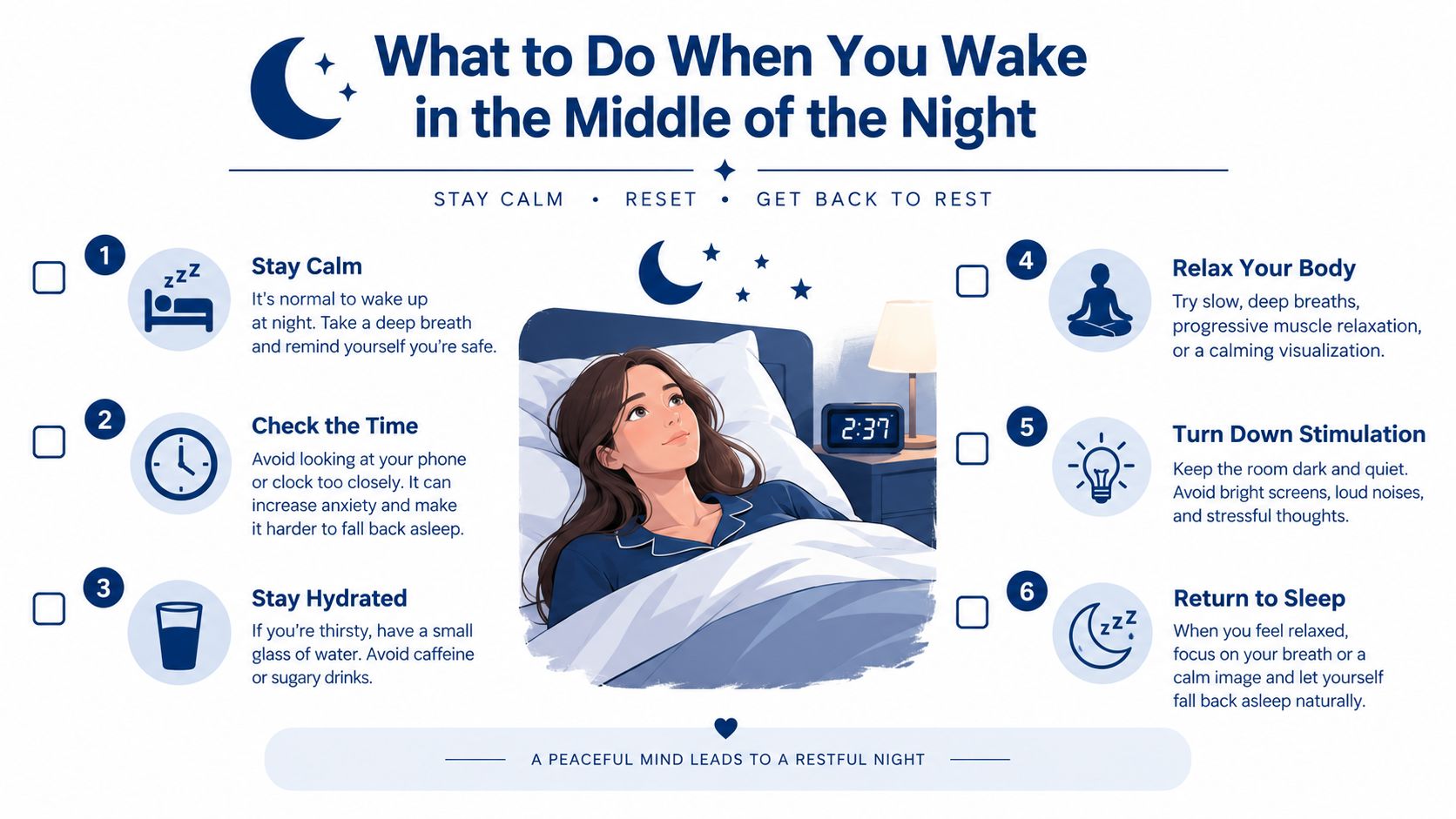
A brief awakening doesn't automatically mean something is wrong. The useful goal is not to eliminate every moment of wakefulness. It's to prevent a short interruption from becoming a fully alert episode.
The first step is to avoid clock-watching. Repeatedly calculating how much sleep remains can turn a neutral awakening into a performance test. If the sleeper notices wakefulness continuing for about 15 to 20 minutes, clinical guidance recommends leaving the bed and moving to another room for a quiet activity until sleepiness returns. (Follow the NHS middle-of-the-night guidance)
A low-stimulation activity might include reading a familiar paper book under dim light, listening to calm audio, or using slow breathing. A phone is usually a poor choice because notifications, bright light, and emotionally engaging content can raise alertness. The bed should become associated with sleep, not with scrolling, worrying, or monitoring the clock.
The aim is a quieter return to sleep, not a perfect night with no awakenings.
Melatonin should remain an evening, pre-bed option, not a middle-of-the-night response. Taking it after waking can place its timing too close to the morning for some sleepers and may make the next sleep period less predictable. A person who wakes repeatedly should discuss timing, dose, other supplements, and medicines with a healthcare professional rather than improvising during the night.
A dark room also creates a safety issue. Clear pathways, a dim night-light if needed, and keeping water or essential items within easy reach can reduce the chance that navigating the room becomes a second source of arousal. Readers whose minds begin racing can find additional practical ideas in this guide to sleeping when the brain is racing.
Supplement Formats and Ingredients to Consider
Supplements can provide a structured evening cue, but they're not sedatives that force sleep continuity. Evidence varies by ingredient, product quality, dose, timing, and the reason a person wakes. The table below is a comparison framework, not a promise of an outcome.
| Ingredient | Evidence for maintenance | Common formats | Contains melatonin? |
|---|---|---|---|
| Magnesium glycinate | May support relaxation and normal nervous system function, but sleep results vary | Capsule, powder | No |
| L-theanine | Often used for evening relaxation; maintenance-specific evidence is limited | Capsule, gummy, tea blend | No |
| GABA | Used in calming formulas; evidence for staying asleep is limited | Capsule, gummy | No |
| Apigenin | Commonly included in botanical sleep blends; maintenance-specific evidence remains limited | Capsule, tea | No |
| Valerian | Used in traditional and modern nighttime formulas; results vary across preparations | Capsule, gummy, tea | No |
| Tart cherry | Used in food-based sleep products; maintenance-specific evidence is not definitive | Juice, capsule, powder | No |
| Low-dose melatonin | Most relevant to circadian timing and evening sleep preparation; it isn't a guaranteed answer to repeated waking | Strip, capsule, gummy | Yes |
Melatonin deserves particular care. It belongs before intended sleep, not after a night waking. People who are pregnant or nursing, under 18, managing a medical condition, or taking prescription medication should consult a healthcare professional before starting a supplement.
The format can matter for adherence. Capsules suit readers who prefer measured servings, powders can fit an existing evening drink, gummies may be easier for some people to take, and oral strips can avoid water. The key comparison points are ingredient amounts, melatonin status, timing, serving instructions, and interactions, not whether a label uses a stronger-sounding promise.
Readers comparing products can use Sleep All Nite's sleep-support supplement guide as a starting point, then verify the current label and discuss the choice with a healthcare professional. Supplements complement the behavioral levers above. They don't replace a stable wake time, trigger assessment, or professional evaluation when sleep disruption persists.
When to Bring in a Clinician and What CBT-I Offers
Persistent nighttime waking deserves more than endless trial and error, especially when it affects daytime functioning. Loud snoring, pauses in breathing, gasping, restless sensations in the legs, chronic pain, reflux, depressed mood, anxiety, medication changes, and frequent urination can all justify a professional conversation.
Perimenopause can also change sleep continuity. In an NIH study of 45 perimenopausal women, the median pattern included 1.5 awakenings per night and 24.3 minutes of wake after sleep onset. More awakenings were associated with lower estradiol and higher FSH after adjustment for night sweats and depressive symptoms. (Read the NIH perimenopause sleep study) A separate Harvard Apple Women's Health Study update analyzed 94,118 nights from 338 participants and found that 60% showed increased wake after sleep onset in the 18 months leading to menopause. Comparing the year before and the year after the final period, time awake rose by about 4 minutes in an eight-hour sleep period on average. That finding supports a nuanced discussion rather than assuming every 3 a.m. awakening signals severe hormonal disruption.
CBT-I gives the problem a systematic debugging process. It typically combines stimulus control, sleep restriction, cognitive restructuring, and relaxation methods. In a randomized trial of 303 adults with chronic insomnia, the web-based SHUTi program produced 56.6% remission and a 69.7% treatment response at one year. (Read the SHUTi trial)
A separate meta-analysis reported a standardized effect size of 0.91 for insomnia severity and average remission rates of 57.3% versus 27.4% for comparators, while also noting variation between studies and evidence quality. (Review the CBT-I meta-analysis) The approach works best when the schedule is followed carefully. Clinical support isn't a failure of self-management. It's a way to identify the malfunctioning part of the system.
Building Your Own Stay-Asleep Menu
A useful routine is a menu, not a rigid prescription. One sleeper may need to focus on bathroom trips and fluid timing. Another may need a consistent wake time, earlier caffeine, or a discussion about perimenopause. The right starting point is the lever most closely connected to the night's pattern.
Foundation
Begin with the anchors that cost little or nothing:
- Wake time: Keep the morning timing as consistent as practical.
- Morning light: Get outdoor or bright natural light early in the day.
- Bedroom conditions: Favor a cool, dark, quiet setting using what's already available.
- Alcohol awareness: Notice whether evening drinking precedes later waking.
Prevention
Add one evening adjustment at a time. A reader might move caffeine earlier first, then change vigorous exercise timing, then create a low-light wind-down period. If bathroom trips are common, earlier fluid timing is a more logical experiment than adding another sleep ingredient.
A simple sleep diary can record bedtime, estimated sleep onset, awakenings, return-to-sleep time, wake time, and major evening variables. The value comes from finding patterns, not from judging every night.
Rescue
When waking still occurs, the response should stay deliberately boring:
- Don't check the clock repeatedly.
- Remain in bed while comfortably sleepy.
- If wakefulness continues for about 15 to 20 minutes, leave the bed.
- Use dim light and a quiet activity.
- Return only when sleepiness comes back.
- Don't take melatonin in the middle of the night.
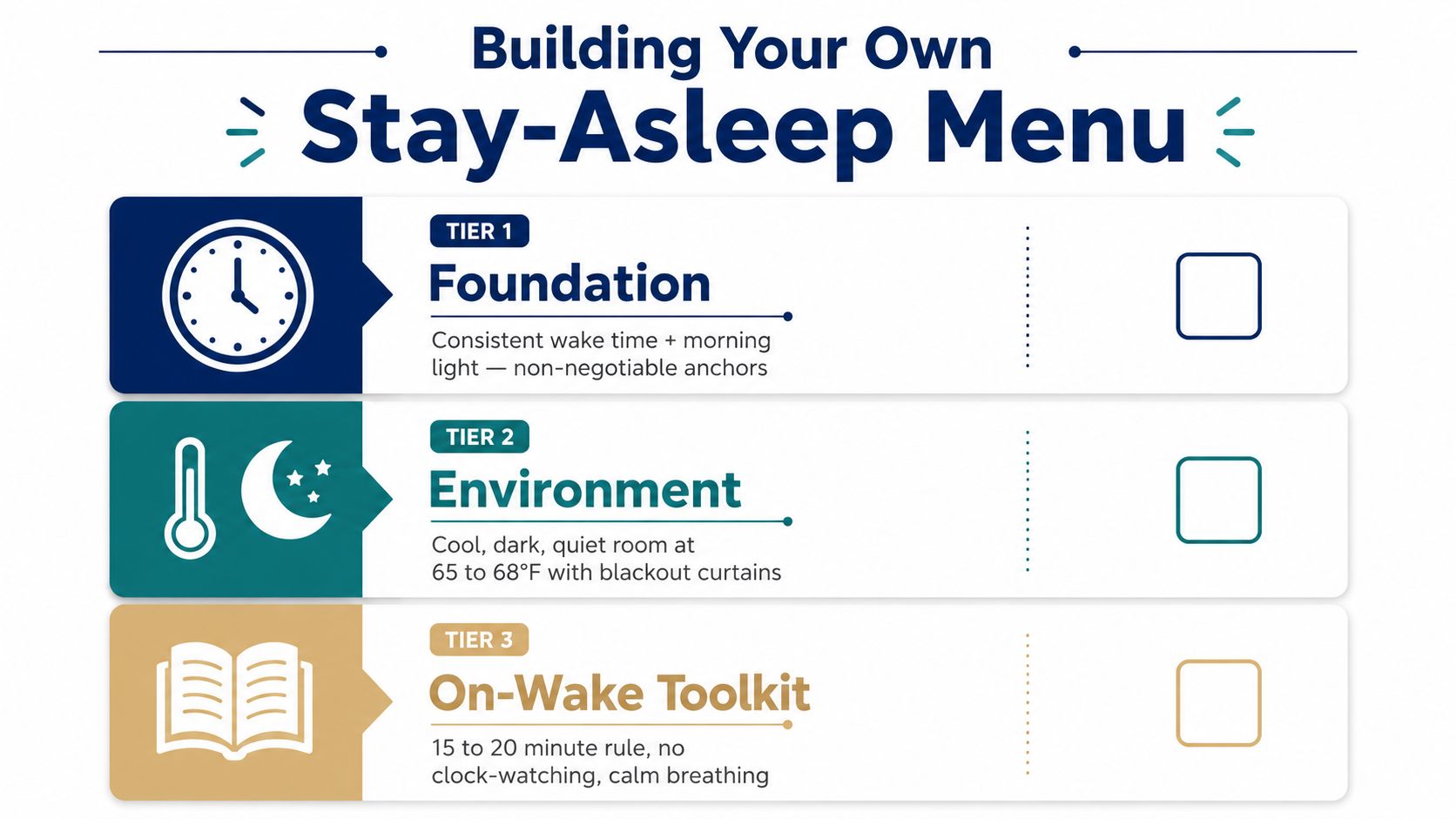
A two-week experiment can keep the process manageable. The first week can center on foundation habits. The next can add one prevention lever, while the rescue plan remains available on difficult nights. Stacking two or three consistent behaviors usually creates a clearer signal than changing many variables at once. More ideas for evaluating sleep patterns appear in this sleep-quality improvement guide.
Sleep All Nite offers capsules, gummies, and dissolving oral strips with clearly listed ingredient amounts and both melatonin-containing and melatonin-free formats. Readers can visit Sleep All Nite to compare formats and labels alongside the behavioral plan, then check the choice with a healthcare professional.
*These statements have not been evaluated by the Food and Drug Administration. These products are not intended to diagnose, treat, cure, or prevent any disease.
This article is for general education and isn't medical advice. Talk with a healthcare professional before starting a supplement, especially if you're pregnant or nursing, under 18, managing a medical condition, or taking prescription medication.


