
Night Shift Health Effects: Essential Recovery Tips


61.8% of night-shift workers report short sleep, and about 18.5% meet criteria for insomnia. Night shift health effects extend far beyond tiredness, reaching metabolic, cardiovascular, immune, and cancer-related systems.
Night work creates a biological mismatch. The worker stays alert under artificial light while the circadian system is preparing the body for sleep, then tries to recover during daylight, when the internal clock promotes wakefulness. The result isn't just a difficult routine. It can be a persistent conflict between work hours, sleep timing, light exposure, meals, and normal physiology.
Night-shift health effects also vary by schedule. A fixed overnight schedule and a rapidly rotating schedule don't challenge the body in exactly the same way, so the most useful approach looks beyond total hours worked. It considers when the body receives light, food, activity, and sleep, as well as whether the schedule allows genuine recovery.
Table of Contents
- Why Night-Shift Sleep Problems Start Before Tiredness Sets In
- How Circadian Disruption Links Night Work to Long-Term Risk
- Fixed Night Shifts Versus Rotating Schedules Explained
- Heart, Metabolism, and Blood Sugar Risks on Night Shifts
- Why Sleeping Enough Is Not the Same as Circadian Recovery
- Practical Ways to Reduce Night-Shift Health Effects
Why Night-Shift Sleep Problems Start Before Tiredness Sets In
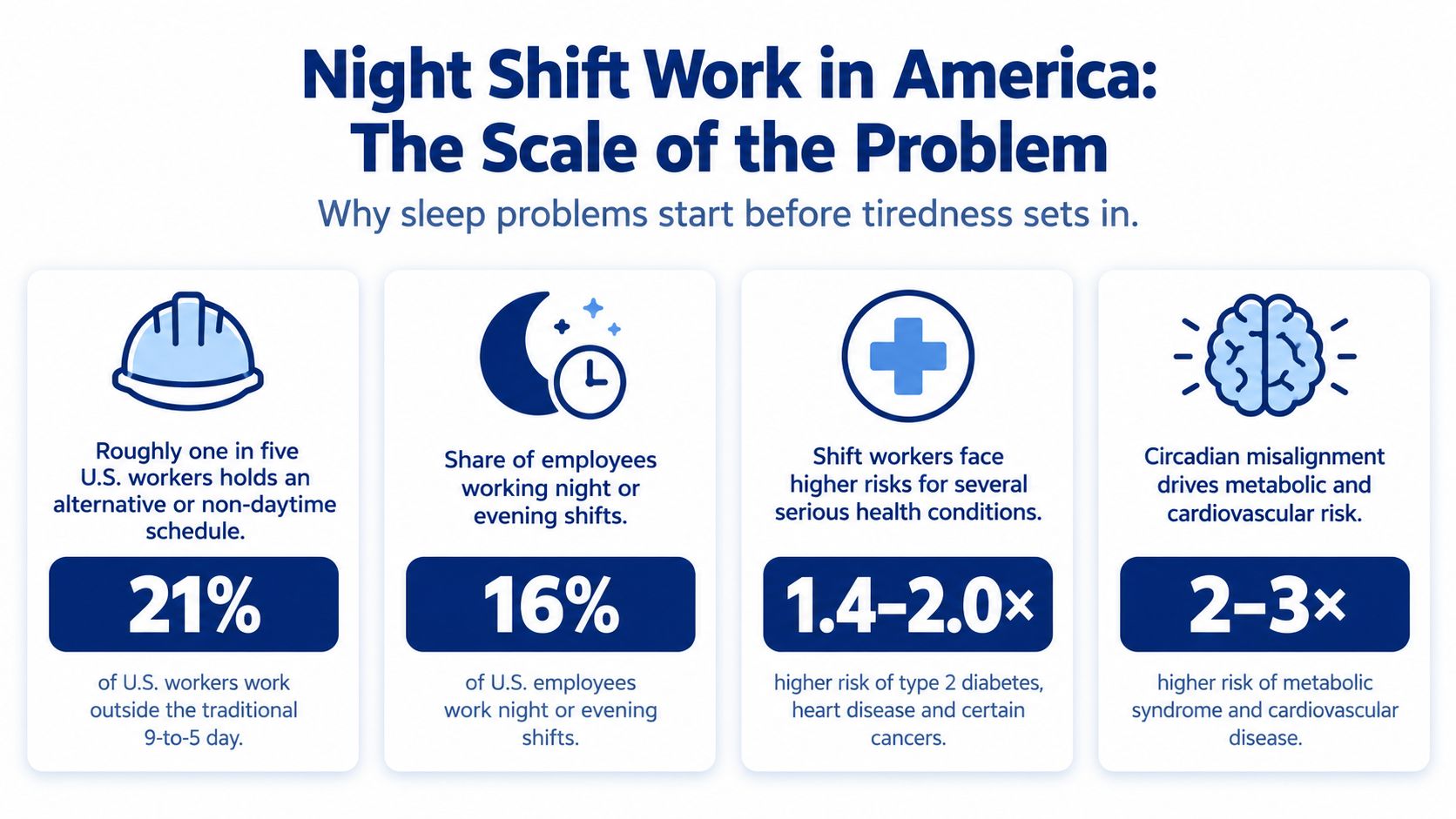
U.S. occupational data summarized by the National Institute for Occupational Safety and Health provides a clear baseline. Short sleep duration was reported by 61.8% of night-shift workers, compared with 35.9% of daytime workers. Poor sleep quality affected 30.7% of night-shift workers, while 18.5% met the NIOSH definition of insomnia, compared with 8.4% of daytime workers.
That definition matters. NIOSH's measure of insomnia combines poor sleep quality with impaired ability to perform sleep-related daily activities. In other words, the difference isn't limited to workers saying they feel tired after a difficult shift. Night workers were more likely to experience sleep that was both unsatisfying and functionally disruptive.
The body clock creates the first obstacle
A night worker may finish a shift exhausted but still struggle to fall asleep. Daylight, household noise, responsibilities, and normal daytime activity can all interfere, but the central problem starts inside the circadian system. During the biological night, the body is organized for sleep, reduced alertness, and fasting. During the biological day, the circadian system promotes alertness, making daytime sleep easier to interrupt.
That conflict helps explain why a worker can spend a reasonable amount of time in bed and still wake feeling unrefreshed. Sleep opportunity and biological readiness aren't the same thing. A person may protect a daytime sleep window, yet receive lighter or more fragmented recovery because the timing opposes the internal clock.
Practical rule: Treat daytime sleep as a protected biological need, not as leftover time after work, errands, and family obligations.
Poor sleep can then make the next shift harder. Fatigue reduces mental function and physical ability, while stress about sleeping can make the next daytime sleep period even more difficult. Readers who also wake during the night may find the discussion of cortisol and sleep problems useful, although night-shift workers should first consider whether schedule timing and light exposure are driving the pattern.
The important distinction is that night shift health effects begin with impaired recovery and circadian misalignment. Chronic disease risks become easier to understand once those two processes are clear.
How Circadian Disruption Links Night Work to Long-Term Risk
The circadian system coordinates sleep and wakefulness with the light-dark cycle. Night work reverses the usual pattern by placing activity and light exposure during the biological night, followed by attempted sleep during the biological day. The International Agency for Research on Cancer's evaluation identifies disruption of normal physiological circadian rhythms as the most pronounced effect of night work.
IARC classified night-shift work involving circadian disruption as “probably carcinogenic to humans,” Group 2A. This classification doesn't mean that every night worker will develop cancer, and it isn't a prediction of an individual's personal probability. It identifies a hazard for which the evidence is credible enough to support prevention and further study.
What the cancer classification means
IARC reported limited human evidence linking night-shift work with breast, prostate, colon, and rectal cancers. It also found sufficient evidence in experimental animals that altered light-dark schedules can cause cancer, along with strong mechanistic evidence involving processes such as immune suppression, chronic inflammation, and abnormal cell proliferation.
The distinction between hazard and individual risk prevents two common misunderstandings. The classification isn't a guarantee of harm, but it also isn't something to dismiss because the risk differs between workers. Duration, frequency, timing, intensity of exposure, personal health, and schedule design may all influence how the body responds.
Circadian disruption also matters because it affects several systems at once. Night work can alter sleep, immune regulation, glucose handling, blood pressure control, and hormone timing. Cancer-related concerns therefore appear alongside metabolic and cardiovascular concerns because they may share upstream biological disturbances.
| System | Associated outcome | Proposed mechanism |
|---|---|---|
| Sleep and nervous system | Shorter, poorer-quality, or less restorative sleep | Wakefulness during the biological night and attempted sleep during daylight |
| Immune system | Immune-system dysfunction | Circadian misalignment and insufficient recovery sleep |
| Metabolic system | Type 2 diabetes and other metabolic disorders | Adverse timing of food intake, glucose regulation, insulin sensitivity, and activity |
| Cardiovascular system | Cardiovascular disease and coronary events | Disrupted blood pressure control, autonomic balance, lipid metabolism, sleep, and stress |
| Cancer-related pathways | Associations involving breast, prostate, colon, and rectal cancers | Immune suppression, chronic inflammation, abnormal cell proliferation, and altered light-dark timing |
The circadian rhythm disruption guide can help readers separate a circadian-timing problem from ordinary sleep-habit advice. The practical point is straightforward: improving sleep conditions matters, but sleep conditions can't fully remove exposure to light, meals, and activity at biologically unusual times.
Fixed Night Shifts Versus Rotating Schedules Explained
“Night shift” describes more than one pattern. A worker who stays on a permanent overnight schedule faces a different timing problem from a worker who moves between days, evenings, and nights. The difference can affect which night shift health effects appear most strongly.
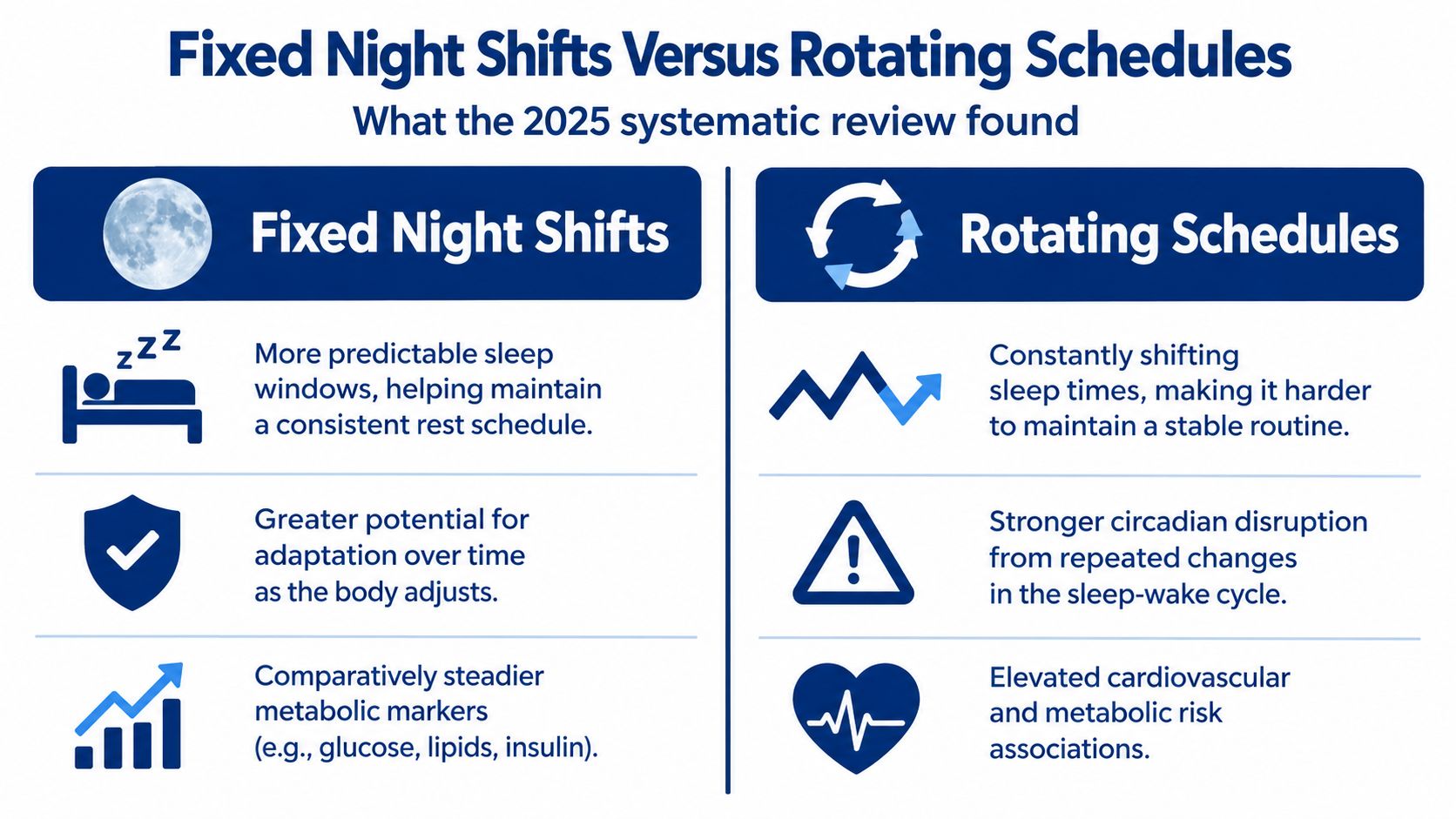
A 2025 systematic review found that fixed night work was more strongly associated with cardiometabolic outcomes, including ischemic heart disease, higher blood pressure, obesity, and type 2 diabetes. Its pooled estimate for ischemic heart disease was RR 1.44, with a 95% confidence interval of 1.10 to 1.89. Fixed shifts also showed greater melatonin disruption and miscarriage risk in that review. These figures come from the published systematic review indexed by PubMed.
Rotating schedules showed a different pattern. They were more consistently associated with impaired sleep quality and had a stronger association with overall cancer risk, with a pooled OR 1.14, with a 95% confidence interval of 1.04 to 1.24. These are pooled associations, not individual predictions, and they don't establish that one schedule is universally worse.
Why the pattern can matter
Fixed nights may offer more predictable sleep and meal timing, but they can also maintain prolonged exposure to an overnight work pattern. Some workers partially adapt when their sleep, light, and meals remain consistent. Others continue to experience metabolic strain because their schedule conflicts with daylight, social obligations, or regular daytime activity.
Rotating schedules create a different challenge. The body receives changing signals about when to sleep and wake, especially when rotations move quickly or include short recovery periods. The relevant questions include:
- Rotation direction: Does the schedule move later from days to evenings to nights, or does it force earlier wake times?
- Consecutive nights: Does the worker have enough time to establish a usable sleep pattern before returning to daytime work?
- Quick returns: Is there enough time between shifts for sleep, meals, transportation, and basic recovery?
- Recovery days: Do days off provide protected recovery, or do they require a complete reversal back to daytime living?
The evidence doesn't justify calling every fixed schedule safer or every rotating schedule more dangerous. It supports a more precise conclusion: schedule design may shape different outcomes, with fixed nights showing stronger cardiometabolic associations and rotating schedules showing greater circadian instability and sleep disruption.
Heart, Metabolism, and Blood Sugar Risks on Night Shifts
Cardiometabolic health is one of the clearest areas in which night work can affect the body beyond sleep. A systematic review and meta-analysis published in the BMJ found shift work associated with a myocardial infarction risk ratio of 1.23, a 95% confidence interval of 1.15 to 1.31. The same analysis reported an ischemic stroke risk ratio of 1.05, with a 95% confidence interval of 1.01 to 1.09, and a coronary events risk ratio of 1.24, with a 95% confidence interval of 1.10 to 1.39.
Those numbers describe associations across populations. They don't mean that an individual night worker will experience a heart attack or stroke. They do show why long-term overnight work deserves attention in routine health care, particularly when blood pressure, blood sugar, weight, or cholesterol changes appear.
Why food timing matters
At night, workers often eat while the body is biologically prepared for fasting and sleep. Repeated nighttime wakefulness and eating occur when glucose regulation, insulin sensitivity, blood pressure control, autonomic balance, and lipid metabolism aren't optimized. Sleep restriction and stress can add further pressure by promoting insulin resistance and changes in body composition.
This doesn't make an overnight snack a moral failure. It means that meal timing becomes part of the exposure. A large, energy-dense meal at the biological low point may affect digestion and metabolic regulation differently from a meal placed earlier in the worker's wake period.
A separate meta-analysis of 12 studies in healthcare workers, published in Obesity Reviews, reported a pooled odds ratio of 2.17 for metabolic syndrome among shift workers, although substantial heterogeneity means that estimate shouldn't be treated as a universal prediction for an individual.
What deserves practical attention
Long-term night workers can ask a clinician about monitoring:
- Blood pressure: Changes may develop without obvious symptoms.
- Blood sugar: Screening can identify dysglycemia before it becomes noticeable.
- Lipids: Cholesterol changes can add to cardiovascular risk.
- Weight trajectory: Gradual change may reveal schedule-related strain.
- Sleep symptoms: Persistent difficulty sleeping or functioning deserves early attention.
A workable food structure may include a balanced meal before the shift, lighter planned food during the night, and fewer heavy meals near the biological low point. Exercise and medical appointments also need to fit around protected sleep rather than compete with it.
Why Sleeping Enough Is Not the Same as Circadian Recovery
A sleep tracker may show an apparently adequate duration while the body remains exposed to poorly timed light, food, and activity. Sleep quantity is necessary, but it isn't the whole circadian picture.
A 2025 field-study review highlighted continuing inconsistencies in the epidemiological evidence and called for better measurement of mechanisms and mediators, including circadian timing, light exposure, meal timing, physical activity, and schedule design. That emphasis changes the question from “How many hours did the worker sleep?” to “What signals did the body receive before, during, and after that sleep?”
Timing can hide risk
A worker may sleep during the day, wake for an evening meal, work overnight under bright lights, eat again at 3 a.m., and exercise immediately before daytime sleep. Another worker may sleep for a similar duration but keep light, food, and activity more aligned with the schedule. Their sleep totals could look similar while their metabolic signals differ.
A retail-worker study used explainable artificial intelligence to identify distinct metabolic-risk clusters. One higher-risk group was older, had an average of 13.3 years of night-work experience, and had raised blood pressure and cholesterol, according to the published retail night-worker study. The finding doesn't prove that duration alone causes the risk, but it supports personalized monitoring rather than assuming that all night workers adapt in the same way.
Adequate sleep can protect recovery without completely neutralizing biologically mistimed light, food, and activity.
That distinction also matters for melatonin. Melatonin belongs in an evening or pre-sleep plan, not as a response to waking in the middle of a shift or at 3 a.m. Readers considering timing should review melatonin timing for sleep, then discuss individual use with a healthcare professional, especially when taking medication or managing a health condition.
The practical conclusion isn't that night workers must perfect every variable. Limited energy should go first toward the signals that can be changed most consistently: a protected sleep window, deliberate light exposure, predictable meals, and a schedule that minimizes abrupt reversals.
Practical Ways to Reduce Night-Shift Health Effects
Risk reduction works best as a layer of small decisions rather than a promise that one habit will cancel night work. Workers may not control staffing, rotation direction, or shift length, but many can identify one change that protects sleep or reduces poorly timed exposure.
Start with the schedule and sleep environment
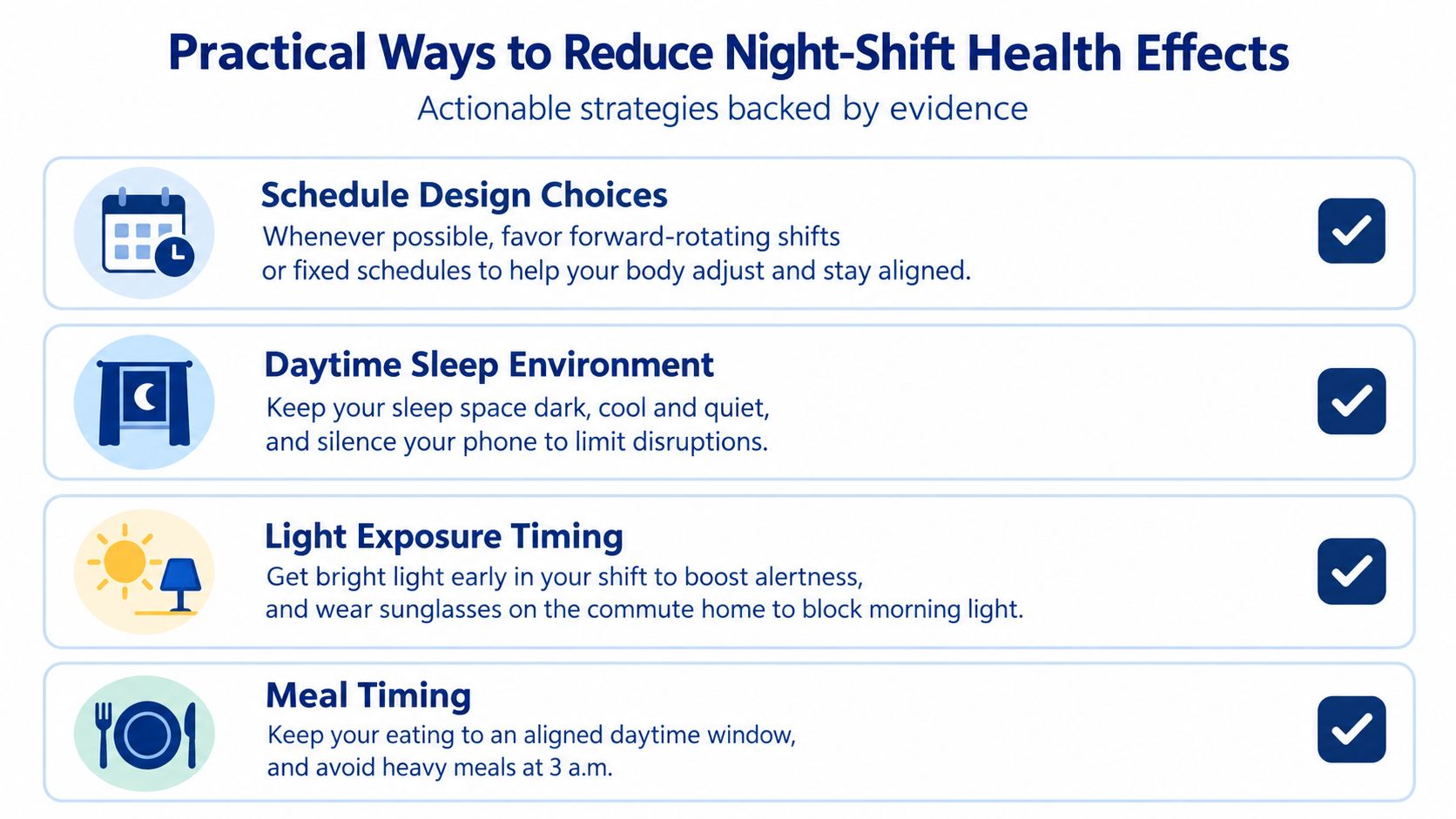
Where scheduling choices exist, a worker can ask whether a fixed pattern or forward-rotating pattern creates fewer abrupt changes. The evidence doesn't support one universal schedule, so the useful test is whether the pattern permits regular sleep, reasonable recovery days, and fewer quick reversals.
Daytime sleep benefits from a room that is dark, cool, and quiet. Free options include silencing the phone, asking household members to protect the sleep window, closing available blinds, and using ordinary clothing or towels to reduce small light leaks. A fan or free white-noise app may help if one is available, but no purchase is required.
Use light and meals deliberately
Bright light early in the shift can support alertness, while reducing bright light near the end of the shift can make the transition toward daytime sleep easier. Sunglasses on the commute home may be useful for workers who find morning light activating, but safety comes first, and sunglasses shouldn't impair driving.
Meal structure should reduce the need for heavy, unplanned eating at the biological low point. A worker might place the main meal earlier in the wake period, prepare lighter food before work, and keep water accessible. The aim isn't perfection. It is to make the less disruptive choice easier when fatigue and vending-machine food compete for attention.
Protect safety during the low point
Immediate safety deserves as much attention as long-term prevention. A CDC and NIOSH summary on sleep and work reports that, compared with regular day shifts beginning after 7:00 a.m., accident and error risks increase by 28% for night shifts and 15% for evening shifts.
Workers in clinical, industrial, transportation, and other safety-sensitive roles should treat severe sleepiness as a functional hazard. A short rest opportunity, a safer commute plan, or a conversation with a supervisor may matter more than pushing through a dangerous level of fatigue.
Compare supplement formats carefully
Supplements can't replace schedule changes, medical evaluation, or evidence-based insomnia care. When a worker is already considering optional support, the Sleep All Nite sleep-support supplement collection offers different formats and ingredient profiles to compare.
For example, Deep Calm is a melatonin-free capsule providing 275 mg of magnesium per serving from magnesium glycinate. Magnesium supports normal nerve function, muscle health, energy production, muscle relaxation, and normal nervous system function.* A healthcare professional can help determine whether magnesium is appropriate, particularly for anyone managing a condition or taking prescription medication.
The safest routine is the one a worker can repeat without sacrificing essential sleep or delaying care. Persistent insomnia symptoms, loud snoring, breathing pauses, severe mood changes, or unexplained metabolic changes warrant professional evaluation rather than escalating supplements.
Sleep All Nite offers capsules, gummies, and dissolvable oral strips with clearly listed ingredients and amounts for adults comparing optional nighttime formats. Readers can review those choices at Sleep All Nite, then check with a healthcare professional before starting a supplement, especially when working nights, managing a medical condition, or taking prescription medication.
*These statements have not been evaluated by the Food and Drug Administration. These products are not intended to diagnose, treat, cure, or prevent any disease.
This article is for general education and isn't medical advice. Talk with a healthcare professional before starting a supplement, especially if you're pregnant or nursing, under 18, managing a medical condition, or taking prescription medication.


