
How to Sleep After Working Night Shift and Wake Rested


The shift ends, the sun is already up, and the trip home turns into another alertness test. Morning light hits the windshield, traffic noise follows the worker through the front door, and family members may need breakfast, rides, or conversation. By the time the bedroom is finally dark, the body feels exhausted but the brain feels inconveniently awake.
Learning how to sleep after working night shift requires more than standard sleep hygiene. A daytime sleeper needs to protect a short, vulnerable sleep opportunity from light, noise, temperature changes, errands, commuting, and household demands. The right routine doesn't force sleep. It makes sleep easier to reach and harder to interrupt.
Table of Contents
- Why Daytime Sleep Feels So Hard After a Night Shift
- Your Post Shift Wind Down From Clock Out to Lights Out
- Build a Bedroom That Works During the Day
- Timing Your Sleep Naps and Melatonin Wisely
- Making Day Sleep Fit Real Life Family and Social Demands
- Your Personalized Night Shift Sleep Plan That Sticks
- Safety Notes for Night Shift Workers
Why Daytime Sleep Feels So Hard After a Night Shift
A night worker can finish a demanding shift with heavy eyelids and still struggle to sleep at home. That apparent contradiction is normal. The internal clock promotes alertness as daylight arrives, while the worker is asking the body to begin its main sleep period.
Research reported by the American Academy of Sleep Medicine on shift start times and sleep found that estimated sleep duration changes sharply with shift timing. Workers starting between 9 a.m. and 2 p.m. could sleep about 8 hours, while those starting between 8 p.m. and midnight were estimated to sleep only 4.5 hours. Night and early-morning workers typically lose 1 to 4 hours of total sleep time. Those figures date to 2010 and came out of a conference presentation rather than a full review, but the pattern they describe has held up in the years since, and it explains why a deliberate post-shift system matters.
Morning light is one part of the problem. It reaches the eyes during the commute, signals daytime to the brain, and makes the transition from work to sleep less clean. Then the outside world takes over with deliveries, traffic, neighbors, phones, and household activity.
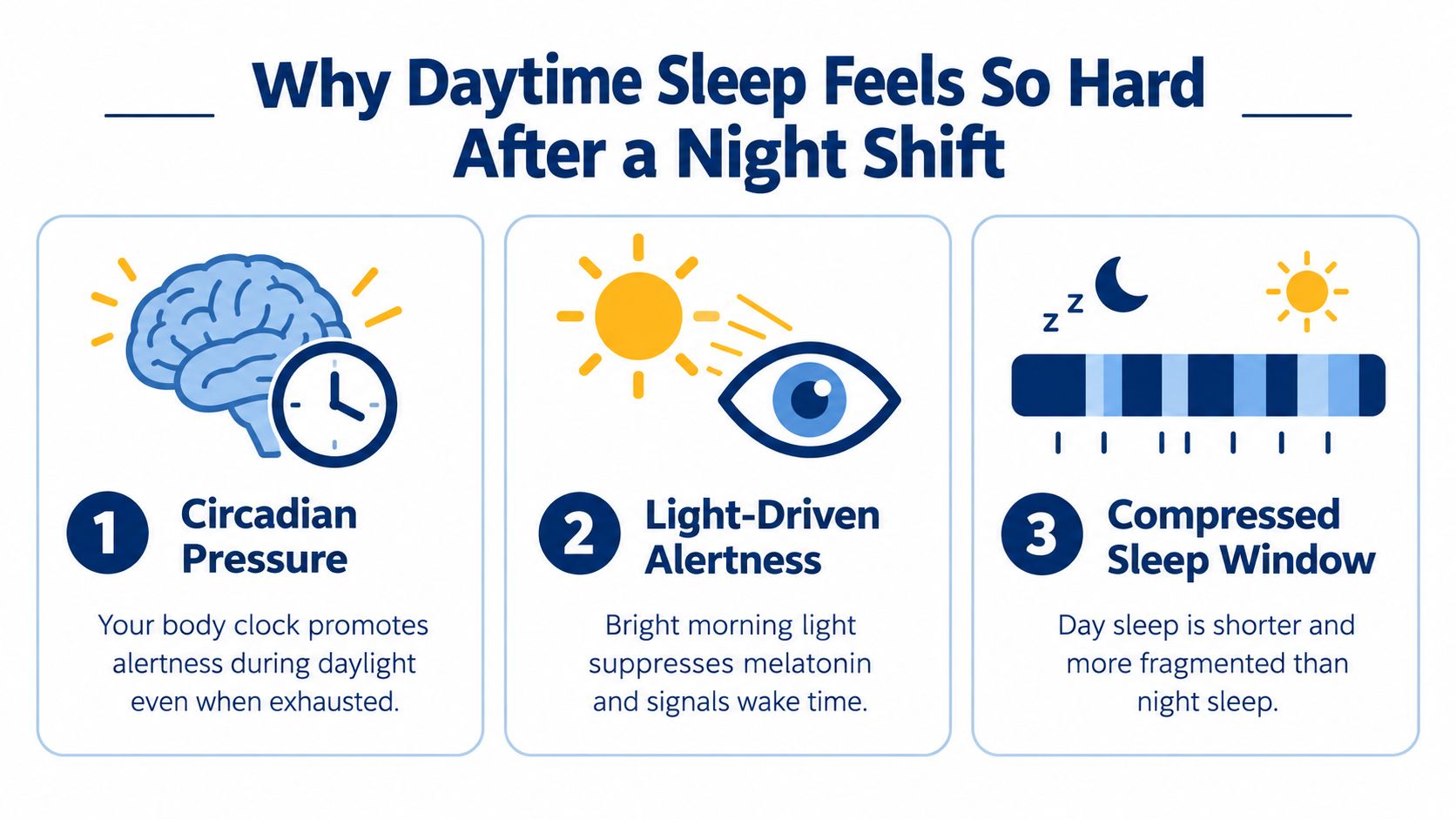
The struggle isn't a character flaw
CDC/NIOSH data show how widespread this burden is. 61.8% of U.S. night-shift workers reported short sleep duration, against 35.9% of daytime workers and 37.6% of the workforce overall, and 30.7% of night workers reported poor sleep quality. Insomnia was reported by 18.5% of night-shift workers, compared with 8.4% of daytime workers, according to the CDC and NIOSH bulletin on shift work.
That context changes the approach. Instead of lying in bed demanding sleep, the worker should design a repeatable sequence that controls light, timing, environment, and interruptions. A racing mind may also need a separate strategy, such as the techniques described in this guide to cortisol and sleep problems.
The useful mindset is simple: the post-shift routine starts at clock-out, not when the bedroom door closes.
Your Post Shift Wind Down From Clock Out to Lights Out
The first sleep opportunity after a night shift is often the easiest one to lose. A worker who stops for groceries, scrolls through messages, starts laundry, and handles household tasks may arrive in bed tired but overstimulated. The sequence below is designed for the first 60 to 90 minutes after leaving work.
- Reduce morning light on the commute. Sunglasses can make the drive or walk home less visually stimulating. They won't erase every alerting cue, but they can help the worker avoid treating the commute as the start of a new daytime routine. Safety comes first, so sunglasses shouldn't impair driving or visibility.
- Skip optional errands. The supermarket, pharmacy, and household chores can wait when another sleep window is available later. A parent may need to hand off morning responsibilities to a partner or arrange a quiet transition before arriving home. The objective is to preserve sleep opportunity, not to complete every task before bed.
- Choose a low-stimulation landing routine. A small, easy-to-digest snack may be more comfortable than a heavy meal. Water can address thirst, while caffeine should be kept away from the intended sleep period if it makes falling asleep harder. A warm shower, dim lighting, and a familiar non-work activity can help the body shift gears.
- Go to bed without adding a second morning. Bright screens, intense exercise, complicated decisions, and emotionally charged conversations can all push sleep further away. If the brain keeps replaying the shift, the guidance on how to sleep when your brain is racing offers a separate way to reduce mental activation.
Protect the first sleep opportunity: Don't spend the best part of the morning proving that every responsibility can be finished before bed.
This video can serve as a short visual reset for the transition from work to rest:
For workers who prefer a supplement format that doesn't require water or swallowing a pill, Drift Off is a raspberry-flavored oral strip that dissolves on the tongue and pairs 1 mg of melatonin with valerian root, lavender, chamomile, and hibiscus extracts. One rule matters more than any other for a night worker: melatonin causes drowsiness, so it belongs at home after the commute is over, never before driving. Use only as directed, and anyone who is pregnant, nursing, under 18, taking prescription medication, or managing a medical condition should consult a physician first.
Build a Bedroom That Works During the Day
A daytime bedroom has to defeat conditions designed for wakefulness. Darkness, quiet, and cool comfort aren't decorative details for a night worker. They create the strongest available contrast between the outside morning and the intended sleep period.
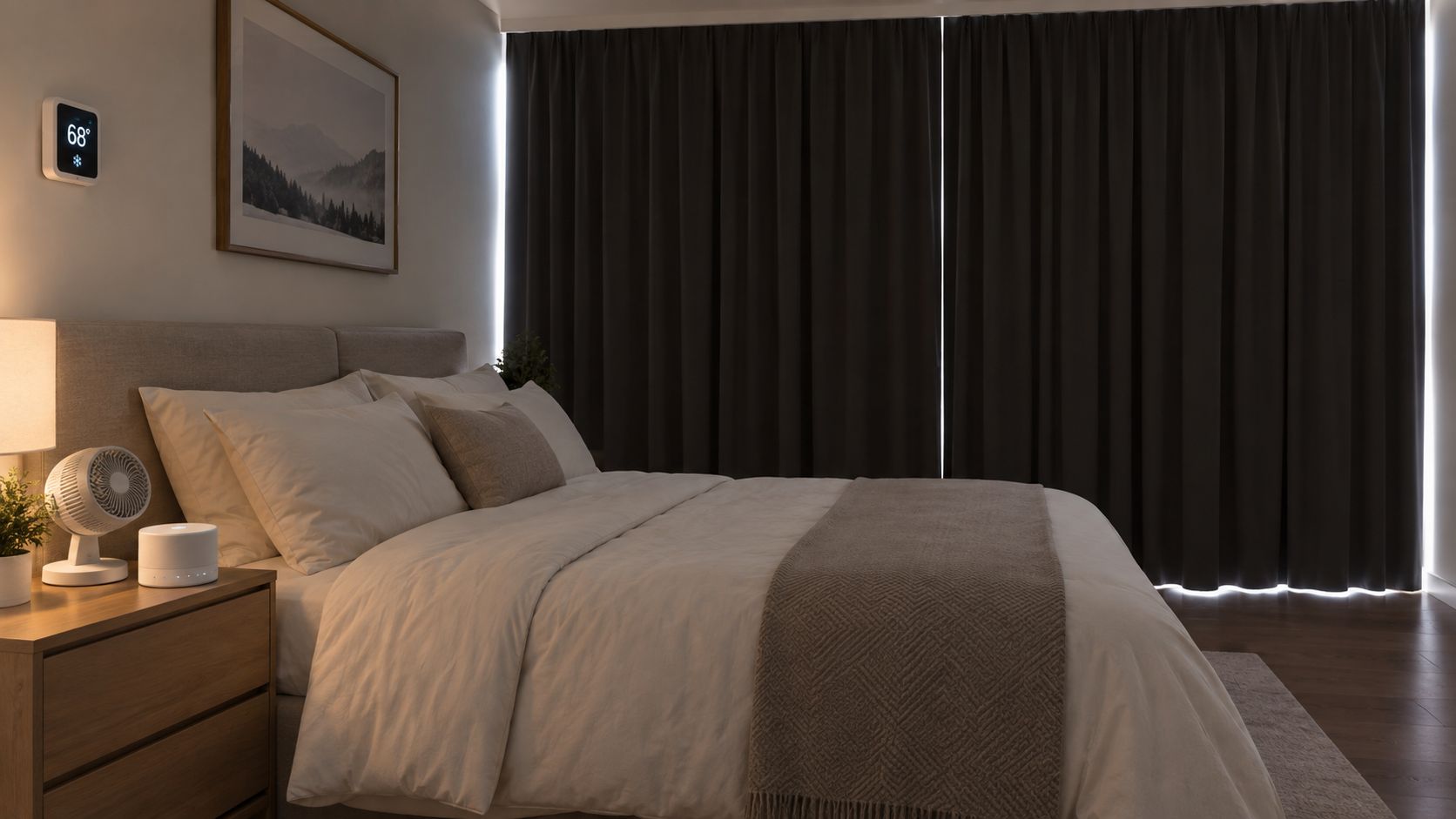
Start with the light leaks
Blackout curtains work best when they cover the entire window and reduce light around the edges. Renters can combine temporary blackout panels, removable shades, and a comfortable eye mask. A towel or draft stopper at the bottom of the door can help when hallway light enters the room.
Small lights deserve attention too. Cover bright charger indicators, turn the phone face down, and place the alarm where it can be reached without checking notifications. The bedroom should communicate one message: nothing needs attention right now.
Treat noise as an engineering problem
Daytime noise is unpredictable, so a single solution may not be enough. Earplugs can reduce intermittent sounds, while a fan or white-noise machine can cover changes in traffic, voices, and building activity. In a shared home, a closed door and a visible sleep notice can prevent avoidable interruptions.
The best setup depends on the space:
- Noisy street: Use sealed curtains, earplugs, and steady background noise rather than relying on silence.
- Shared bedroom: Agree on protected quiet hours and keep a backup sleep mask and earbuds nearby.
- Rental apartment: Use temporary window coverings and a portable fan instead of permanent modifications.
- Family home: Silence nonessential alerts and establish a clear rule for emergencies versus ordinary requests.
Keep the room physically comfortable
A cool room, breathable bedding, and a warm shower before bed can make the transition more comfortable. The exact thermostat setting is personal, and the temperature shown in a product image isn't a medical requirement. Someone who wakes cold may need lighter layers, a different blanket, or improved airflow rather than a colder room.
A quick audit can reveal the weak point:
- Can daylight be seen around the curtains?
- Can a delivery, pet, or phone notification wake the worker?
- Does the room feel stuffy after the door closes?
- Does the bed encourage rest, or does it become a place for scrolling and work?
- Can another household member identify the protected sleep period?
Fix the most disruptive problem first. A perfect sleep cave isn't necessary, but a bedroom that repeatedly loses to morning light and household noise needs deliberate reinforcement.
Timing Your Sleep Naps and Melatonin Wisely
The best sleep pattern depends on the shift, commute, and responsibilities at home. Some workers do well with one protected daytime block. Others need an anchor sleep period after work plus a shorter pre-shift nap. The choice involves trade-offs, not a universal rule.
| Pattern | Best For | Trade Off |
|---|---|---|
| Anchor sleep | Workers who can protect a consistent daytime block | Family duties or morning appointments may break the block |
| Split sleep | Workers with childcare, commuting, or household demands | Two sleep periods require careful timing and may feel less restorative |
| Anchor sleep plus pre-shift nap | Workers who need extra alertness before another overnight shift | A late or overly long nap can make the next main sleep period harder |
| Flexible recovery sleep | Rotating workers between different schedules | Frequent changes can make the body clock harder to manage |
Anchor sleep versus split sleep
An anchor period gives the body a predictable place to recover. A worker might go to bed soon after arriving home, wake for essential daytime responsibilities, and then add a pre-shift nap if fatigue remains high. The practical advantage is consistency. The limitation is that real life may interrupt the block.
Split sleep can work better for a parent who must handle school drop-off or for a worker with a long commute. The first block protects sleep soon after work, while the second fills part of the gap before the next shift. Naps should be short enough to avoid leaving the worker foggy, and they shouldn't end so close to clock-in that there isn't time to become fully alert.
Caffeine belongs earlier in the shift, not as a rescue measure near the planned bedtime. Light can also be timed deliberately. Workers should reduce bright exposure as they approach sleep, then use ordinary daylight after waking when they need to become alert.
Melatonin requires caution
Melatonin is a timing signal, not a guarantee of unconsciousness. A worker who takes it after a bright commute, a large meal, and an hour of phone use may still struggle because the rest of the system is working against sleep. Timing, dose, interactions, and personal health conditions matter.
The timing point is also a safety point. Because melatonin can cause drowsiness, it should be taken once the worker is home and finished driving, and never before a commute, a return trip, or any task that needs full alertness. The same caution applies to a pre-shift nap dose, which can leave someone groggy on the drive in.
Anyone considering melatonin should discuss it with a clinician or pharmacist, especially when taking prescriptions, managing pregnancy or breastfeeding, or dealing with ongoing insomnia. The sleep-support supplement guide can help organize questions, but it shouldn't replace individualized medical advice.
Sleep education alone may not resolve persistent night-shift insomnia. A 2025 systematic review and qualitative evidence synthesis of shift workers' own accounts of sleep disturbance and fatigue points toward behaviorally focused support that helps workers manage thoughts, emotions, routines, and fatigue around sleep, rather than generic advice (systematic review of shift workers' experiences of sleep disturbance and fatigue).
Making Day Sleep Fit Real Life Family and Social Demands
A sleep plan fails when it assumes the worker can disappear every morning. About 15% of night workers have non-optional activities outside work that reduce sleep opportunity, and those obligations are associated with more insomnia symptoms and greater shift-work-disorder risk. In that work, 72% of the workers short on sleep time were at high risk for shift work disorder, against 42% of those with enough sleep availability. It was presented as a conference abstract rather than a full paper, so treat it as a signal rather than a settled finding (conference abstract on non-optional activities and sleep among night workers).
The solution isn't guilt or total isolation. It is negotiation. A household needs to know which hours are protected, which interruptions are urgent, and which chores can move to another time.
Use plain agreements
A worker can say, “Sleep is protected from the time I arrive home until the agreed wake-up time. Please text only for urgent issues, and keep the bedroom door closed.” A partner can respond with a specific handoff, such as handling breakfast, pets, or deliveries during that period.
Children need practical cues rather than abstract explanations. A sign on the door, a prearranged quiet activity, and a clear emergency rule can reduce repeated decisions. The household should also revisit the agreement when shifts rotate.
Build a sustainable weekly rhythm
A permanent night schedule may protect the body clock more effectively than constant flipping, but families often need daytime connection. A workable compromise might include a consistent post-shift sleep block on workdays, a planned shared meal after waking, and limited schedule changes on days off.
Social plans should be chosen with the recovery window in mind. An appointment immediately after clock-out may cost more sleep than expected because it also adds travel, light, waiting, and mental activation. When a daytime obligation cannot move, the worker can protect the remaining sleep with a darker commute, a shorter errand list, and a second sleep period before work.
Protecting sleep isn't selfish. It protects the worker's attention, mood, and ability to participate in the life the schedule is meant to support.
The goal isn't a perfect week. It is a predictable pattern that leaves room for family without requiring the worker to sacrifice every recovery period.
Your Personalized Night Shift Sleep Plan That Sticks
A useful plan fits on one page:
- Clock-out time: ______
- Commute light strategy: ______
- Bedtime target: ______
- Wind-down activity: ______
- Main sleep block: ______
- Backup nap window: ______
- Room changes: ______
- Household quiet agreement: ______
- Caffeine cutoff: ______
Test the plan after the next shift, then adjust one variable at a time. If sleep breaks at noon, inspect light, noise, temperature, and household interruptions before adding another supplement. If a neighbor is loud, combine earplugs with steady background noise. If days off cause a complete schedule flip, preserve at least one anchor sleep period rather than trying to maintain two opposing routines perfectly.
Persistent insomnia, dangerous sleepiness while driving, loud snoring with breathing pauses, or severe mood changes deserve professional assessment. Shift-work sleep disorder is a recognized occupational sleep burden, and the CDC/NIOSH data cited earlier show that night workers face a substantially heavier sleep burden than daytime workers.
The next step is practical: write the one-page plan before the next shift ends, prepare the bedroom in advance, and protect the first sleep opportunity instead of negotiating with exhaustion at home.
Safety Notes for Night Shift Workers
Night work carries risks that daytime sleep advice usually skips. A few are worth stating plainly.
- Drowsy driving is the biggest one. The commute home after a night shift is when sleepiness peaks. If the drive already feels unsafe, the answer is a nap before leaving, a ride, or public transit, not a stronger coffee.
- Never take melatonin before driving. It causes drowsiness, so it belongs at home after the commute, and the same applies before a pre-shift drive.
- Valerian compounds sedatives. It can add to the effects of alcohol and prescription sedatives.
- Chamomile is a ragweed relative. Anyone with that allergy should approach chamomile-containing products carefully.
- Sunglasses have limits. Use them to soften morning light, not in conditions where they reduce visibility.
Anyone who is pregnant or nursing, under 18, taking prescription medication, or managing a medical condition should talk to a clinician before starting a supplement. Ongoing night-shift insomnia is worth a medical conversation in its own right.
These statements have not been evaluated by the Food and Drug Administration. This product is not intended to diagnose, treat, cure, or prevent any disease.
Sleep All Nite offers nighttime wellness products in formats including dissolvable oral strips, capsules, gummies, and night skincare, with options organized around goals such as winding down and falling asleep. Visit Sleep All Nite to review the available nighttime routine options and choose what fits the worker's existing sleep plan.


