
Too Much Melatonin: Symptoms, Risks, and How to Reset


Melatonin is natural, but that doesn't make too much melatonin harmless. A gummy isn't a vitamin, and taking several because one didn't work can turn a timing signal into an unpredictable pharmacological spike. The practical rule is simple: more melatonin rarely means more restorative sleep. It more often means heavier mornings, stranger dreams, and a less reliable night.
A high dose can also distract from the underlying problem. Someone who wakes at 3 a.m. may not need more melatonin at all. Light exposure, stress, menopause-related changes, medication interactions, alcohol, an inconsistent schedule, or an untreated sleep disorder may be driving the wake-up. Melatonin can help with sleep timing, but it isn't a universal sedative or a permanent solution.
Table of Contents
- Why More Melatonin Does Not Mean More Sleep
- Recognizing the Symptoms of Too Much Melatonin
- How High Doses Disrupt Sleep Architecture
- Acute Overdose Risks and Long-Term Concerns Worth Knowing
- How to Reset Your Melatonin Dose and Actually Sleep Better
- What Good Melatonin Use Actually Looks Like
- Frequently Asked Questions About Too Much Melatonin
Why More Melatonin Does Not Mean More Sleep
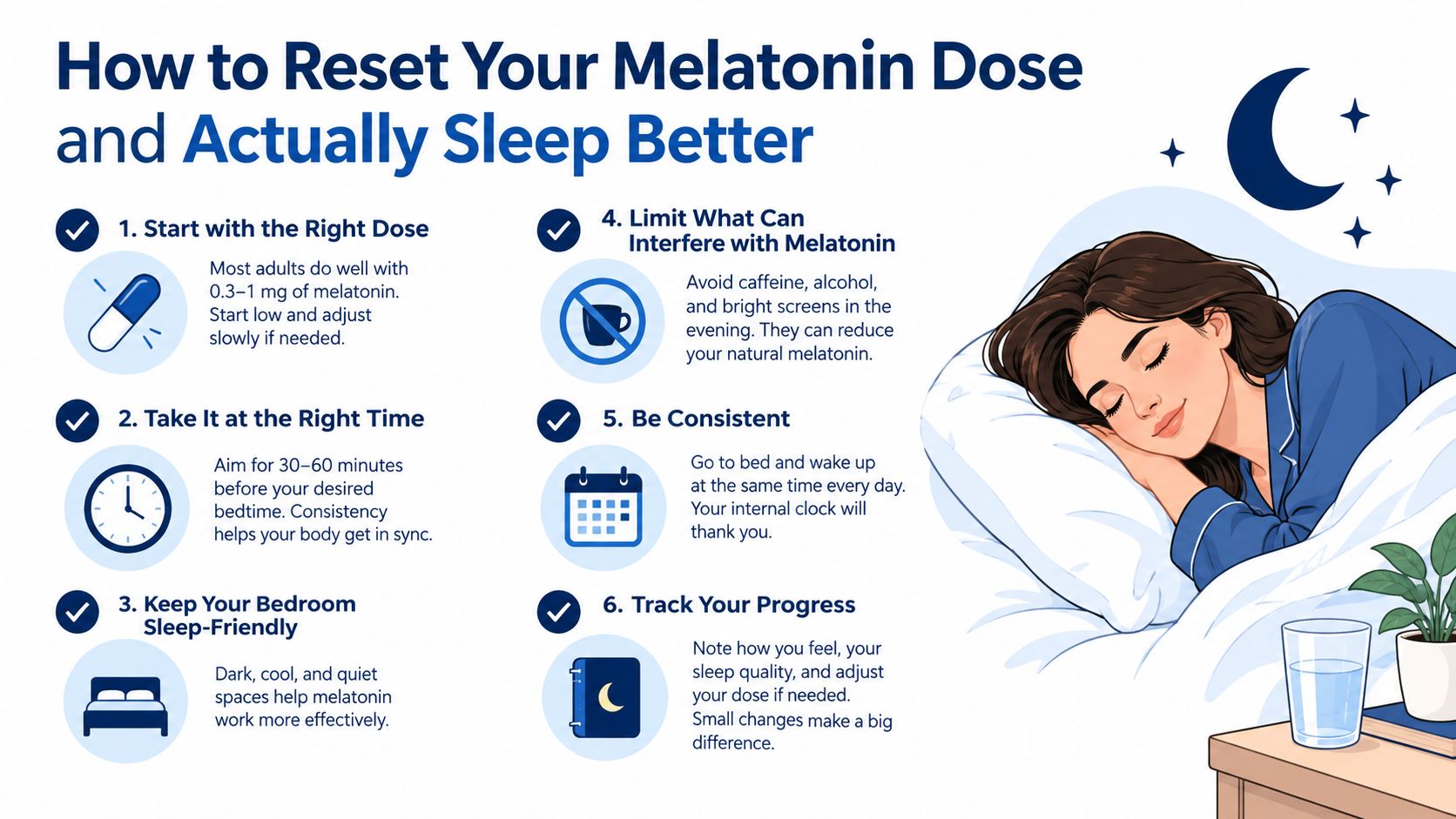
More melatonin does not create proportionally more sleep. Melatonin is a hormone that signals darkness and helps coordinate circadian timing, not a sedative that forces the brain into unconsciousness. A modest amount, taken at the right time, may support sleep onset. A larger amount can make the signal stronger and less aligned with the body's sleep window.
The common escalation, “one gummy helped, so three must work better,” is poor sleep strategy. Melatonin acts through sensitive receptors and the biological clock, so the response does not rise neatly with the dose. Excess can cause drowsiness at the wrong time, unsettled sleep, or a noticeable drop in sleep quality.
High-dose products also make exposure difficult to predict. Oral melatonin has average bioavailability of about 15%, while reported values range from roughly 3% to 56%, depending on the formulation and individual metabolism, according to this pharmacokinetic review of oral melatonin. The same labeled dose can therefore produce very different effects in different people.
Practical rule: If a small amount causes next-morning impairment, increasing the dose is the wrong experiment.
Start by identifying the sleep problem. Delayed sleep timing calls for a different approach than repeated awakenings. Shift work requires circadian planning, while stress-related insomnia may respond better to a wind-down routine and treatment for racing thoughts. Using more melatonin for every complaint is blunt, unreliable, and often counterproductive. High doses also deserve a longer view, because repeated excess exposure may disrupt sleep architecture, not merely cause one groggy morning.
Recognizing the Symptoms of Too Much Melatonin
The symptoms of excessive melatonin usually fall into three practical groups: what happens during the night, what appears the next morning, and what develops when high doses become a routine.
During the night
Some people become heavily sleepy but don't experience smooth, restorative sleep. They may report unusually vivid or disturbing dreams, restless sleep, or a paradoxical sense that the night became lighter and more fragmented. A dose that pushes the body's timing signal too far can interfere with the normal transition between sleep stages instead of supporting a clean progression.
Others notice dizziness, nausea, or a strange feeling of being sedated but not fully asleep. These effects can become more pronounced when melatonin is combined with alcohol, another sleep aid, or a medication that changes how the liver processes it.
The next morning
Sleep inertia, the heavy, slow-to-start feeling after waking, is one of the clearest signs that the dose or timing isn't working. Headache, dizziness, nausea, and difficulty concentrating can accompany it. These symptoms matter even when the person technically slept for a full night, because the goal is usable daytime function, not just more hours in bed.
The short duration of melatonin in the bloodstream doesn't guarantee a clean morning. A large dose can create an unusually high peak, and individual absorption varies widely. The body may also be responding to a mistimed signal rather than just clearing a sleeping pill.
With repeated high-dose use
Nightly overuse can produce irritability, mood changes, and a growing sense that sleep is becoming less dependable. Low libido or other hormone-related concerns deserve medical attention rather than automatic attribution to melatonin, but repeated high-dose exposure raises a reasonable question about endocrine signaling. Persistent symptoms shouldn't be managed by adding another gummy.
A useful symptom diary should record the product, dose, timing, bedtime, awakenings, dreams, morning alertness, alcohol, caffeine, and other medicines. That pattern often reveals whether the problem is too much melatonin, poor timing, an interaction, or an unrelated sleep condition.
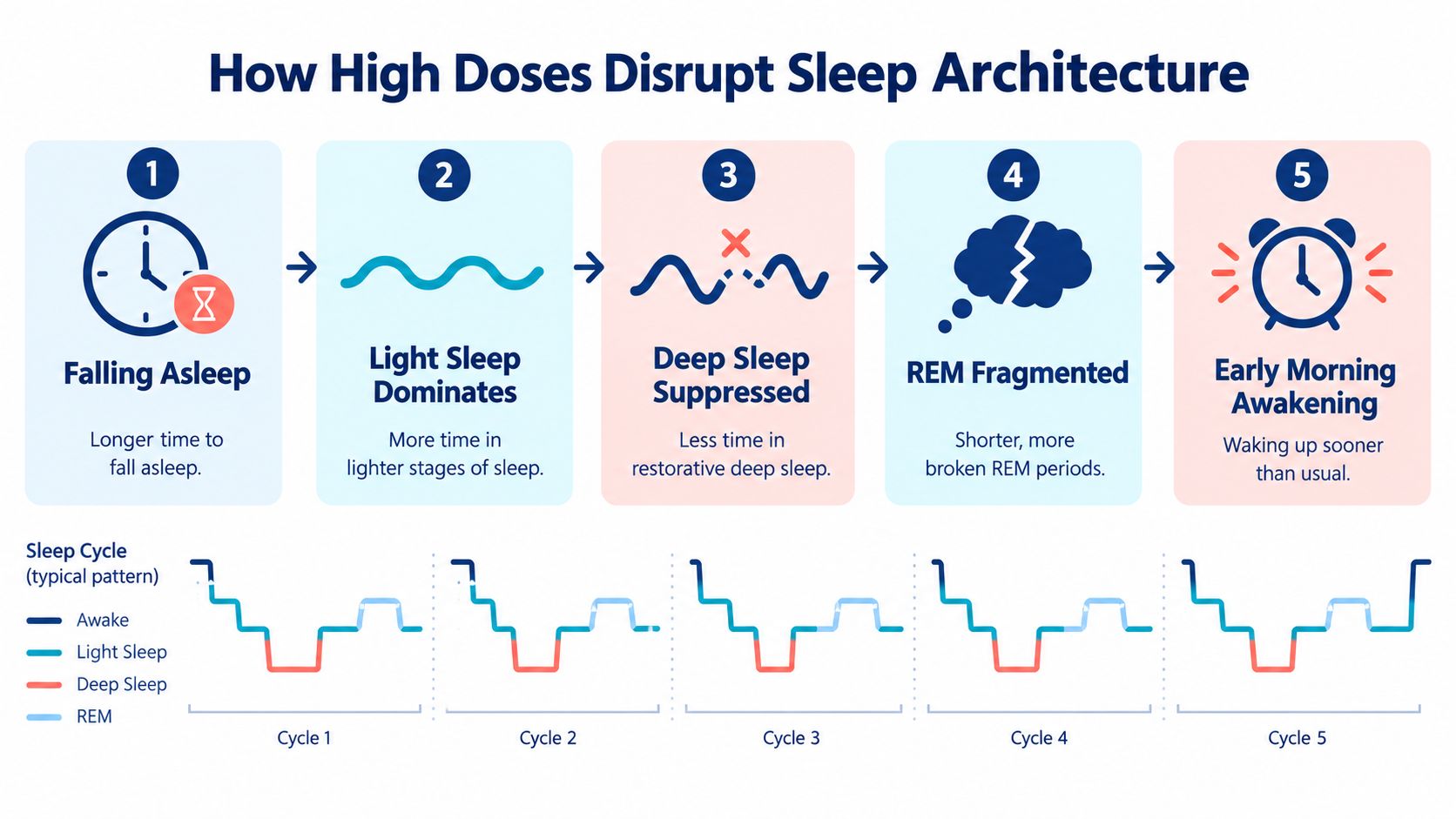
How High Doses Disrupt Sleep Architecture
Sleep moves through lighter stages, slow-wave sleep, and REM sleep. Each supports a different job, including physical recovery, learning, emotional regulation, and mental restoration. A useful sleep aid should support that sequence and its timing, not merely create sedation.
A high dose can send a melatonin signal that conflicts with the body's internal clock. Falling asleep may become easier, while the rest of the night becomes less stable. Fragmented REM sleep, unusually vivid dreams, early waking, and morning brain fog can follow, even after enough time in bed.
The timing explains why more melatonin is a poor guarantee. Immediate-release melatonin generally reaches its peak in about 40 to 50 minutes, while its elimination half-life is about 45 to 60 minutes. Oral bioavailability averages around 15%, with reported values ranging from roughly 3% to 56%, as noted in the pharmacokinetic review cited earlier.
That profile can create a spike followed by a rapid decline. Sleepiness may be strong near bedtime without maintaining the biological signal through the whole night. Taking a large amount after waking at 3 a.m. is especially unreliable. It cannot recreate the timing conditions that support normal sleep maintenance and may push the body clock in the wrong direction.
Mistimed signals can also contribute to circadian rhythm disruption, which helps explain why a sedated night can still produce poor-quality sleep.
Adults will not all experience identical changes in sleep stages. The practical conclusion is simpler: a larger dose is a larger gamble. The label shows how much was swallowed, not how much entered the bloodstream or how the exposure will interact with the body clock, liver metabolism, medications, and sleep architecture. Reduce the dose rather than escalating it when sleep quality worsens.
Acute Overdose Risks and Long-Term Concerns Worth Knowing
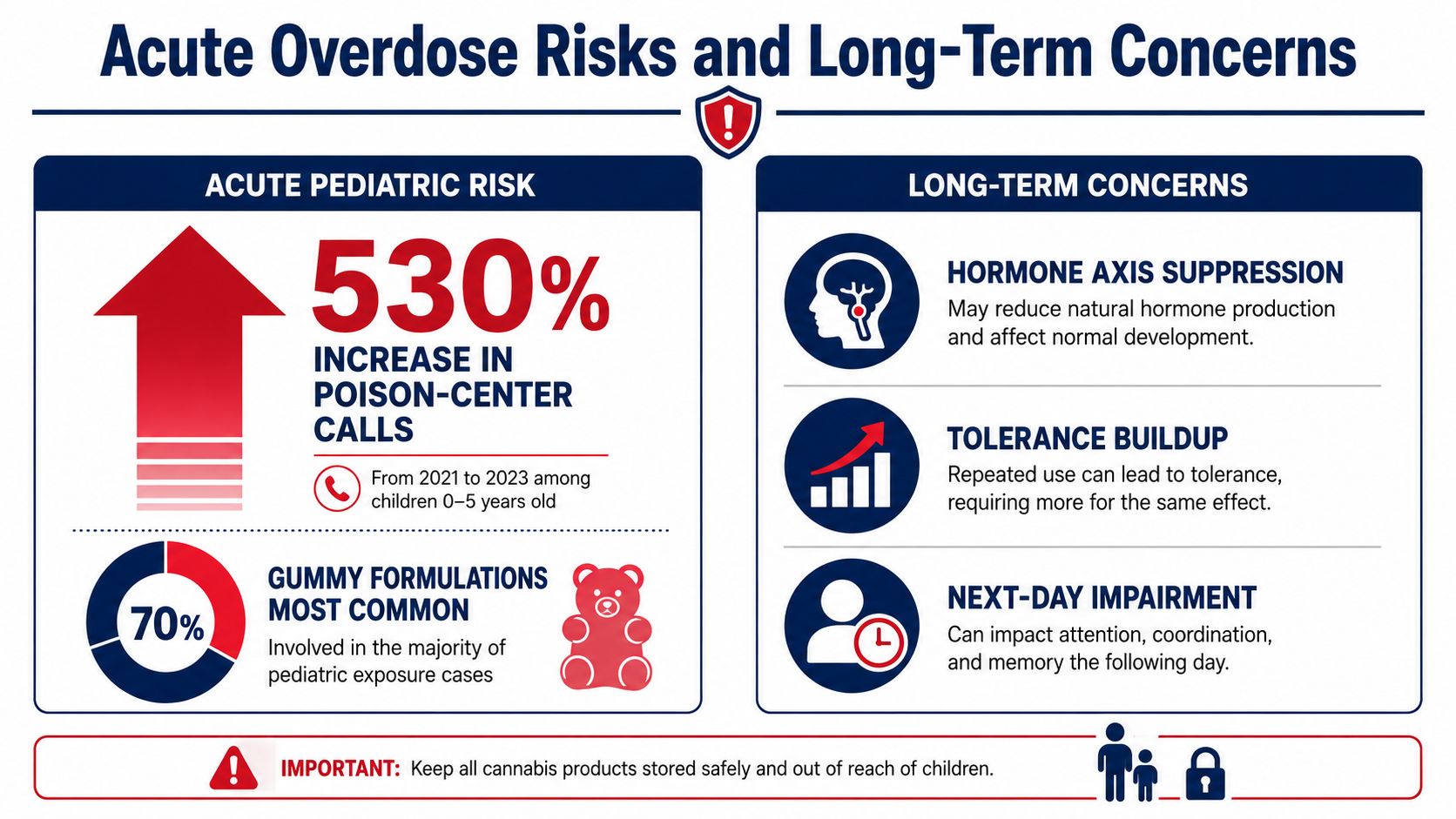
Children face the clearest acute danger because melatonin gummies can look like candy and remain easy to reach. U.S. poison control centers recorded more than 260,000 melatonin ingestions among children and adolescents younger than 20 from 2012 through 2021, including more than 50,000 cases in 2021 alone, according to the CDC analysis of pediatric melatonin ingestions. The analysis classified 4,555 ingestions as more serious outcomes, including five children who required mechanical ventilation.
A separate 2024 CDC report linked melatonin to about 11,000 emergency department visits for unsupervised medication ingestions among infants and young children during 2019 through 2022. Flavored gummies appeared frequently in these cases. Safe storage, child-resistant packaging, and careful household routines therefore matter as much as the product itself.
The pediatric problem is exposure, not just potency
After a large ingestion, parents should contact poison specialists promptly rather than wait for severe symptoms. Have the product label, estimated amount, ingestion time, child's age, and current symptoms ready. Unresponsiveness, breathing problems, severe dizziness, or a child who cannot be awakened requires emergency help.
Adults face a different immediate hazard. Keeping a gummy jar beside the bed makes repeated dosing easy when the first serving has not produced sleep. Alcohol, sedating medicines, and other supplements can intensify drowsiness, creating problems for driving, supervision, or morning caregiving.
Chronic high-dose use remains the harder question
Adult evidence generally supports short-term tolerability, and serious adverse events were uncommon in the reviewed evidence. Long-term high-dose exposure deserves more scrutiny. Regulators have raised concerns that doses of 10 mg or higher may affect endocrine signaling. A 2025 analysis also reported an association between long-term melatonin use and higher heart-failure or death risk, while stating that the association could not establish causation, as summarized in the adult melatonin safety profile.
This does not prove that melatonin causes cardiovascular disease. It does show why nightly high-dose use should not become an evidence-free habit, especially for middle-aged adults, menopausal women, and people combining melatonin with other sleep aids. Months or years of repeated exposure warrant a clinician's review, particularly when the original sleep problem remains unresolved.
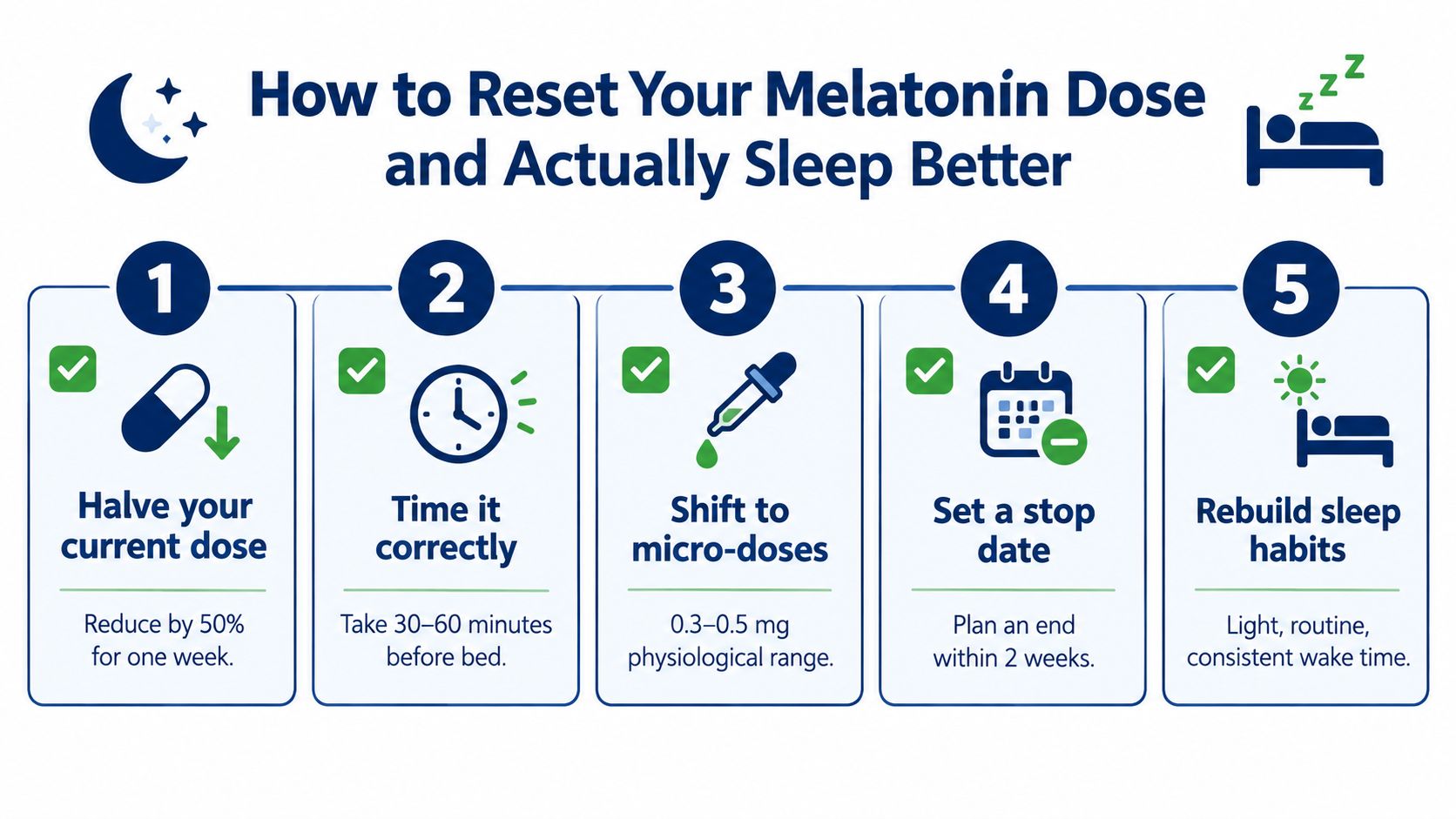
How to Reset Your Melatonin Dose and Actually Sleep Better
A dose reset should be deliberate, not another round of guessing. First, audit the current product. Record the stated milligrams per serving, whether the product is immediate-release or extended-release, how many servings are taken, and whether other sleep ingredients are included. A “sleep blend” can hide the fact that the melatonin dose is already high.
Reduce the signal before changing everything else
For an adult using a high dose nightly, a practical reset is to halve the current dose for about one week, provided the person has no medical reason to avoid melatonin and hasn't been told to stop abruptly by a clinician. The next target can be 0.5 to 1 mg, depending on the starting amount, response, age, medications, and reason for use. This is a practical coaching approach, not a substitute for individualized medical advice.
A lower-dose format can make the change easier. An oral strip or capsule with a clearly stated amount avoids the confusion of breaking an unsuitable gummy into uncertain pieces. A product such as Drift Off contains 1 mg of melatonin per raspberry-flavored oral strip, along with valerian root, lavender, chamomile, and hibiscus extracts, and dissolves on the tongue without water.
Correct the clock, not just the milligrams
Take the selected dose 30 to 60 minutes before the intended bedtime, then keep the target bedtime and wake time consistent. Taking melatonin after waking during the night usually turns a timing tool into a morning-impairment risk. Bright evening light, late scrolling, alcohol, and irregular wake times can overwhelm a carefully chosen dose.
During the first week, sleep may feel temporarily worse. That doesn't prove the body needs the previous amount. It may reflect anxiety about sleeping without the familiar dose, an underlying insomnia pattern, or a schedule that was already unstable. Keep a simple log and change one variable at a time.
Know when to stop experimenting
Melatonin-free options deserve consideration when even a low dose causes pronounced morning grogginess, when the person takes medicines that inhibit CYP1A2, or when high-dose use has continued for months. A pharmacist or clinician should review antidepressants, antibiotics, contraceptives, blood thinners, seizure medicines, and other sedating products before the reset continues.
The guide to sleep support supplements can help organize alternatives, but supplements shouldn't replace an evaluation for chronic insomnia, sleep apnea, restless legs, depression, anxiety, or menopausal symptoms.
What Good Melatonin Use Actually Looks Like
A composite example makes the dose problem easier to recognize. A woman in her late 40s began taking melatonin for repeated 3 a.m. awakenings. After the first amount seemed less helpful, she raised the dose from 5 mg to 10 mg over six months. Her sleep didn't become more stable. Instead, she noticed more fragmented nights, stranger dreams, and foggier mornings.
Her mistake wasn't unusual. She was using a sleep-onset tool to solve a sleep-maintenance problem. Melatonin may help signal an appropriate bedtime, but it doesn't automatically address awakenings driven by hot flashes, stress, alcohol, pain, breathing problems, or a heightened early-morning stress response.
She reduced the dose, moved it earlier in the evening, and stopped treating each awakening as evidence that she needed another serving. She also tracked bedroom temperature, alcohol, evening light, and the timing of awakenings. The reset didn't magically cure every night, but it removed the high-dose fog and made the underlying pattern easier to see.
For a racing mind, behavioral tools matter as much as supplement choice. A structured wind-down, written worry list, dimmer evening light, and guidance on how to sleep when the brain is racing can target the arousal that melatonin can't resolve.
The useful distinction is straightforward:
- Sleep onset problem: The person can't become sleepy at the intended bedtime. Timing, light exposure, circadian delay, and a low dose may matter.
- Sleep maintenance problem: The person falls asleep but wakes repeatedly. The cause needs investigation rather than automatic dose escalation.
- Morning impairment problem: The person sleeps but wakes sedated. The current dose, timing, interactions, or product combination needs review.
A good routine leaves the person more functional, not merely more medicated.
Frequently Asked Questions About Too Much Melatonin
Can melatonin cause dependence?
Melatonin is not treated like a classic dependence-forming sedative, and many people stop it without a withdrawal syndrome. The actual problem is psychological reliance. If someone starts believing sleep is impossible without a gummy, the supplement becomes a crutch, and that makes a dose reset feel harder than it should.
Does too much melatonin affect children differently from adults?
Yes. Children can show sleepiness, headache, nausea, dizziness, agitation, or other symptoms after an ingestion, and their smaller body size makes accidental exposure harder to judge. According to the CDC pediatric ingestion report cited earlier, poison control centers logged more than 260,000 pediatric melatonin ingestions, with more than 50,000 reported in 2021. If a child takes a large amount, call poison control or a medical professional promptly instead of waiting for symptoms to declare themselves.
Do medication interactions become more dangerous at higher doses?
They become less predictable. Melatonin is mainly metabolized through the liver enzyme CYP1A2, so a CYP1A2-inhibiting medication can raise exposure. Other sedating substances can also intensify drowsiness, dizziness, impaired coordination, and next-day impairment. Anyone taking antidepressants, antibiotics, contraceptives, blood thinners, seizure medicines, or multiple sleep aids should check with a pharmacist or clinician before using a higher dose.
Are melatonin-free supplements effective, or are they just a compromise?
They can be a reasonable choice when the underlying problem is tension, muscle relaxation, or an evening wind-down rather than circadian timing. Their value depends on the ingredients, the person, and the underlying sleep issue, so they are not a guaranteed substitute. A steady wake time, morning light, less evening stimulation, and a proper look at persistent insomnia still matter more than swapping one supplement for another.
Sleep All Nite offers goal-based nighttime products in capsules, gummies, and dissolvable oral strips, with both melatonin-containing and melatonin-free options. Adults trying to move away from excessive melatonin can review ingredient amounts and intended use at Sleep All Nite, then discuss the choice with a healthcare professional.


