
Can You Take Ashwagandha and Melatonin Together


At bedtime, the bedroom is quiet, but the decision isn't. One bottle contains ashwagandha, another contains melatonin, and the question feels urgent: can you take ashwagandha and melatonin together, or could combining them leave the next morning worse than the night before?
The most accurate answer has two parts. A published eight-week human trial found no serious safety signal when specific doses of the two ingredients were used together in adults with sleep disturbances. That result doesn't automatically make the combination appropriate for someone taking prescription medicines, drinking alcohol, managing thyroid or liver disease, or needing to drive early.
This guide separates a possible direct interaction from the more practical concerns, including additive sleepiness, ashwagandha-specific risks, product labels, and individual health factors. It also provides a personal risk-triage framework, a sensible evening plan, and warning signs that call for stopping and contacting a healthcare professional. Readers comparing supplement options can also review sleep support supplements by ingredient and format.
Table of Contents
- The Core Question Behind Taking Ashwagandha and Melatonin Together
- What the 8-Week Combination Study Actually Found
- Why Ashwagandha's Own Risks Matter More Than the Headline
- How Ashwagandha and Melatonin Affect the Body Differently
- A Practical Evening Timing and Dosing Plan
- Who Should Use Caution or Avoid the Combination
- A Simple Safety Checklist Before You Stack Them
- Common Questions About Ashwagandha and Melatonin Together
The Core Question Behind Taking Ashwagandha and Melatonin Together
At bedtime, two bottles can make the decision look simple. A published eight-week human trial found no serious safety signal from a specific ashwagandha and melatonin combination in adults aged 18 to 50 with sleep disturbances. That finding describes one formula, dose, and study group. It does not confirm that the same plan suits someone using prescription medicines, alcohol, or other calming supplements.
Human data shows no proven direct chemical incompatibility between ashwagandha and melatonin. The practical concern is additive drowsiness, along with ashwagandha's potential interactions and its separate safety considerations. Their effects can be compared to overlapping dimmer switches: each may lower alertness in its own way, and the combined effect can be stronger for some people.
Melatonin primarily acts as an evening signal for sleep timing. Ashwagandha is an herbal extract with a different evidence base and its own risk profile. Neither should be treated as interchangeable with a prescription sleep medicine. Over-the-counter availability also does not remove the need to check the label and review possible interactions with a pharmacist or doctor.
Practical rule: A reassuring combination study shows that a specific formula and dose appeared tolerable during that study. It cannot establish that every product, medication list, medical condition, or morning schedule carries the same level of risk.
The bottles may contain more than the names on the front label suggest. A product could combine several sedating botanicals, provide more melatonin than the studied amount, or use an ashwagandha extract unlike the research preparation. Alcohol, opioids, benzodiazepines, sedating antihistamines, prescription sleep medicines, and other central-nervous-system depressants can further change the decision.
Some generally healthy adults may tolerate the pair for a short period, but personal circumstances deserve more weight than a simple yes-or-no answer. Compare the published trial with the actual ingredients, your medicines and conditions, and how early you must be alert the next morning. For broader comparison, review sleep support supplements by ingredient and format.
What the 8-Week Combination Study Actually Found
A person with sleep difficulty may wonder whether taking both supplements offers more help than taking either one alone. The clearest direct human evidence comes from the eight-week combination trial, a randomized, double-blind, placebo-controlled eight-week study of ashwagandha and melatonin published in Clocks & Sleep.
The study enrolled 200 adults aged 18 to 50 with sleep disturbances and placed 50 participants in each of four groups: ashwagandha, melatonin, the combination, or placebo. The ashwagandha group received 300 mg twice daily, or 600 mg daily. The melatonin group received 3 mg daily, while the combination group received 600 mg of ashwagandha plus 3 mg of melatonin daily.
Those doses function like the study's measuring line. Results apply most directly to those preparations and amounts, not automatically to every capsule, gummy, tincture, or blended sleep product.
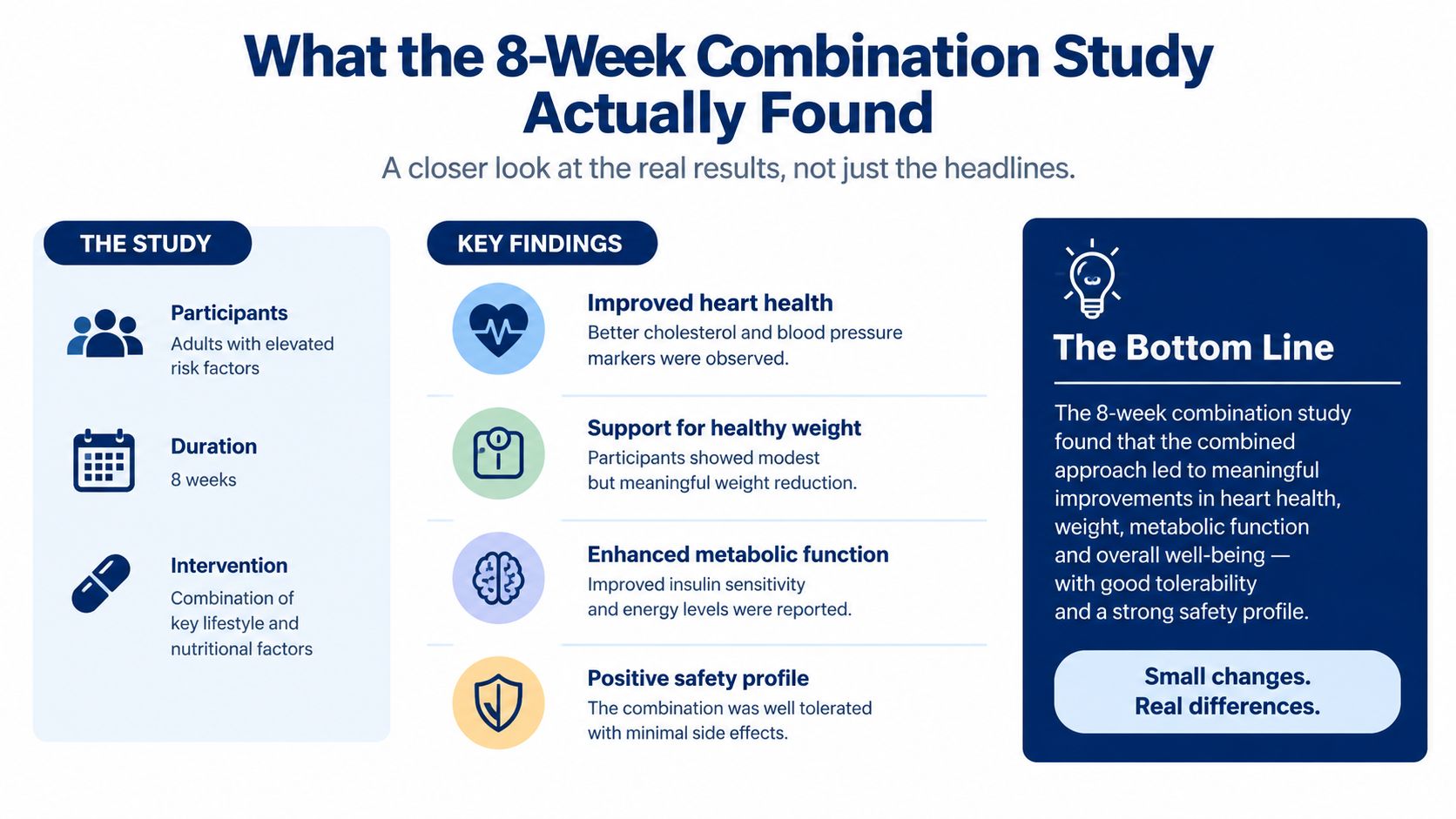
Within the study period, safety results were broadly reassuring. Mild adverse events occurred across the groups, with no clinically significant differences between treatments and no serious adverse events reported. The trial report lists the most common complaints as mild nausea, headache, abdominal discomfort, and occasional drowsiness.
The findings still have boundaries. Participants were adults aged 18 to 50, and follow-up lasted eight weeks. The trial does not establish long-term safety, effectiveness for every type of insomnia, or suitability for people with medical conditions and interacting medicines. It also does not test products containing more melatonin, several sedating herbs, or a different ashwagandha extract.
Read the full Supplement Facts panel rather than relying on the product name. For example, Deep Rest contains 10 mg of melatonin and includes ashwagandha in a broader blend containing St. John's Wort. That formula differs from the study combination, and St. John's Wort can interact with many prescription medicines.
For help comparing melatonin amounts, review low-dose melatonin guidance, then compare the actual label with the 3 mg amount examined in the combination study.
Why Ashwagandha's Own Risks Matter More Than the Headline
The phrase “no serious adverse events” can sound like a blanket safety statement. It isn't. The trial provides useful information about one combination over one study period, but ashwagandha has individual cautions that can matter more than the absence of a serious event in a selected research group.
U.S. government health sources describe ashwagandha as appearing well tolerated for up to approximately three months, while its long-term safety isn't known. Reported concerns include rare liver problems and possible effects on thyroid function. In one study, three adult men taking 500 mg daily of a standardized root-and-leaf extract for eight weeks experienced small increases in thyroxine, or T4. These details are summarized by the National Institutes of Health Office of Dietary Supplements.

Ashwagandha may also interact with several medication categories. A person taking a sedative, anticonvulsant, immunosuppressant, diabetes medicine, blood-pressure medicine, or thyroid-hormone treatment should ask a clinician or pharmacist before adding it. The concern may involve increased drowsiness, altered medication effects, or changes in a condition that the medicine is managing.
Extra caution is appropriate for people who are pregnant or breastfeeding, have thyroid or autoimmune disorders, have liver disease, or already take a sedating prescription. A healthcare professional can review the exact extract, dose, medication list, and medical history instead of relying on a general supplement label.
This is also why stress-related sleep content needs careful boundaries. Readers exploring cortisol and sleep problems shouldn't assume that a supplement is an appropriate way to address every cause of nighttime alertness. Persistent sleep disruption can reflect medication effects, a sleep disorder, mood symptoms, hormonal changes, or another health issue that requires evaluation.
How Ashwagandha and Melatonin Affect the Body Differently
Melatonin and ashwagandha are often placed in the same “sleep supplement” category, but that label hides important differences. Melatonin acts primarily as a timing signal for the brain's circadian system. Immediate-release melatonin generally reaches peak levels within about an hour, so its timing matters more than taking it whenever sleep feels difficult. (Review the NCBI Bookshelf melatonin overview)
Common clinical studies have used melatonin doses ranging from 0.1 mg to 10 mg, but there isn't a universally established maximum adult dose. Starting with a low amount is a more restrained way to assess response than beginning with a high one. More melatonin isn't automatically better, and larger amounts may increase unwanted sleepiness or other effects.
Ashwagandha has a different role in the evidence. Researchers have studied root extracts in the range of 250 to 600 mg daily, and a 2021 systematic review and meta-analysis identified five randomized controlled trials involving 400 participants. The overall sleep improvement compared with placebo was statistically significant but small, with more noticeable benefits at 600 mg daily and when use lasted at least eight weeks. The findings are detailed in the systematic review of ashwagandha and sleep.
Ashwagandha may cause drowsiness and may have GABAergic activity, which gives researchers a reason to be cautious when it's combined with other substances that depress the central nervous system. That doesn't prove a dangerous chemical reaction with melatonin. It does support a practical concern about additive sedation, impaired coordination, and morning fogginess.
A person who feels unusually sleepy after adding the second ingredient shouldn't assume the problem is harmless because both products are “natural.” The response could come from either ingredient, their combined effects, another ingredient in the formula, or an interaction with a medication or alcohol.
A Practical Evening Timing and Dosing Plan
A cautious routine starts with one new ingredient at a time. If ashwagandha and melatonin are introduced on the same evening and the next morning brings nausea, vivid dreams, impaired coordination, or heavy drowsiness, the person won't know which change caused it.
Melatonin belongs in the evening, before intended sleep. Clinical references describe taking a low dose about 30 to 60 minutes before bed, rather than assuming that a larger serving will work better. Readers can compare timing principles in melatonin timing for sleep.
Ashwagandha has been studied in daily amounts from 250 to 600 mg, depending on the extract and trial. A person considering it should follow the product label and ask a clinician or pharmacist about the specific extract, rather than treating the research range as a universal prescription. Taking it with an evening meal may be more comfortable for someone who experiences stomach upset, but the right administration instructions depend on the product.
A simple free-first evening menu might include:
- Anchor the schedule: Keep bedtime and wake time reasonably consistent when possible.
- Reduce stimulation: Dim lights and step away from demanding work before bed.
- Create a buffer: Choose a quiet activity that doesn't require problem-solving.
- Track the response: Note the ingredient, time, amount, morning alertness, dreams, and stomach symptoms.
If the person feels foggier than usual, has unusual morning sedation, experiences impaired coordination, develops vivid nightmares, or notices gastrointestinal symptoms, the new ingredient should be stopped or reduced while a healthcare professional is consulted. Melatonin shouldn't be added after waking in the middle of the night. Its place is earlier in the evening, before bed, not as a rescue dose at 3 a.m.
Who Should Use Caution or Avoid the Combination
Risk depends less on the word “supplement” and more on the entire nighttime picture. Someone who occasionally uses a low amount and has no relevant medical conditions is in a different category from someone taking zolpidem, a benzodiazepine, an opioid, or several sedating products.
The following table is a screening tool, not a diagnosis. “Low concern” doesn't mean risk-free, and “avoid” means the combination should not be started without individualized medical guidance.
| Risk Tier | Reader Situation | Practical Action |
|---|---|---|
| Lower concern | Generally healthy adult considering short-term use with no sedating medicines, alcohol, or relevant medical condition | Compare the product with the studied doses, introduce one ingredient at a time, and monitor next-day alertness |
| Use caution | Thyroid treatment, autoimmune disease, liver disease, anticonvulsants, immunosuppressants, diabetes or blood-pressure medicines, or another sedating prescription | Ask a healthcare professional or pharmacist to review the combination before starting |
| Avoid until reviewed | Benzodiazepines, zolpidem, eszopiclone, opioids, alcohol, multiple central-nervous-system depressants, pregnancy, or breastfeeding | Don't combine independently. Obtain individualized medical advice first |
Melatonin guidance warns about additive sedation with central-nervous-system depressants and advises avoiding driving or machinery for several hours after taking it. Similar cautions apply to combinations involving benzodiazepines, zolpidem, and eszopiclone because excessive sedation can occur. The Mayo Clinic melatonin guidance provides the relevant medication and activity cautions.
The morning schedule matters, too. A person who works at home with no early obligations may notice drowsiness differently from someone commuting, caring for a child, operating equipment, or driving before sunrise. Alcohol shouldn't be used alongside the combination, and unusual sleepiness is a reason to avoid driving rather than test personal tolerance on the road.
A Simple Safety Checklist Before You Stack Them
A short checklist can prevent the most common mistakes:
- Review the full label. Check the exact melatonin amount, ashwagandha extract, serving size, and additional sedating ingredients.
- Check prescription medicines. Include medicines taken only at night, as well as anticonvulsants, thyroid treatments, immunosuppressants, diabetes medicines, and blood-pressure medicines.
- Skip alcohol. Alcohol can add to sedation and make the next morning less predictable.
- Add one ingredient first. Give the body a chance to show how it responds before introducing another supplement.
- Use the lowest sensible amount. Don't assume that a larger melatonin serving or a higher ashwagandha amount improves the result.
- Watch the next morning. Stop and seek advice if coordination, thinking, alertness, stomach comfort, or sleep quality changes in a concerning way.
- Reconsider long-term use. Ashwagandha has the strongest safety support for short-term use up to about three months, while longer-term safety remains insufficiently established.
NCCIH notes that ashwagandha may cause drowsiness and can interact with sedatives, anticonvulsants, thyroid-hormone medicines, immunosuppressants, and some diabetes and blood-pressure medicines. The same source describes short-term use up to about three months as having the best safety support, with insufficient evidence for longer-term use. Those cautions are summarized in NCCIH's ashwagandha information.
The aim isn't to feel knocked out. A sensible routine should leave the person able to wake, think, walk, and drive safely the next day. If sleep trouble continues despite simple changes, or if symptoms are severe, medical evaluation is more appropriate than repeatedly adding ingredients.
Common Questions About Ashwagandha and Melatonin Together
Can the combination be used every night?
No trial supports indefinite nightly use of the pair. Reassess if sleep stays poor, prescriptions or medical conditions change, or morning alertness worsens. A clinician can help determine whether a different sleep plan makes more sense.
Should either ingredient be taken with food?
Food may make ashwagandha easier on the stomach. Melatonin is generally timed for bedtime, not used as a middle-of-the-night rescue. Follow each label and ask a pharmacist about timing with other medicines.
What if someone switches from one ingredient to the other?
Change one ingredient at a time. If the first caused nausea, vivid dreams, drowsiness, or poor coordination, stop and clarify that response before adding a replacement.
What changes with a prescription sleep medicine?
Sedation may stack. Melatonin guidance cautions against central-nervous-system depressants, including benzodiazepines, zolpidem, eszopiclone, and alcohol. Anyone considering Deep Rest while taking prescription medication should ask a physician to review it because it contains 10 mg of melatonin and St. John's Wort, which can interact with many prescriptions.
Sleep All Nite offers capsules, gummies, and dissolvable strips with different ingredient amounts and melatonin options. Compare formats at Sleep All Nite and consult a healthcare professional before combining products.
*These statements have not been evaluated by the Food and Drug Administration. These products are not intended to diagnose, treat, cure, or prevent any disease.
This article is for general education and isn't medical advice. Talk with a healthcare professional before starting a supplement, especially if you're pregnant or nursing, under 18, managing a medical condition, or taking prescription medication.


