
Magnesium Glycinate with Ashwagandha: What to Know


Magnesium glycinate with ashwagandha may support relaxation for some adults, but direct evidence for taking them together is missing. The right choice depends on the main sleep issue, overall health, medicines, and whether the doses match those studied for each ingredient alone.
Table of Contents
- Why This Combination Keeps Coming Up
- What Each Ingredient Actually Does
- Why Combining Them Is Plausible but Unproven
- Dosing and Timing That Make Sense
- Safety Concerns and Who Should Avoid This Combo
- Comparing Supplement Formats and Product Options
- Building a Bedtime Routine That Works for You
- Key Takeaways and Next Steps
Why This Combination Keeps Coming Up
A common pattern sounds like this: sleep comes eventually, then eyes open at 3 a.m., the clock gets checked, and tomorrow's tasks start replaying. The body feels tired, but the mind doesn't settle. Within minutes, a phone search turns up magnesium glycinate with ashwagandha as a calm, melatonin-free sounding option.
The pairing appeals for a simple reason. Magnesium glycinate is often discussed for evening wind-down and muscle relaxation, while ashwagandha is discussed for stress. Put together, the story writes itself: one ingredient for the body, one for a racing mind. That story is plausible, but plausibility isn't proof.
A Popular Idea Is Not a Tested Stack
Separate research exists for each ingredient, and that's where confusion starts. A study of magnesium alone doesn't test a combination product. A study of ashwagandha alone doesn't show that adding magnesium improves the result. No direct evidence in the material reviewed here establishes that the pair works better than either ingredient on its own.
Two ingredients with separate evidence don't automatically create a proven combination.
That distinction matters most for readers who wake during the night, track sleep scores, or feel wired despite exhaustion. Those patterns can have different drivers, including stress, schedule shifts, caffeine, alcohol, pain, or a sleep disorder that needs medical evaluation. A supplement pairing can't sort out the cause.
A more useful question is narrower: what's the main problem at night? Trouble winding down, suspected low magnesium intake, stress related alertness, repeated awakenings, and loud snoring with pauses in breathing aren't the same problem. Treating them as interchangeable leads to random trial and error.
The honest starting point is modest. Magnesium glycinate with ashwagandha might be a reasonable trial for some healthy adults after safety screening, but it shouldn't be framed as a guaranteed stack or a substitute for care when sleep problems persist.
What Each Ingredient Actually Does
Understanding the combination starts with separating it. The two ingredients come from different categories, have different timelines, and shouldn't be judged the same way.
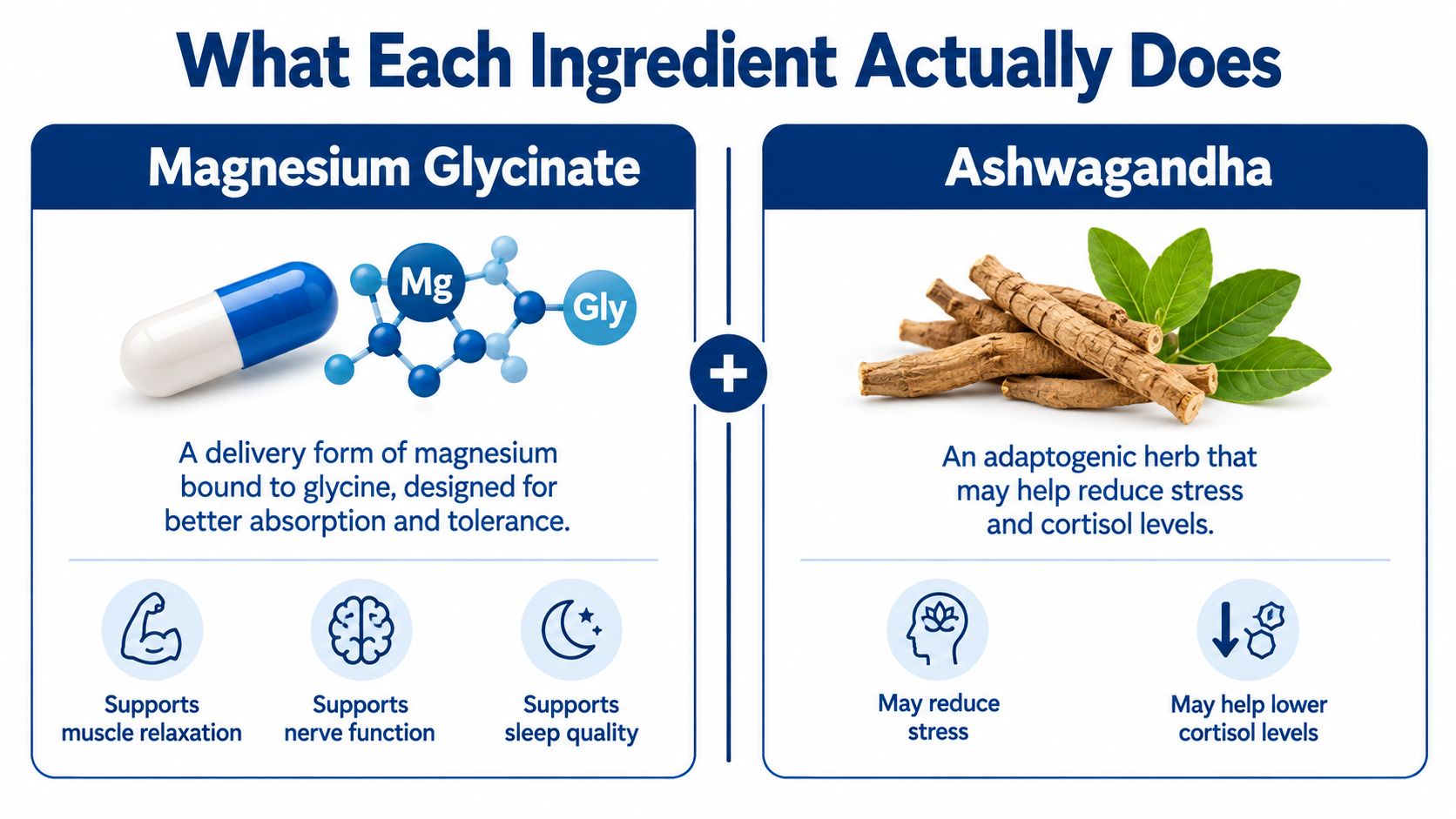
Magnesium Glycinate Is a Delivery Form
Magnesium glycinate, also called magnesium bisglycinate, is magnesium bound to glycine. The form describes how magnesium is delivered, not proof of superior sleep effects. Labels can look impressive because the full compound weighs much more than the magnesium inside it.
The number that matters for comparison is elemental magnesium. A large milligram amount for magnesium glycinate compound doesn't mean the same amount of elemental magnesium. Readers comparing products should look for the elemental amount first, then check serving size and capsule count.
Evidence for this form and sleep is emerging but limited. In a 2025 randomized, double-blind, placebo-controlled trial of 155 adults reporting poor sleep, 250 mg of elemental magnesium from magnesium bisglycinate daily for 4 weeks lowered Insomnia Severity Index scores by 3.9 points, compared with 2.3 points for placebo, with a between-group p-value of 0.049. That's a modest short-term difference, not proof that magnesium treats every type of sleep disturbance.
Ashwagandha Has a Larger, Still Modest Sleep Record
Ashwagandha is a botanical extract studied more often for stress, with sleep measured alongside it. The NIH Office of Dietary Supplements summarizes a review of randomized studies involving 491 adults in India with high stress, anxiety, or an anxiety disorder. Over 6 to 8 weeks, ashwagandha reduced stress and anxiety compared with placebo, along with reduced sleeplessness, fatigue, and cortisol. A separate sleep review it summarizes found a small but significant effect on sleep.
- Different timeline: Ashwagandha research usually runs for weeks, not one night.
- Different target: The clearest logic is stress reduction first, sleep second.
- Different label issue: Extract type and daily amount vary across products, so study results don't transfer automatically.
The practical difference is timing and expectation. Magnesium glycinate is typically framed as an evening mineral supplement, while ashwagandha is studied as a daily extract taken consistently. Calling both sleep aids flattens that difference and makes the combination sound more established than it is.
Why Combining Them Is Plausible but Unproven
The combination sounds logical because poor sleep often has more than one layer. Physical tension can sit alongside mental alertness. Low nutrient intake can exist during a stressful season. That overlap explains interest, but it doesn't create direct evidence.
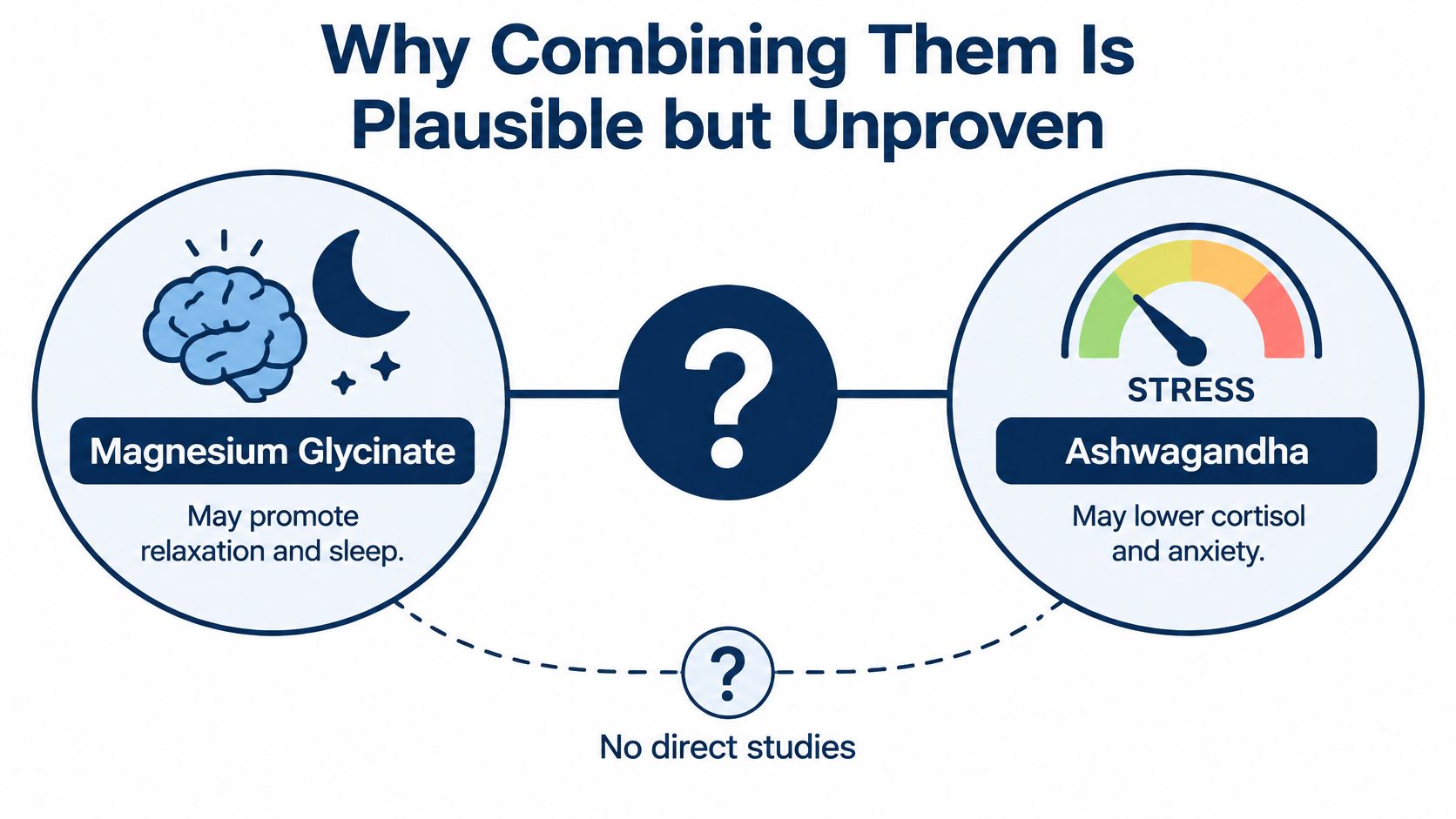
No study cited here tested magnesium glycinate with ashwagandha together against placebo or against each ingredient alone. Claims about synergy remain extrapolation.
A Decision Framework Beats Stacking by Habit
Readers get more value from matching the likely driver to the next step:
- Stress related hyperarousal: Racing thoughts, tension, and difficulty switching off point first toward stress load, schedule, caffeine timing, and wind-down habits. Background on stress and insomnia patterns can help separate stress from other causes.
- Suspected magnesium inadequacy: Diet quality, medicines, and health conditions matter more than a marketing claim about a chelated form.
- Repeated night awakenings: Awakenings need their own review, especially when snoring, breathing pauses, reflux, pain, or frequent bathroom trips are present.
- Another sleep disorder: Persistent insomnia, possible sleep apnea, or restless legs symptoms belong in a clinical conversation, not a supplement experiment.
Practical rule: Start with the dominant nighttime problem, not with the longest ingredient list.
Magnesium research doesn't support oral magnesium as a routine insomnia treatment for everyone. Ashwagandha research generally evaluates standardized extracts independently, often for several weeks. Those are different evidence profiles, and they shouldn't be merged into a promise.
A cautious trial may still make sense for some healthy adults. The trial needs clear limits, one change at a time when possible, and a stop point if sleep, mood, digestion, or morning alertness gets worse. Without those limits, a stack becomes guesswork.
Dosing and Timing That Make Sense
Dose comparisons get messy because labels emphasize different numbers. A clean approach starts with studied amounts, then checks whether a product matches them.
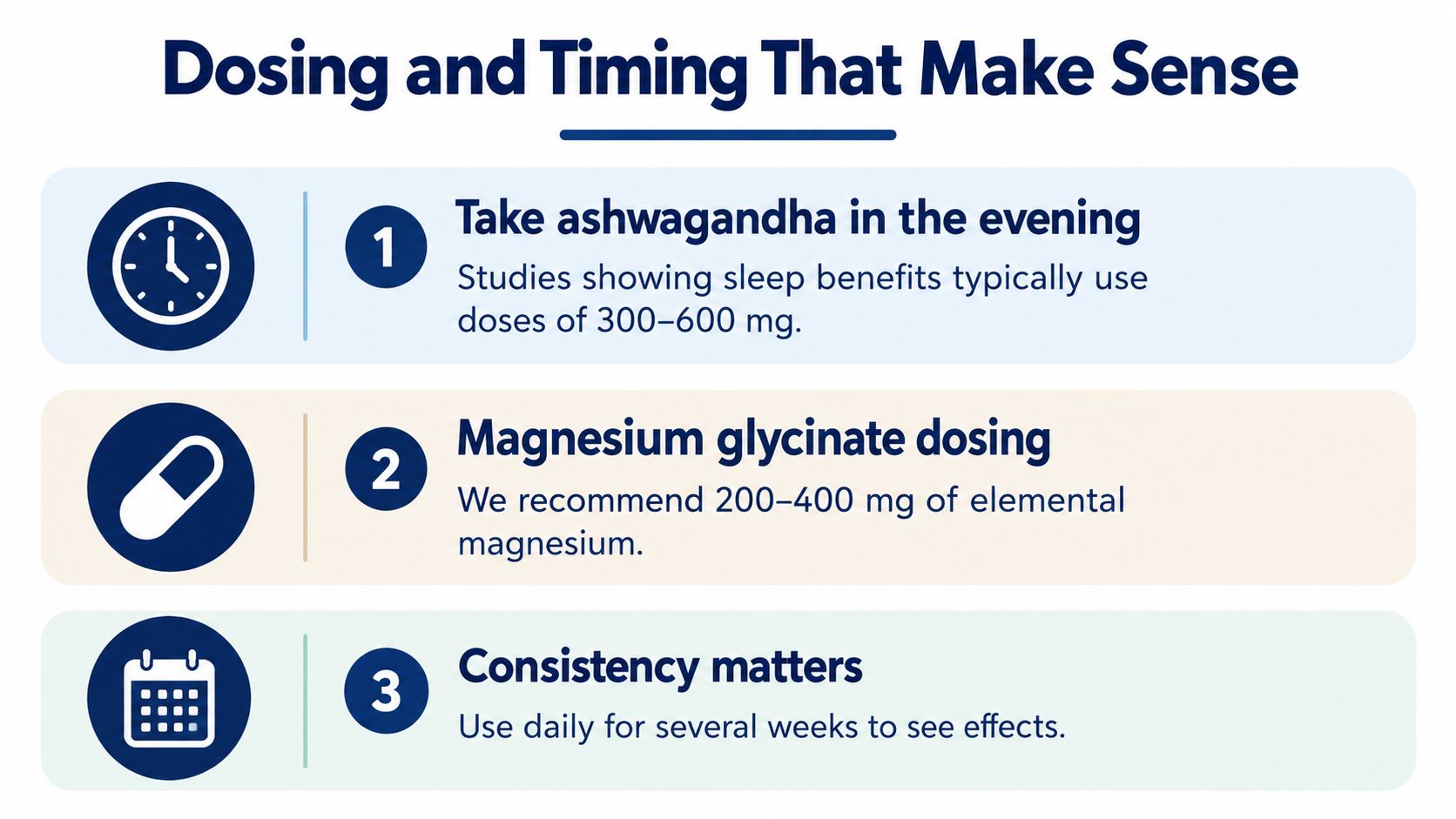
For ashwagandha, a 2021 systematic review and meta-analysis of randomized trials pooled five trials with about 400 participants and found a small but significant improvement in overall sleep versus placebo (standardized mean difference -0.59). Benefits were more prominent in people with insomnia, at doses of at least 600 mg per day, and with treatment lasting at least eight weeks.
That doesn't mean every label with ashwagandha delivers a studied extract or amount. Proprietary blends can hide the per-ingredient dose, which makes comparison difficult. A product listing ashwagandha inside a blend shouldn't be treated as equal to a trial using a defined daily extract amount.
For magnesium, a randomized study of magnesium bisglycinate used 250 mg of elemental magnesium daily, taken as two capsules 30 to 60 minutes before bedtime, with each capsule providing 125 mg of elemental magnesium and 761.5 mg of glycine, for a full daily total of 1,523 mg of glycine. The protocol is useful because it separates elemental magnesium from total compound weight.
A Simple Label Check
- Find elemental magnesium: Ignore the larger compound weight until the elemental amount is clear.
- Check serving size: A serving may require several capsules, which affects consistency.
- Check ashwagandha amount: A named ingredient without a clear amount can't be compared with trial doses.
- Check for melatonin and other actives: Some blends that include ashwagandha also contain melatonin or herbs with known drug interactions.
- Set a review date: Ashwagandha evidence builds over weeks, so a two-night test doesn't answer much.
The video below can be used as a general orientation before checking labels more closely.
Timing also needs a firm boundary. If melatonin is used at all, it belongs in the evening, before bed. It shouldn't be taken after a night waking.
Safety Concerns and Who Should Avoid This Combo
Melatonin-free doesn't mean low risk. Ashwagandha is physiologically active and can be sedating, while magnesium safety depends partly on kidney function, dose, and medicine timing.
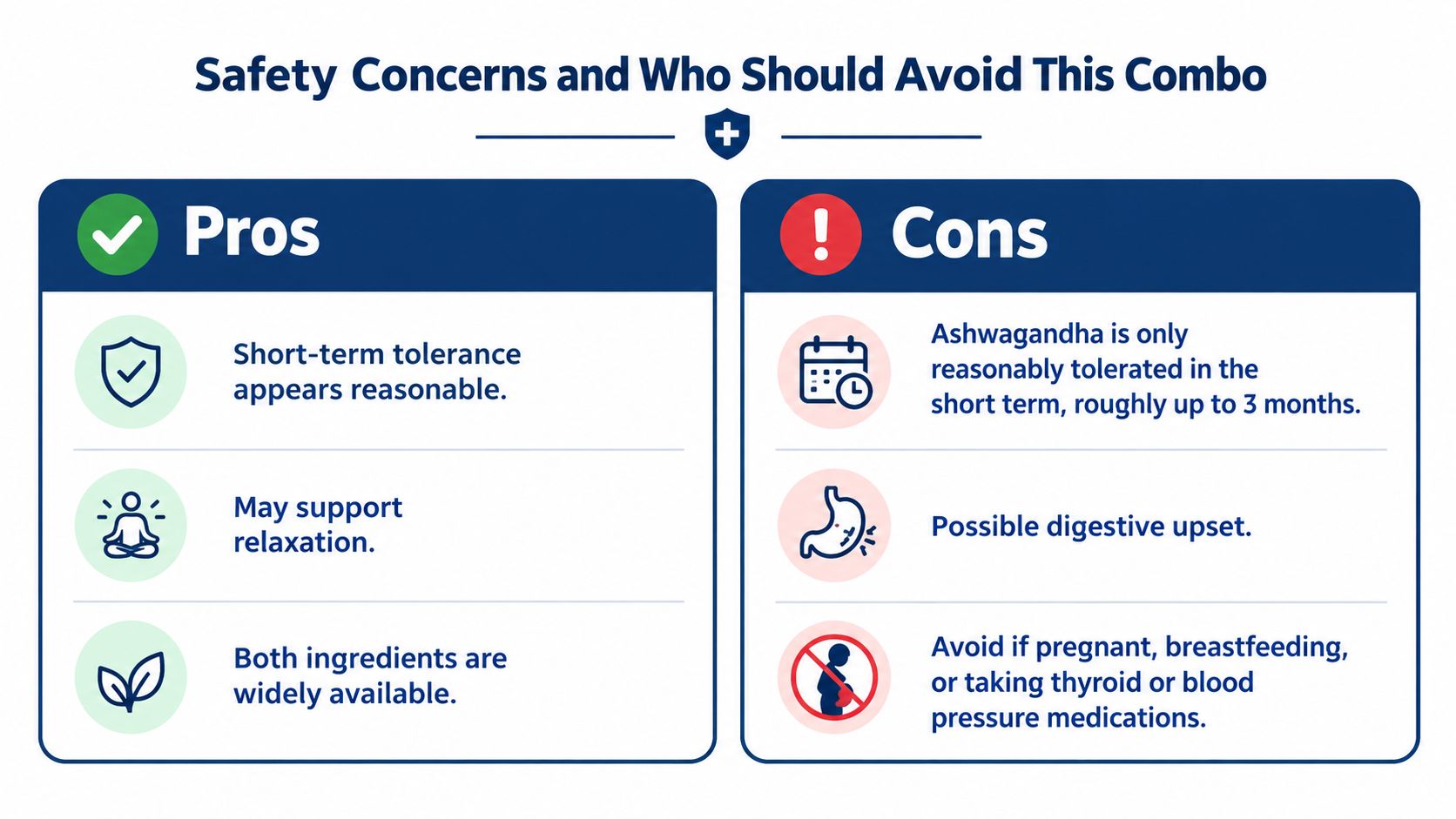
The National Center for Complementary and Integrative Health page on ashwagandha and the NIH Office of Dietary Supplements both indicate that ashwagandha appears to be well tolerated for up to about three months, and that long-term safety is not known. Reported concerns include drowsiness, gastrointestinal effects, rare liver injury, possible thyroid effects, and interactions with sedatives, diabetes medicines, blood-pressure medicines, immunosuppressants, and possibly thyroid medication.
Who Should Pause Before Any Trial
- Thyroid, autoimmune, liver, or kidney concerns: Clinician or pharmacist review comes first.
- Pregnancy, nursing, planned surgery, or age under 18: Self-experimentation isn't appropriate without professional guidance.
- Prescription medicines: Sedatives and several chronic-condition medicines need interaction review.
- Impaired kidney function: Magnesium can accumulate when kidneys don't clear it normally, which can lead to dangerously high levels.
Magnesium timing can also affect absorption of certain medicines, including some antibiotics and bisphosphonates. Separation instructions vary by medicine, so a pharmacist should confirm spacing rather than relying on a generic internet rule.
Warning signs deserve a stop and reassessment. Persistent morning grogginess, diarrhea, abdominal discomfort, jaundice, dark urine, unusual fatigue, or worsening sleep shouldn't be pushed through. Jaundice or symptoms suggesting liver injury need prompt medical attention.
Readers comparing gentler sounding options may also review the discussion of a non-habit-forming sleep aid, but that phrase doesn't remove interaction or organ-related concerns. Safety screening is the decision, not an afterthought after purchase.
Comparing Supplement Formats and Product Options
Format affects consistency more than many labels admit. Capsules can deliver larger mineral amounts, but several capsules per serving may feel burdensome. Gummies are easier for some adults, though sugar, serving size, and lower ingredient density need attention. Oral strips remove the need for water, yet they're usually built around different ingredients than a magnesium glycinate capsule.
For readers comparing broader categories, the overview of best sleep support supplements provides context, but ingredient amounts still need product-by-product checking. A category roundup can't confirm whether a specific label matches a studied dose.
Sleep All Nite Product Formats at a Glance
| Product | Format | Key Ingredients | Melatonin |
|---|---|---|---|
| Deep Calm | Capsule | Magnesium glycinate (275 mg magnesium per serving) | Melatonin-free |
| Nite Bites | Gummy | Reishi, L-theanine, lemon balm, passion flower, valerian root | Melatonin-free |
| Drift Off | Dissolving strip | Valerian root, lavender, chamomile, hibiscus | 1 mg per strip |
| Deep Rest | Capsule | Vitamin B6, magnesium (as citrate), and a proprietary blend that includes ashwagandha, St. John's Wort, GABA, L-theanine, and 5-HTP | 10 mg per serving |
One factual example is Deep Calm, a melatonin-free capsule providing 275 mg magnesium per serving from 2,500 mg magnesium glycinate, with a serving of three capsules. It delivers magnesium as magnesium glycinate to help the body maintain healthy levels of this essential mineral.*
That example shows why elemental math matters. The 2,500 mg figure is compound weight, while 275 mg is the magnesium amount used for comparison. Readers who only scan the larger number can overestimate what a serving provides.
Combination products need even closer reading. A formula may contain magnesium and ashwagandha but provide far less elemental magnesium than a magnesium-only capsule, or list ashwagandha inside a blend without a clear amount. Deep Rest is an example: it lists ashwagandha within a proprietary blend, provides 13 mg of magnesium as citrate rather than glycinate, and contains 10 mg of melatonin plus St. John's Wort, which interacts with many prescription medicines. It is not a magnesium glycinate and ashwagandha pairing, and its ashwagandha amount can't be compared with trial doses. Capsule count, blend transparency, and melatonin content should be checked before format preference.
None of the Sleep All Nite products is extended-release, prolonged-release, or sustained-release. Of the products above, only Deep Calm and Nite Bites are melatonin-free, so labels shouldn't be assumed interchangeable.
Building a Bedtime Routine That Works for You
A routine works best as a menu, not a prescription. Free steps come first because they address common drivers without adding cost, equipment, or another product to track.
Consistent wake time is a strong anchor. A fixed wake time, morning light when available, and a regular wind-down period give the body clock clearer signals. Evening light dimming, a shower, reading, or preparing clothes for morning can serve as low-effort cues.
Free First Options to Mix and Match
- Park racing thoughts: A short written list before bed can move tomorrow's tasks out of bed.
- Lower stimulation: News, work messages, and intense shows can end earlier when possible.
- Keep the room comfortable: A fan if one is available, lighter bedding, or a free white-noise app may help some adults.
- Protect the last hour: Caffeine timing, alcohol, large late meals, and vigorous late exercise deserve review before supplements.
For a broader framework, readers can compare these steps with guidance on sleep quality improvement and choose only the changes that fit home, schedule, and budget. Shift workers and caregivers may need a different anchor than adults with a fixed daytime schedule.
Supplements, if used, sit inside that routine rather than replacing it. A chewable evening option such as Nite Bites contains reishi extract 200 mg per gummy with L-theanine, lemon balm, passion flower, and valerian root, and ingredients in the formula are commonly used to support a calm, balanced state of mind.*
Middle-of-the-night rules stay simple. Melatonin belongs in the evening before bed and shouldn't be taken after a waking. Clock checking, bright light, and starting work in bed usually make alertness worse.
Key Takeaways and Next Steps
Magnesium glycinate with ashwagandha rests on two separate evidence bases, not a tested combination. Magnesium bisglycinate has a modest short-term trial result, while ashwagandha has a larger but still modest sleep record tied to dose, extract, and duration.
Three checks keep the decision grounded. First, compare elemental magnesium, not compound weight. Second, confirm whether ashwagandha amount and extract are clear enough to compare with studied use. Third, screen medicines and health conditions before any trial, especially thyroid, liver, kidney, autoimmune, pregnancy, and surgery related concerns.
A cautious, time-limited trial with clear stop rules is more informative than stacking several new products at once.
Persistent insomnia, loud snoring with breathing pauses, severe daytime sleepiness, or worsening mood needs medical evaluation. Supplements can be one small part of a routine, but they don't diagnose the reason for 3 a.m. awakenings or replace care for a sleep disorder.
Readers who want to compare capsule, gummy, and strip formats can review ingredient amounts and melatonin content at Sleep All Nite before choosing any product. A healthcare professional or pharmacist should check suitability first, especially when prescription medicines or medical conditions are involved.
*These statements have not been evaluated by the Food and Drug Administration. These products are not intended to diagnose, treat, cure, or prevent any disease.
This article is for general education and isn't medical advice. Talk with a healthcare professional before starting a supplement, especially if you're pregnant or nursing, under 18, managing a medical condition, or taking prescription medication.


