
Melatonin Alternatives for Sleep: A Comprehensive Guide


14.5% of U.S. adults had trouble falling asleep on most days or every day, while 17.8% had trouble staying asleep. The most useful melatonin alternatives for sleep depend on whether the problem is sleep onset, nighttime waking, early morning awakening, or a shifting body clock.
Those two figures, reported by the Centers for Disease Control and Prevention, point to an important distinction. Difficulty getting to sleep and difficulty remaining asleep may feel similar at bedtime, but they aren't the same problem. A supplement chosen for relaxation may not address a circadian timing issue, and a product taken for occasional wind-down support shouldn't be treated as care for chronic insomnia.
For adults who wake around 3 a.m., including many women navigating perimenopausal sleep changes, the first question isn't “Which ingredient is strongest?” It's “What pattern keeps repeating?” That answer helps separate a bedtime routine choice from a need for behavioral treatment or clinical evaluation.
Table of Contents
- Understanding Why Melatonin Alternatives Matter
- Supplement Alternatives to Melatonin for Sleep
- Matching Alternatives to Your Sleep Problem
- Behavioral and Medical Alternatives
- Timing and Special Populations
- Choosing the Right Product Format
- Building Your Sleep Support Strategy
Understanding Why Melatonin Alternatives Matter
Sleep difficulties are common, but they don't all have the same shape. The CDC data distinguish sleep initiation, meaning trouble falling asleep, from sleep maintenance, meaning trouble staying asleep. Someone may lie awake at bedtime, wake repeatedly, rise too early, or experience several of these patterns together.
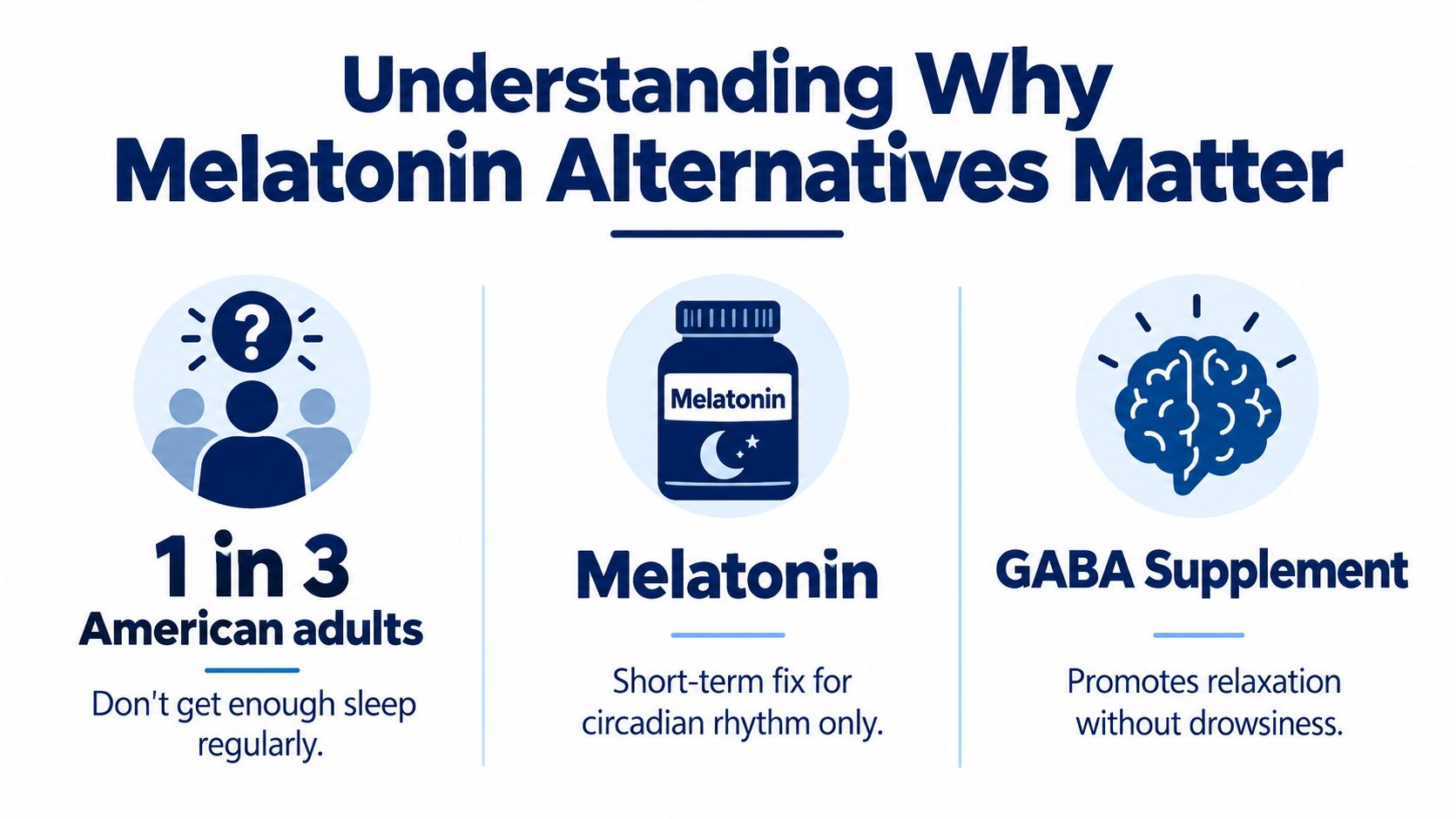
Melatonin is often used because it relates to the body's sleep-wake timing system. That makes it a different kind of option from ingredients marketed for relaxation. A person whose internal clock runs late may be asking a timing question, while someone whose mind remains active after getting into bed may be dealing with conditioned arousal, stress, or an inconsistent sleep schedule.
Occasional support versus chronic insomnia
The distinction matters because supplements support sleep routines, but they don't establish a diagnosis or treat the causes of chronic insomnia. The American Academy of Sleep Medicine recommends multicomponent cognitive behavioral therapy for insomnia, or CBT-I, as the primary treatment for chronic insomnia. CBT-I can include cognitive strategies, sleep-regulation education, stimulus control, sleep-restriction therapy, relaxation training, and sleep-hygiene education.
That doesn't make every supplement irrelevant. A melatonin-free product may appeal to an adult seeking a simple evening wind-down ritual, while magnesium may seem more relevant to someone concerned about dietary intake or physical relaxation. The responsible claim remains narrow: an ingredient may support relaxation or a bedtime routine, but it isn't a proven cure for persistent sleep problems.
Practical rule: Match the intervention to the sleep pattern before comparing ingredient labels.
Persistent nighttime awakenings, pronounced daytime impairment, or a recurring pattern that doesn't improve deserves professional attention. A reader exploring what too much melatonin may mean should also remember that increasing a dose isn't the same as addressing the reason sleep remains difficult.
Supplement Alternatives to Melatonin for Sleep
Popular melatonin alternatives for sleep have different evidence profiles. Magnesium, valerian, L-theanine, and botanical blends shouldn't be placed in one category just because each is described as “natural” or “calming.”
A National Center for Complementary and Integrative Health review found that a 2021 magnesium review included only 3 studies involving 151 participants and suggested possible improvement in sleep-onset time among older adults, but the evidence was judged low quality. The same source describes valerian trial results as inconsistent. Research on L-theanine for sleep is still early-stage, with outcomes varying by dose, formulation, and treatment duration.
Reviews of valerian trials have reported some improvement in perceived sleep quality in certain studies, but the NIH Office of Dietary Supplements describes the overall clinical evidence as inconclusive, with small samples and high dropout rates in many trials. Those results support cautious language about perceived sleep quality, not a promise of predictable sedation or treatment for chronic insomnia.
Supplement Evidence Summary
| Supplement | Evidence Quality | Best For | Important Limitations |
|---|---|---|---|
| Magnesium | Limited and low-certainty for insomnia | People considering mineral support or relaxation-oriented routines | Findings are mixed, and the strongest sleep-onset evidence is limited |
| Valerian | Mixed, with some subjective benefit | A wind-down routine focused on perceived sleep quality | Results vary by extract, dose, preparation, and duration |
| L-theanine | Early-stage | Relaxation support within a broader evening routine | Evidence varies by formulation and may not apply to every product |
| Botanical blends | Ingredient-dependent | People who prefer a multi-ingredient wind-down format | Combinations can make benefits and unwanted effects harder to identify |
Magnesium deserves especially careful framing. A product such as Deep Calm delivers magnesium glycinate and provides 275 mg of magnesium per serving. Magnesium is involved in reactions that support normal nerve function, muscle health, and energy production.* It should still be evaluated as a targeted supplement choice, not a universal answer to repeated awakenings or chronic insomnia.
Valerian is similarly nuanced. The evidence suggests that some people may perceive better sleep quality, yet trial results vary substantially. Chamomile has a long tradition as a tea, but NCCIH notes there's no conclusive evidence from clinical trials that it helps insomnia. Readers comparing sleep support supplements should check the exact extract, serving amount, and complete ingredient list instead of relying on an ingredient name alone.
Matching Alternatives to Your Sleep Problem
The most useful choice starts with the symptom that appears most consistently. A person who takes a relaxing supplement for a moving circadian schedule may conclude that the ingredient failed, even though timing and light exposure were the larger obstacles.
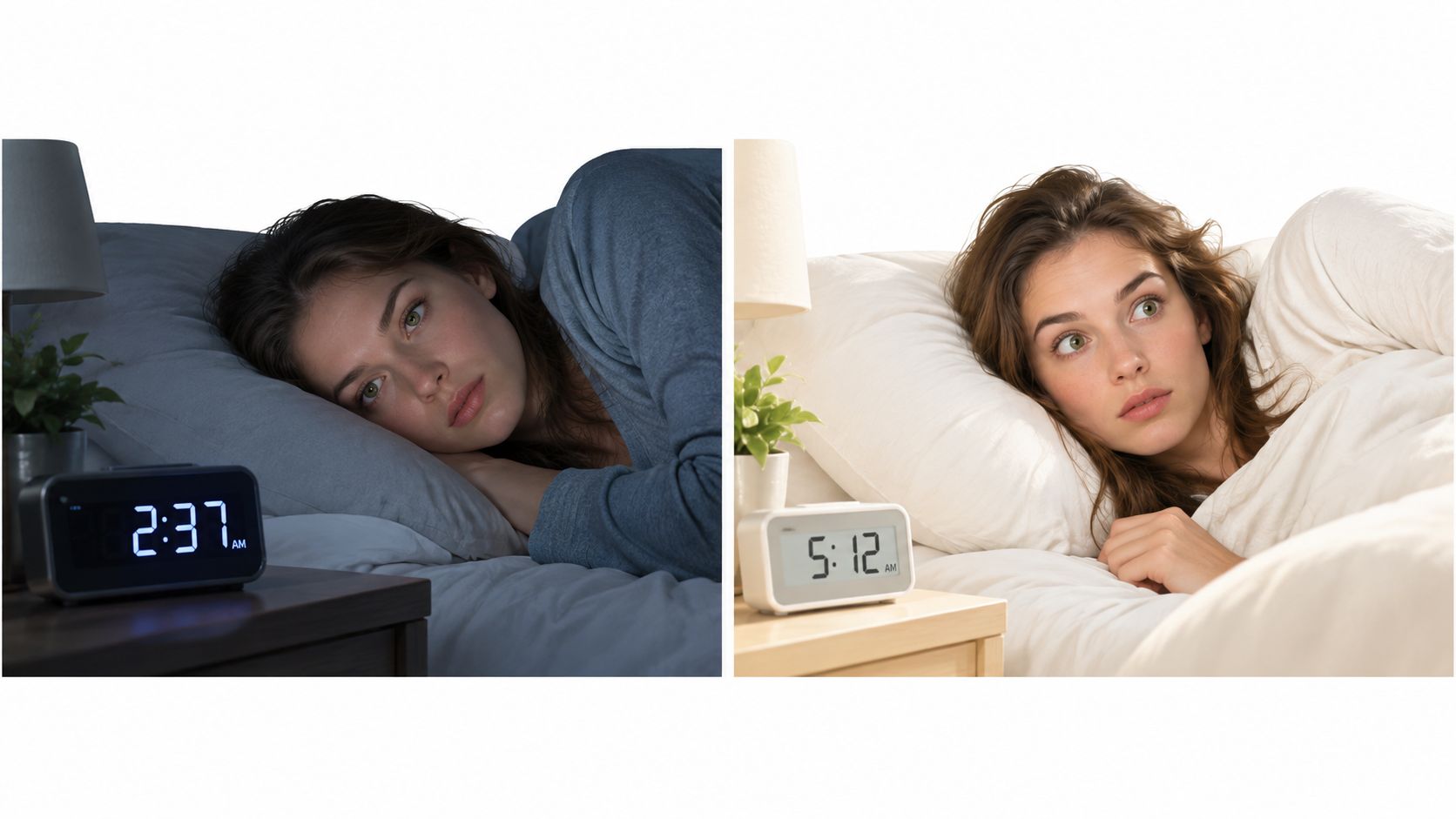
When falling asleep is the main problem
Difficulty falling asleep can involve stress, late light exposure, an irregular wake time, caffeine, or a body clock that isn't ready for bed. Free steps can include choosing a consistent wake time, reducing stimulating activity before bed, and using a quiet, low-pressure routine. Relaxation-oriented ingredients may fit as optional support, but they shouldn't replace an assessment when the pattern is persistent.
When waking at night is the main problem
Repeated waking calls for a different investigation. Bedroom temperature, noise, alcohol, physical discomfort, hot flashes, medication effects, breathing problems, and conditioned wakefulness can all matter. A supplement taken at bedtime can't automatically address each cause.
For readers examining why waking at 3 a.m. happens, the practical response is to record the pattern and discuss persistent symptoms with a healthcare professional. Melatonin belongs in an evening routine before intended sleep, not as a suggestion after a nighttime waking.
When the body clock keeps shifting
Rotating schedules and night work create a timing problem rather than a simple relaxation problem. Light exposure, caffeine timing, naps, commute safety, and a protected daytime sleep window may be more important than swapping one ingredient for another.
The 2025 VA/DoD insomnia guideline recommends CBT-I over medication as the first-line treatment for chronic insomnia. That recommendation reinforces a useful decision principle: a supplement may support an occasional routine, while a persistent sleep pattern may require structured behavioral care. A broader guide to choosing a sleep aid should therefore begin with the problem, not the product category.
Behavioral and Medical Alternatives
For chronic insomnia, the best-supported non-melatonin option is multicomponent CBT-I. It works on the parts of insomnia that supplements cannot reach: the learned link between bed and wakefulness, the schedule patterns that weaken sleep drive, and the spiral of worry that turns one bad night into a repeating pattern. That matters when the problem is not just falling asleep, but staying asleep or waking at 3 a.m. and never quite settling again, a pattern many perimenopausal women recognize.
The core tools are practical. Stimulus control rebuilds bed as a cue for sleep, so if you are awake for a prolonged stretch, you get up and return only when sleepy. Sleep-restriction therapy narrows time in bed so sleep becomes more consolidated, though this approach is best used carefully and often with professional guidance. Cognitive techniques target the mental static: predictions about disaster tomorrow, clock-checking, and the urge to force sleep.
What sleep hygiene can and can't do
Sleep hygiene helps most when it is specific enough to follow. General reminders rarely change a stubborn waking pattern. A more useful version looks like this:
- Wake-time consistency: Pick a fixed rise time that you can keep within about an hour across the week, even after a rough night.
- Light management: Get outdoor light soon after waking, or use a bright indoor light source if morning light is limited. At night, dim the room and keep overhead light low during a 3 a.m. waking.
- Caffeine awareness: If caffeine seems to lengthen nighttime wakefulness, keep it to earlier in the day and avoid the late-afternoon catch-up cup.
- Low-pressure wind-down: Choose one quiet repeatable cue, such as ten minutes of reading, slow breathing, or gentle stretching, instead of turning bedtime into a performance test.
These habits support sleep, but they do not replace treatment for chronic insomnia. Clinical guidance on behavioral care gives multicomponent CBT-I a strong recommendation and places medication in a secondary role when behavioral treatment is unavailable, insufficient, or used as a short-term adjunct, as summarized in the AASM guideline on behavioral and psychological treatments for insomnia.
Prescription medication belongs in a clinician conversation, especially if another condition, drug interaction, or safety issue may be involved. A structured approach to insomnia care can help you match the next step to the pattern itself. Tracking what sustains the waking pattern often reveals a clearer next step than comparing supplement strengths.
Timing and Special Populations
Timing matters most when the sleep problem is really a schedule problem. Shift workers often have to fall asleep when the body expects daylight activity, then stay alert when the body would rather wind down. In that situation, the main question is not which ingredient ranks highest. It is whether the tool matches the job, falling asleep after a night shift, staying asleep through daytime noise and light, or reducing repeated awakenings when the schedule keeps changing.
A 2025 systematic review of industrial-worker sleep interventions found that melatonin improved sleep-onset latency and sleep efficiency in one trial, while total sleep time and waking after sleep onset did not significantly change. That pattern matters. A support that helps with sleep onset may do much less for sleep maintenance or mid-sleep waking, which is why shift-work plans usually work better when timing, light, and schedule protection are addressed together.
A timing-first approach for shift workers
Start with the controllable signals that set the body clock.
- Light exposure: Keep light low during the sleep window, use blackout support if available, and seek brighter light during the part of the shift when alertness is needed.
- Caffeine timing: Use caffeine earlier in the work period if later intake makes post-shift sleep harder.
- Protected sleep: Treat the planned sleep block like an appointment, even if the exact clock time changes across the week.
- Recovery days: Shift the schedule gradually when possible instead of swinging back and forth.
Perimenopausal women who wake at 3 a.m. often need a different kind of sorting process. Early waking can reflect temperature changes, mood symptoms, stress, medication effects, or an emerging insomnia pattern, and those do not point to the same next step. A simple sleep diary can help separate them. Log the wake time, how long you stayed awake, whether you felt hot or sweaty, and where you are in the menstrual cycle. If the pattern clusters around certain days or comes with heat symptoms, that gives a clinician more useful direction than just increasing supplement use.
Choosing the Right Product Format
Format affects whether a supplement fits an evening routine, but it doesn't determine whether the underlying sleep problem is appropriate for self-directed support. Capsules may suit readers who prefer a measured serving, gummies may feel easier for those who dislike swallowing pills, and oral strips can be convenient when water isn't available.

Sleep All Nite offers capsules, gummies, and dissolvable oral strips, including both melatonin-containing and melatonin-free formulas. Readers comparing options should start with three label questions:
- Does it contain melatonin? A product described as a melatonin alternative may still contain the hormone, so the label matters.
- What is the serving amount? Ingredient names alone don't show how much each serving provides.
- How many active ingredients are combined? A blend may fit a wind-down preference, but multiple ingredients can make it harder to identify what agrees with the individual.
Valerian and chamomile illustrate why format and evidence should stay separate. NIH sources describe valerian research as inconclusive, and NCCIH says there's no conclusive clinical-trial evidence that chamomile helps insomnia. A capsule, gummy, or strip can change convenience, but it doesn't turn preliminary evidence into established treatment.
For anyone avoiding melatonin, the product must be melatonin-free. Among Sleep All Nite's options, Deep Calm capsules (magnesium glycinate) and Nite Bites gummies (reishi, L-theanine, lemon balm, passion flower, and valerian root) contain no melatonin.* The label should also be checked for botanicals and amino acids that may warrant medication review. Pregnancy, nursing, age under 18, medical conditions, and prescription use all justify professional guidance before starting a supplement.
Building Your Sleep Support Strategy
A thoughtful plan begins with observation rather than a crowded supplement cabinet. The reader can identify whether the main issue is falling asleep, repeated waking, early morning waking, or a schedule that changes. That starting point narrows the options and shows when behavioral care deserves priority.
A simple framework can keep the process clear:
- Start with the pattern: Note the usual bedtime difficulty, waking pattern, schedule, light exposure, caffeine, and next-day effects.
- Choose free supports first: Consistent waking, a calmer pre-bed routine, appropriate light, and a protected sleep window can provide useful information without adding ingredients.
- Change one variable at a time: Trying several products together makes it difficult to tell what helps, what causes unwanted effects, or whether the schedule changed.
- Review the result: A supplement shouldn't be judged only by whether sleep occurred on one night. The broader pattern, morning alertness, and recurring symptoms matter.
- Escalate when needed: Persistent insomnia, repeated nighttime waking, daytime impairment, or symptoms suggesting another condition call for healthcare evaluation.
Supplements can occupy a narrow but reasonable place in this framework. They may support relaxation or a bedtime routine for some adults, while CBT-I and medical evaluation address persistent or complex sleep problems. The right melatonin alternatives for sleep aren't ranked by novelty or ingredient popularity. They're selected according to the sleep problem, the evidence, the label, and the person's health context.
Readers can compare formats and ingredient amounts through Sleep All Nite, including melatonin-free options and products that contain melatonin. A healthcare professional should review any supplement choice when symptoms persist or prescription medication, pregnancy, nursing, age under 18, or a medical condition is involved.
*These statements have not been evaluated by the Food and Drug Administration. These products are not intended to diagnose, treat, cure, or prevent any disease.
This article is for general education and isn't medical advice. Talk with a healthcare professional before starting a supplement, especially if you're pregnant or nursing, under 18, managing a medical condition, or taking prescription medication.


