
Why Does Eating Sugar Make Me Sleepy Explained


A bowl of ice cream after dinner can create an odd sequence: heavy eyelids on the sofa, followed by a restless night and an alert wake-up around 3 a.m. The same thing can happen after sweet drinks, pastries, candy, or a large serving of refined carbohydrates. That experience leads many people to ask, why does eating sugar make me sleepy?
The answer isn't just that sugar “uses up” energy. Digestion, meal size, circadian timing, insulin, amino-acid transport, and individual glucose regulation can all contribute. A sweet food may produce an early wave of relaxation, while a later glucose drop may leave someone tired, hungry, shaky, or unexpectedly awake.
Table of Contents
- Why Sugar Can Leave You Tired
- How Insulin Changes Brain Chemistry
- Reactive Hypoglycemia and the Energy Drop
- Why Evening Sugar Disrupts Sleep Quality
- Practical Ways to Blunt the Glucose Spike
- The Myth of Sugar as a Sleep Aid
- Building a Better Evening Wind-Down Routine
Why Sugar Can Leave You Tired
A late lunch followed by a sweet snack can change the rest of the afternoon. Concentration fades, your eyes feel heavy, and the sofa becomes more appealing than unfinished work. After dinner, the same pattern may show up as dozing during a television program, even when you expected to stay awake for hours.
Eating itself can promote drowsiness. Digestion increases activity in the gastrointestinal system and changes blood flow and metabolic signaling. Hormonal and inflammatory signals may also add to fatigue after a meal. In controlled studies, volunteers have reported feeling sleepier and less alert in the hours after a meal. A laboratory study of post-meal sleepiness describes this pattern.
Several signals arrive at once
Sugar may intensify that response. Rapidly absorbed carbohydrates raise blood glucose quickly, prompting insulin release. Insulin can change the balance of amino acids in the blood, which may increase the relative availability of tryptophan for transport into the brain. That process is one reason post-sugar sleepiness involves more than a simple idea of sugar “using up” energy.
Meal timing adds another layer. Alertness often dips during the afternoon as part of the body's internal clock, and a large meal can make that dip more noticeable. Portion size, sleep debt, alcohol, and an individual's usual glucose response can shift the experience from mild relaxation to pronounced fatigue.
The timing also matters at night. A sweet evening meal may feel calming at first, yet a later fall in glucose can bring hunger, restlessness, or an unexpectedly alert period. For some people, that pattern may contribute to waking around 3 a.m., so early drowsiness does not necessarily mean the meal supported restorative sleep.
The practical interpretation: feeling sleepy after dessert is common, but it does not show that sugar works as a reliable sedative or that a glucose disorder is present.
Meal composition can also confuse the picture. A laboratory study of 18 healthy adults found that participants felt sleepier and less awake after a high-fat, low-carbohydrate meal, with the difference showing up 2 to 3 hours afterward. Insulin was significantly higher after the low-fat, high-carbohydrate meal, while cholecystokinin was higher after the high-fat meal. These results show why attributing every post-meal slump to sugar oversimplifies the biology. (Read the meal-composition study)
How Insulin Changes Brain Chemistry
Early sugar-related drowsiness can begin with insulin and tryptophan, an amino acid used to produce serotonin and, later, melatonin. This pathway helps explain why a person may feel relaxed after carbohydrates without treating sugar as a sleep medicine.
A rapidly absorbed carbohydrate meal raises blood glucose. The pancreas answers by releasing insulin, which helps move glucose from the bloodstream into body tissues. Insulin also changes the relative amounts of several large neutral amino acids circulating in the blood.
A five-step pathway
Several amino acids compete for transport into the brain, like passengers waiting for limited seats on a train. After insulin rises, it encourages muscle cells to take up several competing amino acids. Tryptophan remains relatively more available in the blood, improving its position in the transport queue.
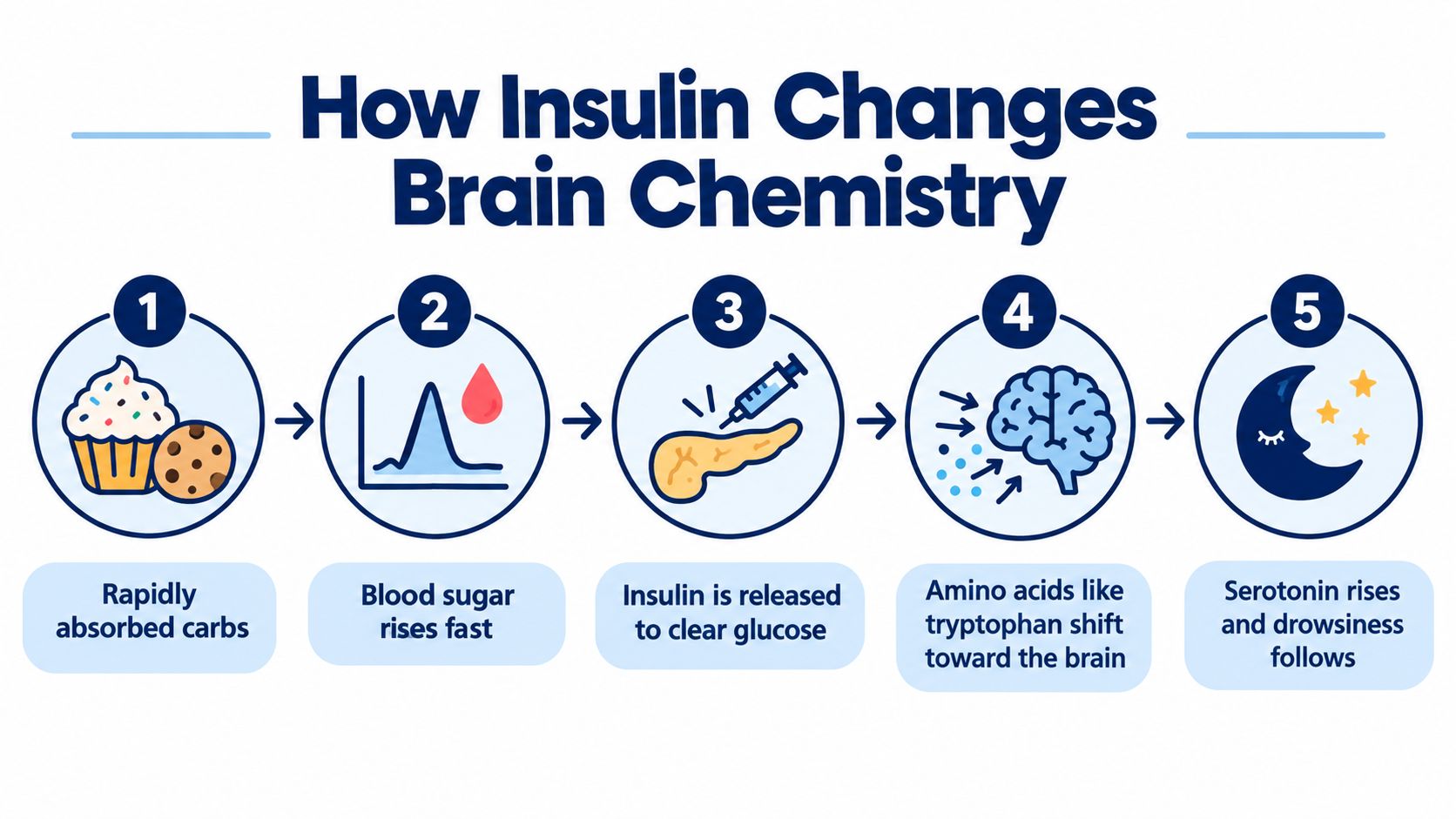
The sequence is:
- Rapidly absorbed carbohydrates enter digestion.
- Blood glucose rises, particularly after a concentrated or high-glycemic food.
- Insulin is released to help clear glucose from the bloodstream.
- The tryptophan-to-competing-amino-acid ratio changes, potentially allowing more tryptophan to enter the brain.
- Brain tryptophan can contribute to serotonin production, followed later by melatonin production, biological signals associated with relaxation and sleep.
A cookie does not directly become melatonin. The proposed mechanism is indirect, and the response varies with the meal, timing, and individual physiology. A review of diet and sleep explains the insulin, amino-acid, and tryptophan pathway.
Timing changes the effect
Controlled research shows that meal timing matters. In a 2007 study of healthy sleepers, participants who ate a high-glycemic-index carbohydrate meal 4 hours before bedtime fell asleep in an average of 9.0 minutes, compared with 17.5 minutes after a low-glycemic-index meal. The difference was 8.5 minutes, approximately 48.6%. The same high-glycemic meal produced sleep onset in 9.0 minutes when eaten 4 hours before bed, compared with 14.6 minutes when eaten 1 hour before bed, a 38.3% difference. Participants also tended to report greater sleepiness after the high-glycemic meal. The American Journal of Clinical Nutrition study reports these sleep-onset findings.
The timing may explain the initial calm without making sugar a dependable bedtime strategy. A supplement such as Nite Cap contains valerian, chamomile, GABA, L-tryptophan, lemon balm, passion flower, and 2 mg of melatonin. Supplements should not be used to interpret or diagnose a glucose response. Melatonin belongs in an evening routine before bed, not after a middle-of-the-night awakening. Anyone considering ingredients that affect sleep or serotonin-related pathways should review them with a healthcare professional, especially when taking prescription medication.
Stress hormones can influence both sleep and alertness, and the relationship between cortisol and sleep problems can add another layer to nighttime symptoms. The practical takeaway is simple: sugar-related drowsiness reflects interacting metabolic signals, amino-acid competition, and meal timing, rather than energy moving directly from the body to the brain.
Reactive Hypoglycemia and the Energy Drop
The first wave of sleepiness and the later “crash” aren't necessarily the same event. Early drowsiness may reflect digestion, insulin signaling, amino-acid competition, meal size, and circadian timing. A later drop in glucose may produce fatigue, poor concentration, hunger, shakiness, sweating, dizziness, anxiety, headache, or a feeling of being tired and wired.
Reactive hypoglycemia usually occurs within about four hours after eating, but feeling tired alone doesn't confirm it. Confirmation requires evidence of low glucose during symptoms, not just a subjective sense of sleepiness. Mayo Clinic explains the timing, symptoms, and need for medical evaluation.
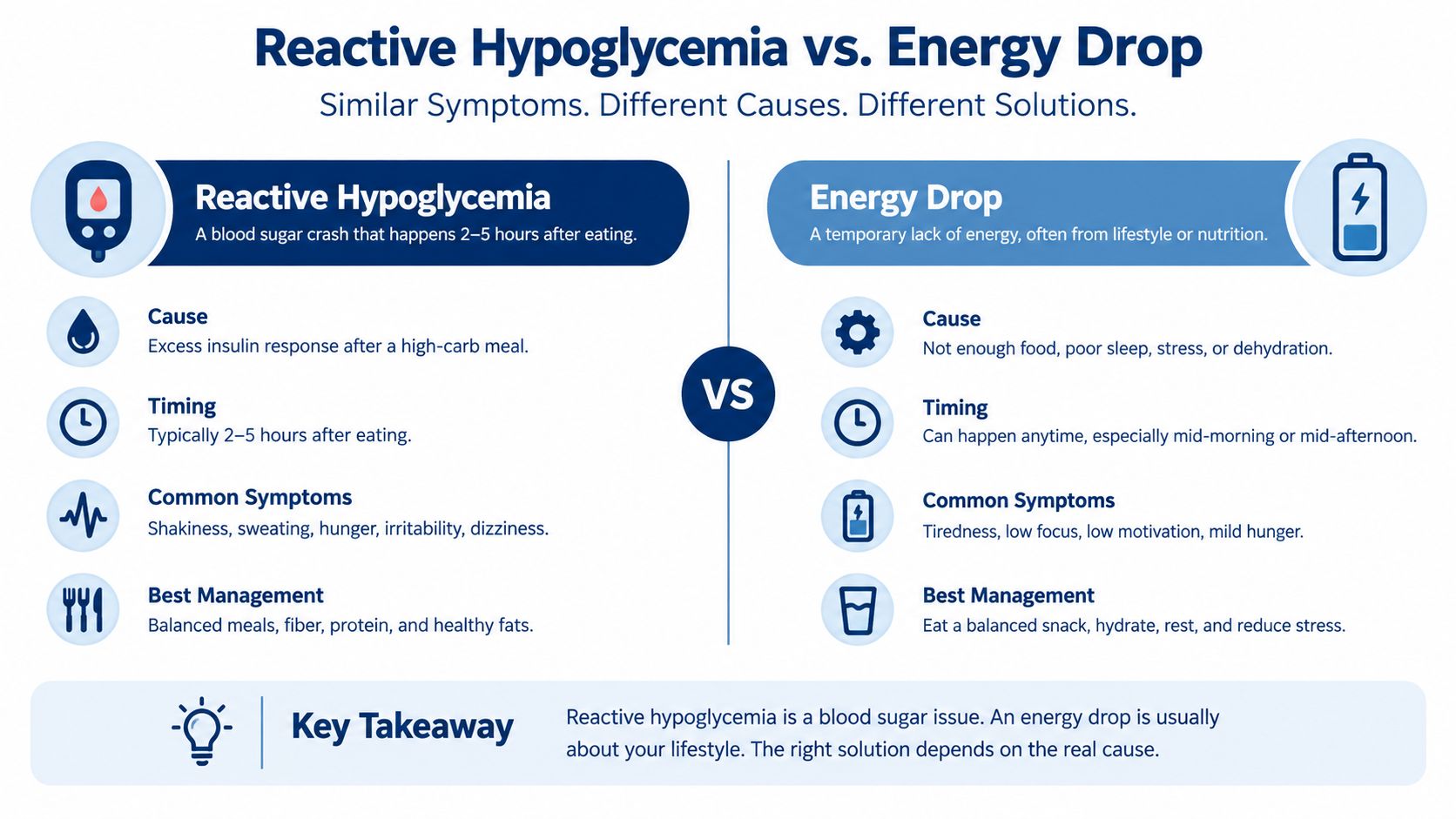
Two different patterns
| Pattern | What may be happening | What the person may notice |
|---|---|---|
| Ordinary post-meal drowsiness | Digestion, meal size, circadian timing, and hormonal signals increase relaxation | Heavy eyelids, reduced alertness, or a desire to rest |
| Possible glucose instability | A rapid rise is followed by a substantial insulin response and subsequent glucose decline | Fatigue plus shakiness, sweating, hunger, dizziness, palpitations, anxiety, or confusion |
High-glycemic-load eating can produce compensatory hyperinsulinemia, meaning insulin rises substantially in response to the glucose load. That response can contribute to reactive hypoglycemia. The early phase may feel sedating, while the later decline can activate counter-regulatory hormones and physical arousal. Researchers analyzing Women's Health Initiative data describe how a rapid blood-sugar rise, the insulin response, and the drop that follows may trigger hormones such as adrenaline and cortisol.
The distinction matters because a sweet snack eaten alone, especially on an empty stomach, may produce a faster glucose rise than the same carbohydrate eaten with fiber, protein, or fat. A large portion can intensify the response, but people vary substantially in insulin sensitivity, meal tolerance, activity, and metabolic health.
Persistent or extreme sleepiness deserves more attention than an occasional post-dessert slump. Recurrent episodes accompanied by excessive thirst, frequent urination, unexplained weight change, shakiness, sweating, palpitations, confusion, or documented low glucose should be discussed with a healthcare professional. Insomnia guidance for middle-of-the-night awakenings can help with sleep habits, but it shouldn't replace evaluation of recurring metabolic symptoms.
A melatonin-free option such as Deep Calm provides 275 mg of magnesium per serving as magnesium glycinate. Magnesium is involved in biochemical reactions that support nerve function, muscle health, and energy production, and the product is intended for a nighttime routine, not for diagnosing or correcting a glucose response.*
Why Evening Sugar Disrupts Sleep Quality
A late dessert can create a misleading sequence. The person feels sleepy on the sofa, assumes the food has helped with sleep, and then goes to bed. Later, glucose dynamics, digestion, body-clock timing, alcohol, stress, or an unrelated sleep issue may contribute to an awakening.
A rapid glucose rise can be followed by a compensatory insulin response and a subsequent glucose decline. That decline may produce fatigue, reduced concentration, or subjective drowsiness, especially after a large refined-carbohydrate load or in someone with impaired glucose regulation. A review of dietary nutrition and sleep discusses glycemic and insulin responses and the role of meal composition.
Why the 3 a.m. pattern feels confusing
The early sleepy sensation doesn't guarantee stable sleep later. A person may become drowsy because of post-meal physiology, then experience a later shift toward hunger, alertness, or physical arousal. The result can feel like a contradiction: sugar seems to help with falling asleep, yet sleep becomes less settled.
Late evening meals may also interact with normal circadian changes. The body handles food differently across the day, and a meal close to bedtime can leave digestion, temperature regulation, and glucose processing active when the body is preparing for sleep. Evidence on late carbohydrate intake and overnight sleep remains nuanced, so a single dessert shouldn't be treated as the proven cause of every 3 a.m. awakening.
A useful experiment: record the meal time, portion, carbohydrate type, protein and fiber content, alcohol intake, bedtime, sleep onset, and time of any awakening. Patterns become more informative when symptoms are compared with context.
The bidirectional relationship between sleep and glucose also needs caution. A 2025 scoping review found only nine eligible papers examining food intake, blood glucose, sleepiness, and work productivity, and only one assessed blood glucose and sleepiness together. That limited evidence means a continuous-glucose-monitor reading shouldn't automatically be treated as the explanation for every episode of drowsiness. The scoping review describes the limited research base.
People who want broader strategies can review guidance on sleep quality improvement. The most useful approach is usually observational rather than alarmist: track timing and symptoms, adjust one variable at a time, and seek medical assessment when the pattern is frequent, severe, or accompanied by other warning signs.
Practical Ways to Blunt the Glucose Spike
Sugar does not need to be forbidden to reduce a post-meal slump. The more useful goal is a steadier meal pattern, especially if afternoon sleepiness or a middle-of-the-night awakening keeps recurring. Start by changing how a sweet or starchy food is eaten, rather than treating it as an isolated problem.
Build a steadier meal
- Pair carbohydrates with protein: Add eggs, yogurt, beans, fish, tofu, poultry, or another protein source. Protein can make a carbohydrate-based meal feel less like a rapid, standalone glucose load.
- Include fiber: Vegetables, legumes, whole grains, nuts, seeds, and whole fruit can slow digestion and glucose absorption. A pastry eaten alone creates a different pattern from a smaller dessert after a fiber-rich meal.
- Avoid concentrated sugar on an empty stomach: A sweet drink, candy, or refined snack may raise glucose faster when eaten alone than when included in a balanced meal.
- Reduce the portion without banning the food: A smaller serving can preserve enjoyment while lowering the total carbohydrate load. Choose an adjustment you can repeat without feeling punished.
- Choose the timing deliberately: If evening sweets seem to come before restless sleep, test moving them earlier. Controlled research found that a high-glycemic meal affected sleep onset differently when eaten four hours before bed than when eaten one hour before bed, so timing deserves attention. (See the controlled sleep study)
A gentle walk after eating may help some people when it feels safe and practical. It does not need to be formal exercise. Walking around the home, taking the stairs, or completing an easy household task can add movement without equipment.
Keep a food and symptom log to separate sugar-related sleepiness from the effects of a large meal. Record the meal size, ingredients, eating time, alcohol intake, sleep duration from the previous night, symptom onset, and symptoms such as shakiness, sweating, hunger, or palpitations.
Timing can matter at night because a large or sweet evening meal may create a delayed pattern: early drowsiness followed by lighter sleep or a later awakening. Moving dessert earlier, reducing the serving, or pairing it with protein and fiber provides a practical way to test that pattern without eliminating enjoyable foods.
The goal isn't perfect glucose control at every meal. It's identifying the smallest change that makes energy and sleep feel more consistent.
Recurrent symptoms deserve professional assessment rather than endless diet experiments. Balanced meals may support steadier energy, but they cannot determine whether reactive hypoglycemia, diabetes, medication effects, or another condition is involved.
The Myth of Sugar as a Sleep Aid
Feeling sleepy after sugar can make bedtime carbohydrates seem like a shortcut. That conclusion goes too far. A temporary sensation of drowsiness isn't the same as healthy sleep, and it doesn't prove that sugar will improve sleep quality or prevent a later awakening.
The evidence is inconsistent. A systematic review found that only three of six clinical trials reported a significant effect of high-glycemic-index intake on sleep. The positive trials involved small groups, and the review concluded that high-glycemic meals might improve sleep-onset latency in young men, while evidence for other sleep outcomes and populations remained inconsistent. The systematic review summarizes the mixed clinical evidence.
Why the shortcut fails
The controlled result involving a high-glycemic meal four hours before bed demonstrates a possible sleep-onset mechanism under particular conditions. It doesn't establish that candy, soda, or dessert immediately before bed will help every adult fall asleep or sleep well.
The same review also reported mixed observational findings. Some studies associated high-glycemic eating with better sleep duration or quality, while others linked it with sleep disturbance, including a study of 53,069 postmenopausal women. Those conflicting results matter for adults who already experience changing sleep around midlife, because a food that causes early drowsiness may still be a poor long-term sleep strategy.
Drowsiness is a symptom to understand, not a sleep treatment to chase.
Sugar also can't address racing thoughts, an irregular body clock, medication effects, breathing-related sleep problems, or persistent nighttime awakenings. If sleep trouble continues, the most useful next step may be a conversation with a healthcare professional rather than a larger dessert.
Building a Better Evening Wind-Down Routine
A steadier evening routine starts with variables that cost nothing. A person might finish a large meal earlier, keep concentrated sweets smaller, dim bright light, use a quiet activity, or write down worries before getting into bed. The best menu depends on work schedules, household demands, medications, and personal preferences.
For someone who wants to understand how to sleep when the brain is racing, a short written brain dump can separate planning from bedtime. Gentle breathing, stretching, reading, or a familiar audio track may also help signal a transition without making sleep another performance task.
Optional supplement formats
Supplements are optional, and ingredient labels deserve careful attention. Deep Calm is melatonin-free and provides magnesium glycinate with 275 mg of magnesium per serving for a nighttime routine. Nite Bites is also melatonin-free and contains reishi extract, L-theanine, lemon balm, passion flower, and valerian root. Neither product should be used to diagnose the reason for post-sugar sleepiness.
For people considering a melatonin format, Drift Off is a raspberry oral strip that dissolves on the tongue without water. It contains 1 mg of melatonin with valerian root, lavender, chamomile, and hibiscus, and is taken before bed, with a maximum of one strip per day. Melatonin belongs in the evening before bed, not after waking during the night.
Persistent sleep disruption, unusual glucose symptoms, or repeated 3 a.m. awakenings should be discussed with a healthcare professional. A balanced evening meal and a consistent wind-down can support better decision-making, but they aren't substitutes for diagnosis or treatment when a medical issue may be present.
Sleep All Nite offers capsules, gummies, and dissolving oral strips with clearly listed ingredients, including melatonin-free formats and lower-dose evening options. Visit Sleep All Nite to compare formats and ingredient amounts, and check with a healthcare professional before starting a supplement, especially when taking prescription medication.
*These statements have not been evaluated by the Food and Drug Administration. These products are not intended to diagnose, treat, cure, or prevent any disease.
This article is for general education and isn't medical advice. Talk with a healthcare professional before starting a supplement, especially if you're pregnant or nursing, under 18, managing a medical condition, or taking prescription medication.


